
Tourism bodies focus on unique attractions
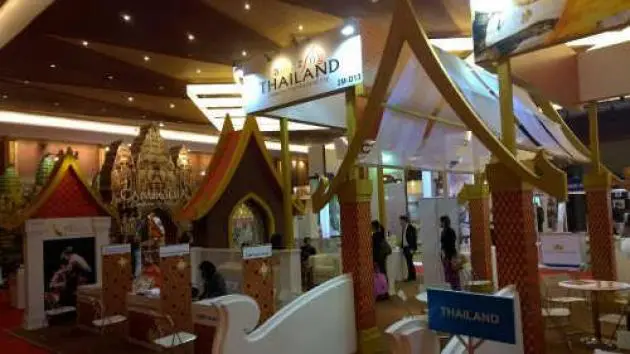


National tourism organisations in Southeast Asia are showcasing unique new attractions this week in a bid to draw visitors from the region and beyond.
At the "Asean Tourism Forum", which is being held in Myanmar’s capital, Thailand, Myanmar, Malaysia, Singapore, Indonesia and the Philippines have unveiled national tourism campaigns for this year, focusing mainly on local products and unique communities.
Thai Tourism and Sports Minister Kobkarn Wattanavrangkul said the government would develop unique products in many provinces as new attractions for local visitors and foreign tourists, which would boost income for the communities and increase employment in rural areas.
Thawatchai Arunyik, governor of the Tourism Authority of Thailand, said the biggest challenge at the moment for the Kingdom was to achieve the targeted level of tourism revenue.
Aside from the national "Discover Thainess" campaign, the agency is preparing to present 12 secondary cities for those seeking less-crowded gateways, 12 monthly mega-events and a domestic campaign, he said.
The previously launched "Discover Thainess" campaign targets 28 million visitors, generating an estimated Bt1.35 trillion from the international market, and 151 million trips generating Bt800 billion from the domestic market.
Last year, the country received 24.7 million foreign visitors, a drop of 6.6 per cent from the 2013 number. Asean tourists accounted 6.6 million or 26.7 per cent of the arrivals.
U Htay Aung, Myanmar’s minister of hotels and tourism, said that although Myanmar had as yet been unable to launch a national campaign as planned, many projects were continuing, especially the development of an infrastructure system as well as hotels and other forms of accommodation in major cities.
Myanmar is targeting about 5 million international tourists this year, up sharply from 3.1 million arrivals last year.
The country’s main tourism products are unspoiled places, as well as its culture and history.
The major challenge for Mynamar this year is the high level of hotel prices, particularly in Yangon and Mandalay. However, when more hotels are completed in the next few years, room rates should be more varied, said the minister.
Mirza Mohammad Taiyab, director-general of Tourism Malaysia, said the country would run a national "Malaysia Year of Festival" – or MyFest2015 – campaign, which is set to organise tourism activities all-year round from music to shopping, culture festivals, food promotions and international entertainment.
"The biggest challenge is to boost arrivals from medium-haul markets, and particularly China and Taiwan, as these two markets plunged [last year] due to the Malaysia Airlines [MH370 crash] tragedy. Malaysia began to recover its China market from May, before moving to improve air connectivity with secondary cities and rural communities in Asean in a bid to boost arrivals," said Taiyab.
Singapore Tourism Board CEO Lionel Yeo, meanwhile, said the country would host the Asian Games this year, an event expected to maintain its prominent presence in the international market.
The island-state will also for the first time operate a port for the Royal Caribbean International cruise line, and will add new attractions this year, such as a national gallery, he said.
Singapore earlier announced a goal to boost the number of business visitors by 50 per cent this year, with Thailand being one of its main markets in this segment.
Ramon Jimenez, tourism secretary of the Phillipines, said: "‘Visit the Philippines 2015’ and the MICE campaign ‘Fun Work’ would be the country’s key messages to attract visitors, especially from Asean. The country will also increase its service standard in order to boost awareness in global markets."
Indonesian Tourism Minister Arief Yahya said the country aimed to increase annual international arrivals to 20 million next year.
Forty per cent of arrivals last year were from Asean nations, a level that is targeted to rise to 50 per cent by 2020.
In 2020, 30 per cent of arrivals are expected to be accounted for by the rest of Asia and Australia, and 20 per cent by long-haul markets.
"Indonesia’s top markets are Singapore, Malaysia, China, Australia and Japan," the minister said.
This year, Indonesia will promote its beaches, Unesco World Heritage sites, spa and beauty, as well as unspoiled places, he added.
