
Lower oil prices weaken PTTEP: Moody's


Play
PTT Exploration and Production Plc (PTTEP, Baa1 stable) is expected to witness weak financial results this year as oil prices are falling below US$50 per barrel, said Moody's Investors Service.
According to Vikas Halan, a Moody's Vice President and Senior Credit Officer, the deterioration in PTTEP's credit profile this year would be temporary and it should recover within 2016. The expectations are based on price assumptions of $55 per barrel in 2015 and $65 per barrel in 2016 for Brent crude.
However, the rating company warned that downward pressure on PTTEP's credit rating will develop if the company makes a large debt-funded acquisition of non-producing assets, or further increases its aggressive US$15.9 billion, five-year capital spending plan, against the backdrop of its ambitious production target of 600,000 barrels of oil equivalent per day (boe/day) by 2020.
Other developments that may result in downward pressure on its credit rating include: 1) high dividend distributions; and 2) oil prices continue to remain low such that we expect prices to stay at or below $50 per barrel in the medium to long term.
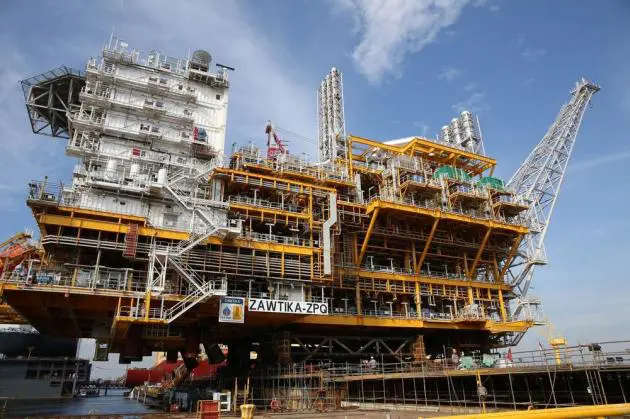
In the fourth quarter, PTTEP's sale revenue fell 8 per cent on a quarter-on-quarter basis to $1.8 billion, and its EBITDA fell 14 per cent to $1.2 billion. The weaker results were largely because of lower realized petroleum sales prices, which tumbled to $74.9 per boe in the quarter, from $100.2 per barrel or equivalent in the preceding quarter. The performance was weak despite higher sale volume, as the Zawtika field in Myanmar began exporting natural gas in August 2014.
Moody's expects PTTEP's 2015 production volumes to further increase from levels seen in 2014, given that the company will benefit from a full year of production from the Zawtika field.
The company now holds $3.9 billion in cash balance at the end of 2014, against $749 million of debt maturing within the next 12 months.
