
Top rice exporter aims to hold market share amid slowdown
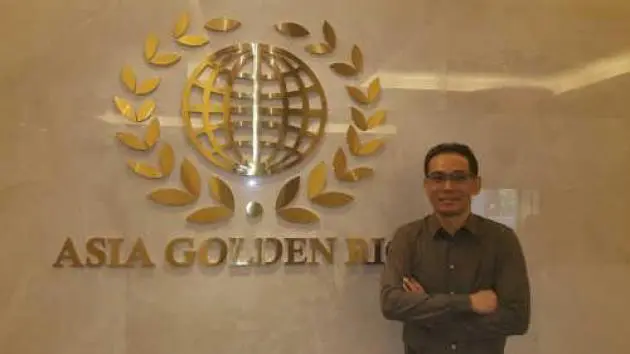


ALTHOUGH Asia Golden Rice sees the rice industry slowing down this year, the country's leading rice exporter aims to maintain market share.
It has already expanded to Cambodia and is moving into related industries such as rice bran oil, rice flour and rice-fired power plants.
President Sombat Chalermwutinan said last week that the company aims to maintain its revenue at about Bt25 billion this year, despite expected lower rice export volume.
“As rice export volume is projected to be lower than 2014 at over 10 million tonnes for the whole country, our export volume will also decrease slightly following the market trend.
“The market share for the firm should stay at 16-17 per cent of the country’s total rice export volume by shipping out about 1.4 million to 1.5 million tonnes of rice this year,” he said.
Factors that will cause lower exports are the economic slowdown in Africa following lower oil prices and the weakening of the euro, which is a major currency for trading in many African countries.
Africa is a key market for AGR, accounting for about half of its export volume, while other key markets are Asia, Europe and the US.
Last year, Asia Golden Rice achieved its historical high export volume of 2.05 million tonnes, making it the biggest rice exporter in the country.
The company does not want to compete with other rice exporters, but wants to ensure its business growth. Since the firm has to be responsible for fixed costs and |several hundred employees, it will continue to trade rice in huge volumes, although it has to face some losses from some contracts due to falling rice prices in the world market.
Asia Golden Rice also expects to realise its first income from its rice trading business in Cambodia by the second half of this year after setting up a mill and parboiled rice plant there about three years ago.
The company in Cambodia is named Crystal Rice.
It is a joint venture with Cambodian partners.
Initially, the firm expects to export about 20,000 tonnes of rice from Cambodia to Europe and China each month.
It decided to set up a plant in Cambodia because the country has a supply of rice as well as export privileges to the European Union. Cambodia also has government-to-government deals to supply rice to China.
The rice mill in Cambodia has a capacity of 1,000 tonnes a day, which can be increased, while the capacity of its Thai plant is about 6,000-8,000 tonnes a day.
The firm has also developed a logistics system in Cambodia to support its export growth from Cambodia in the long run. Cambodia has the potential to become one of the key rice exporting countries.
Cambodia produces about 5 million-8 million tonnes of rice each year, while Thailand produces 20 million-22 million tonnes of milled rice each year.
Besides the mill and plant on about 1,000 rai of land in Kampot, the firm will also join hands with a Holland company to establish a rice flour plant in Cambodia.
Asia Golden Rice is also interested in exploring Myanmar, as it sees the country’s great potential to become one of the world’s leading rice suppliers in three to five years. The firm is studying the laws and regulations in Myanmar.
In Thailand, the firm recently formed a joint venture with Singha Corporation to set up a rice bran oil refinery after joining with Singha in selling rice in the local market under the “Pun Dee” brand.
The company expects that its 120-megawatt power plant can start selling electricity by the middle of next year.
The power plant, which burns rice husks, is also a joint venture with Singha, which has spent years studying the technology.
