
Austrian firm eyes new opportunities here


Play
AUSTRIA-BASED Doppelmayr Cable Car is seeking new business opportunities in Thailand for its automated people movers (APMs) and cable cars, as the country expands its investment in the transportation sector and the tourism industry grows.
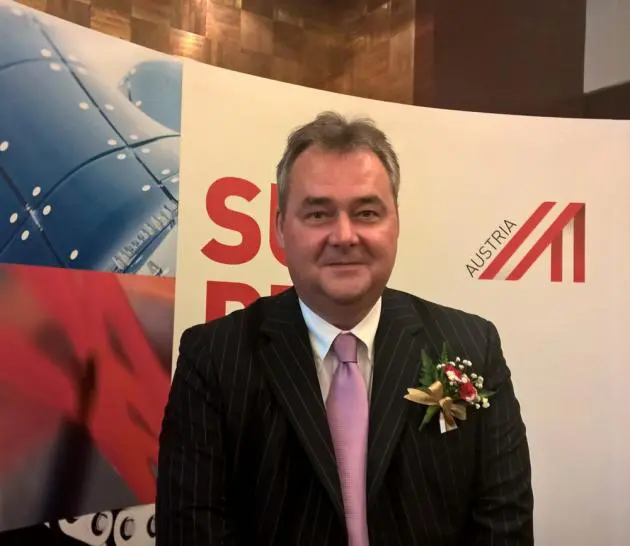
“We are currently [actively] following five projects in Thailand, one of them being an APM project at Suvarnabhumi Airport and the other four cable-car projects at sites in Bangkok and the provinces,” chief executive officer Markus Schrentewein said yesterday.
For APMs, the group is targeting Thailand as its first market in Southeast Asia, and hopes to win a concession for APM lines and maintenance works at Suvarnabhumi Airport, which is owned and operated by Airports of Thailand (AOT).
The group began talks with AOT about this urban transportation system for the country’s main airport before the military coup last year, but progress on the plan was halted due to the change of government, he said.
However, Doppelmayr Cable Car recently met with the transport minister and plans to return for further discussions with AOT in the coming weeks to follow up on the proposed project, he added.
Schrentewein said the company’s cable-propelled APM system would enable the authorities to reduce the immediate investment cost by up to Bt1 billion.
The initial plan announced by AOT entailed an investment cost of Bt2.89 billion.
He said the lower cost was down to a number of key strengths in Doppelmayr’s APM cable-based system.
It requires no form of on-board engine, the lines and train are lightweight, maintenance costs are relatively low, it uses less energy, and it entails reduced operating costs compared with other systems, he explained.
At least two direct competitors offering a cable-propelled system and at least three operators offering a self-propelled system are expected to be in the race for the AOT concession.
“We are ready to bid for the APM project in Thailand at the lowest possible investment cost,” he said.
Suvarnabhumi Airport’s second-phase expansion plan is set to increase passenger capacity from 45 million to 60 million travellers per year.
Aside from the Bangkok project, the group is interested in bidding for similar investment projects at Chiang Mai Airport, Khon Kaen Airport and Phuket Airport, where such facilities are needed to serve the growing number of tourists.
