
High quality at a decent price is Capital Rice's formula


Play
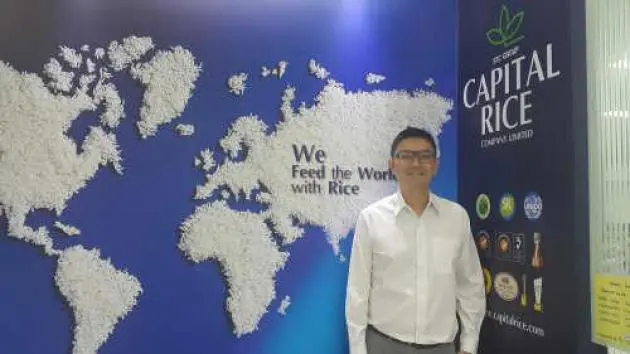
CAPITAL RICE aims to be not only one of Thailand's leading rice exporters, but also a top trader in Asean, by ensuring high quality at competitive prices, creating close relationships with its clients, and applying sustainable production strategies.
Although the company does not foresee much growth in export revenue this year, because of the low rice prices in the world market, it is optimistic that its business will continue to grow.
“The firm expects to maintain its share of 15-18 per cent of the country’s export market in volume, while it will focus more on the domestic market, particularly on organic rice and other goods,” said Wanlop Pichpongsa, deputy managing director of Capital Rice Co.
Last year, Capital Rice was the Kingdom’s second-largest rice exporter, at 1.8 million tonnes. The company’s total turnover under the STC Group was around Bt38 billion, about 70 per cent of its revenue coming from the rice industry. Though rice export is its key business, the company is also active in tapioca export, snacks, wood chips, logistics and hotels.
The company established a rice mill in Cambodia last year as a second export base. However, Wanlop said Thailand would remain the centre for the group. It will not expand aggressively into other countries, as it sees Thailand as a good strategic location for a global rice-trading centre.
The company has explored prospects of investing in Myanmar, but it needs more time to familiarise itself with that country’s laws and regulations.
Under the plan to maintain its share of the export market and take a stronger role in domestic rice trading, Wanlop said the company would focus on quality production, while ensuring price competitiveness.
He said rice was a sensitive product as it involved many farmers and consumers.
He believes that in normal circumstances, there should not be too much intervention in the rice industry, and the market mechanism should be allowed to do its work. Excessive intervention will only cause problems in the long term, such as in the current situation wherein the government has too much rice in its stockpiles.
Wanlop is not opposed to short-term subsidies but said they should only be applied when really needed.
He called for the government to set up a national strategic plan and long-term measures to promote sustainable growth of the rice industry. Thailand should have an independent organisation involving all stakeholders to ensure that rice cultivation is developed sustainably, farmers enjoy reliable incomes, and the trading sector is not hurt by excessive subsidies, Wanlop said.
On the issue of farmer incomes, Capital Rice has taken its own steps to achieve that goal. The company has engaged in contract farming with in Chiang Rai and Phayao provinces for many years, encouraging its farmers to grow organic rice.
When it started out with contract farming, its total area was about 6,000 rai (960 hectares). Now, its contract farming areas total more than 7,000 rai, and more than 218 farming households have joined the project.
Under this system, farmers are assured stable incomes, as they do not have to worry about fluctuating market prices. They also enjoy a healthier environment by growing organic rice.
Wanlop said the company would concentrate more on organic rice production as demand for organic products has increased in the world market amid rising health consciousness.
Moreover, despite expectations of less rice trading in the world market, Capital Rice will continue to form close relationships with buyers through its overseas missions.
