
Safety issue adds to THAI woes
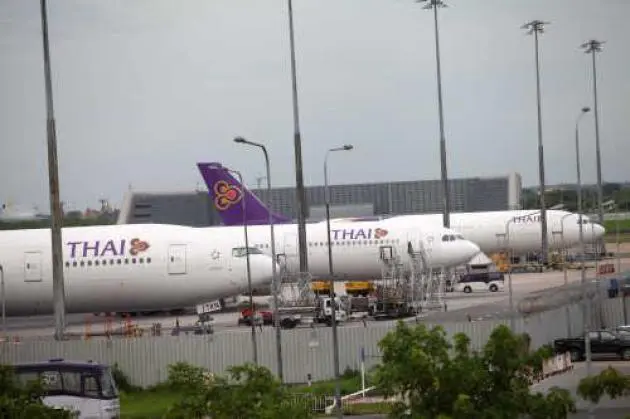


THAI AIRWAYS International is facing difficulties on a number of fronts, as it is being inspected by foreign aviation authorities over safety matters, while it halts its network expansion and grapples with increased costs.
President Charamporn Jotikasthira yesterday said THAI was being investigated by foreign aviation authorities regarding safety matters after the decision by the International Civil Aviation Organisation (ICAO) last month to flag that airlines registered in Thailand had fallen below its safety standards.
A number of other Thai airlines are also facing such an intimidating environment, he said.
The ICAO’s safety declaration caused Japan and South Korea to withdraw permission for five airlines from Thailand to operate to their countries, although Japan quickly agreed a grace period.
Meanwhile, China, Singapore, Germany and Australia are also concerned, and are watching the situation.
“Since March, aviation authorities in many countries, particularly Japan and Korea, have been increasing safety checks of THAI’s aircraft and operations to four times the rate before the ICAO flagging the safety concern,” Charamporn said.
As a result, the national flag carrier is unable to open new routes or operate charter flights to South Korea and China, as planned.
Although the Japan Civil Aviation Bureau is allowing THAI to fly into that country, it seems to have some difficulties over long-term plans, he added.
Affected airlines also face additional costs as a result of the stepped-up safety checks, although there have been no reports of flight delays due to the inspections.
Besides the national carrier, Thai-registered NokScoot, Asia Atlantic, Thai AirAsia X and Jet Asia also face more safety inspections.
Charamporn said THAI’s board yesterday approved the sale of another eight aircraft as part of its organisational restructuring and business-revival master plans.
The company will soon place five Airbus A300-622s and three A330-321s on the market, adding to the earlier announcement of plans to sell 22 aircraft – 18 of them by the end of July.
THAI management also acknowledged a new early-retirement cost-reduction scheme for its employees.
The airline is inviting staff to take up an early-retirement package with the incentive of up to 30 months’ pay, based on their current salaries. It has budgeted Bt5.5 billion for the package.
During the previous quarter, THAI began to cut some unprofitable routes, such as Johannesburg in January, while more routes in Europe and Asia will be cut this year.
