
Premium-grade rice is a tough sell


Thailand is struggling not only to sell its stockpiled rice, but also premium-grade rice to Japan and other countries.
"Japan is considered as a key market for high value-added rice exports, which mostly is Hom Mali [jasmine] rice for consumption and industrial use," Commerce Minister Chatchai Sarikulya said yesterday.
"The government will try not only to promote this rice but also other premium and high value-added rice or fancy rice such as riceberry and sungyod, which have high nutrition, to serve Japan’s rising ageing population and new generations," he said.
The Thai government will encourage farmers to focus more on producing high-quality grains and adding value to rice.
The government will promote greater consumption of Thai rice in Japan, as the market there has high purchasing power and appreciation for healthy and quality goods.
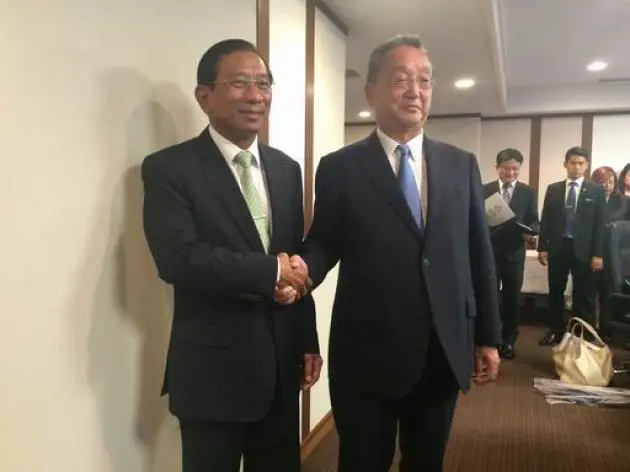
Chatchai took a delegation including executives of the Board of Trade of Thailand and the Federation of Thai Industries to Japan this week. He met with Japan’s leading rice importers to encourage them to buy more from Thailand.
Thailand will also ask Japan to raise its import quota for Thai rice and reduce duties on rice exported over the quota to Japan, he said.
Under its commitments to the World Trade Organisation, Japan has set an import quota of about 780,000 tonnes of rice per year. Thailand’s share is 290,174 tonnes, of which 281,068 tonnes are for long indica and 9,106 tonnes for short grain rice.
The US is Japan’s largest rice supplier following Thailand. Japan will normally import rice to produce sake (awamori alcoholic beverage), crackers and snacks. For table use or direct consumption, Thailand can export 5,596 tonnes of rice under the quota. Rice exported to Japan beyond the quota is subject to a stiff duty of 341 yen per kilogram.
If Japan imports more rice from Thailand, the Kingdom will be able to ensure stable prices for rice. That will also help Thai farmers to get a better income and persuade them to turn to growing premium or high value-added rice.
Chatchai has instructed the International Trade Promotion Department to draw up a marketing plan to build awareness of Thai fancy or other kinds of rice among Japanese consumers. Hirayama Makoto, president of Kitoku Shinryo, a leading rice importer, said Japan has a high opinion of Thai rice but knows only jasmine rice, which is mostly brought in for Thai restaurants and local consumers.
The Thai government should promote Thai rice through a variety of channels such as the modern trade or television media.
Kitoku Shinryo orders about 50,000 tonnes of Thai rice each year under the quota. If Thailand had a bigger quota, his firm would ship in more Thai rice.
Thailand is world famous as a major rice producing country. He has confidence in the quality of rice exports.
Japanese consumers don’t mind the price as long as the quality is good, he added.
Besides rice, Thailand also tried to promote more exports to Japan amid the economic recovery, particularly agricultural products.
The ministry projects Thai exports to Japan will grow steadily to at least US$21.82 billion (Bt736.3 billion) – the same as last year.
Chatchai also urged Japanese manufacturers of rubber tyres and rubber products to use more rubber from Thailand and also to invest in manufacturing rubber for export to third countries.
He met with the Rubber Trade Association and leading rubber tyre and rubber goods producers such as Bridgestone, Marubeni and Yokohama.
Thailand has also encouraged the Japan Import Poultry Association and chicken importers to order more processed and frozen chicken. Thailand maintains high sanitary standards in production and should be able to export more chicken to Japan.
Trade between Thailand and Japan reached $57.53 billion last year. The main exports to Japan were automobiles and parts, processed chicken, machinery, computers, televisions, plastics, processed and canned seafood, and electric appliances and parts.
