
Teddy House in JV talks for cafe, theme park
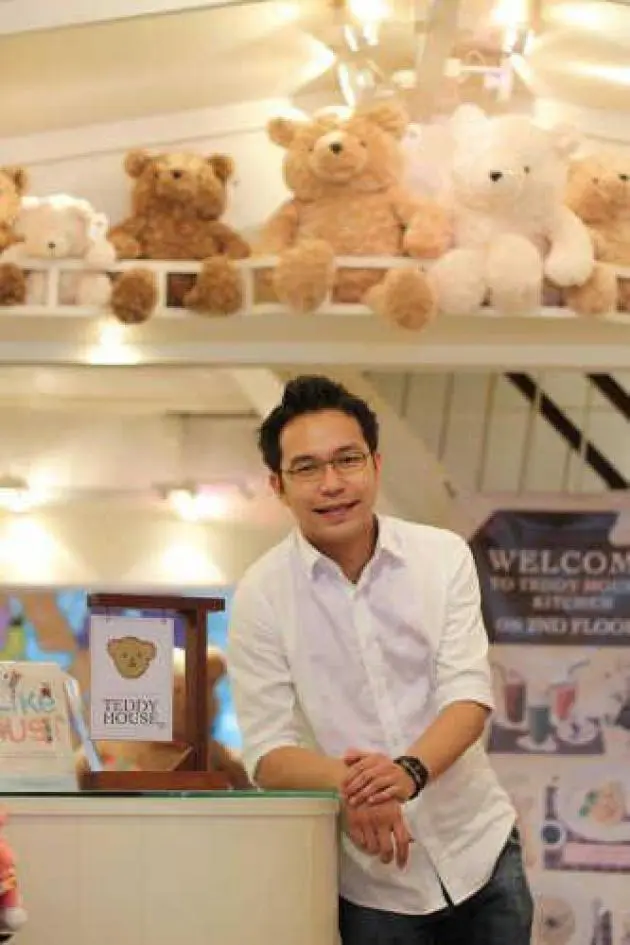


TEDDY HOUSE Co is negotiating with strategic partners to open a "Teddy Cafe" this year and "Teddy House Theme Park" within three years, as it aims for revenue growth averaging 10 per cent a year.
Last year, the company recorded revenue of Bt200 million, half from the domestic market and the rest from export markets in Indonesia and China.
“We do not have enough funds to expand our business by ourselves, but our Teddy House brand is strong in Asia, so we believe we can join with our partners to expand from distributing Teddy House dolls and franchising Teddy House products into other businesses that are related to our products, such as theme parks and cafes, and selling licences for our product character to our strategic partners,” said managing director Pituphum Hirunyapich.
He said the company started this year by signing a contract with Kasikornbank to use the Teddy House character on the bank’s ATM cards. This is the first time KBank has used a local character in its ATM cards.
The company also plans to open its first Teddy Cafe this year through a strategic partner who has experience in the bakery and beverage businesses. Pituphum said that although his company lacked experience in that area, it had a strong brand.
“When we combine our strong point and our strategic partner’s experience, that will create new business for us and our partner,” he said.
He said the company also planned to set up four of “Teddy House Exhibitions”. Two will be held in China, one in Indonesia, and the last one in Thailand. They will take place from the end of this year until mid-2016, and will cost an average of Bt10 million per show. In this way, the market can be tested before opening a Teddy House Theme Park in Thailand in 2018.
Pituphum said the company’s strategy was to transform the Teddy House doll into a range of products, like other cartoon characters. “This will expand our business channels and result in sustainable growth for the long term.” He added that this had been his goal since joined his family business eight years ago.
Pituphum, 34, said his mother successfully built up the Teddy House brand 17 years ago after China started to export its products overseas, including to Thailand. China could produce dolls more cheaply than his mother’s factory in Thailand could, and she saw her manufacturing orders drop.
At that time, his mother decided to change her business strategy from producing dolls to order to making them under her own brand, Teddy House. She opened her first Teddy House shop 17 years ago, and by the time her son joined the company eight years ago, there were four branches.
By that time, Pituphum had earned a bachelor’s degree in advertising from Rangsit University and a diploma in communication arts from the Design and Arts College of New Zealand.
Eight years on, Teddy House now has 32 shops in Thailand, 18 of which are franchisees. The company also has franchisees in Indonesia, with 14 branches, and two franchisees in China.
The company plans to open 10 more branches between 2016 and 2018 in those two countries.
