
Bleak Thai outlook to run to 2018


Thailand’s economic expansion is expected to remain anaemic at 2.4 per cent on average over 2016-18, due to challenges both external and internal, according to the World Bank.
In its "Global Economic Prospects" report, the World Bank anticipates 2-per-cent growth this year, only half of what it had projected back in June.
The growth forecast for 2017 was also slashed by 1.6 percentage points to 2.4 per cent. The growth rate in 2018 is expected to come in at 2.7 per cent.
This follows 0.9 per cent in 2014 and 2.5 per cent in 2015.
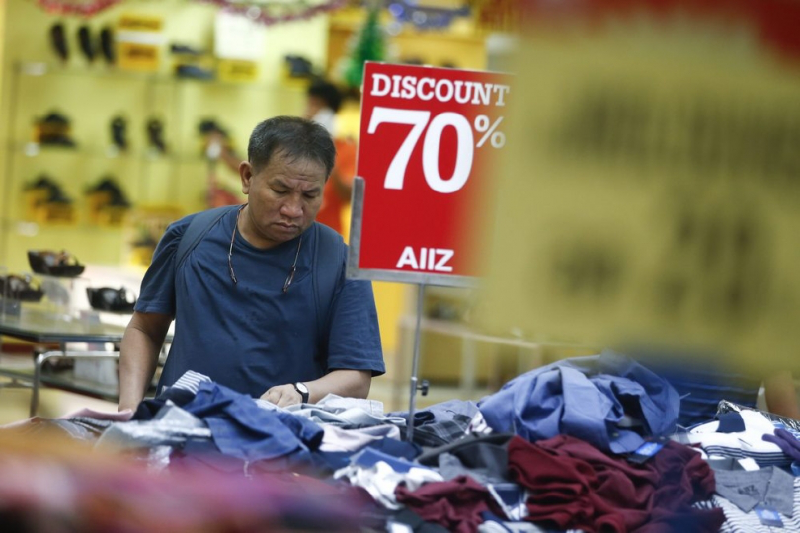
"In Thailand, fragile confidence in the aftermath of political tensions in 2014 continued to weigh on consumption growth.
"Political uncertainty continues to weigh on private investment, and high household debt constrains private consumption," the report said.
This will be exacerbated by greater volatility in the global market.
The World Bank cut the projection for global growth in 2016 and 2017 by 0.4 percentage points and 0.1 percentage points to 2.9 per cent and 3.1 per cent respectively due to weak capital flows to emerging and developing countries, weak trade and low commodity prices.
In the baseline scenario, China will steer its economy to a more consumption and services-led growth. Monetary policy tightening in the United States will proceed without undue turbulence.
China’s growth will remain below 7 per cent in the next three years – 6.7 per cent, 6.5 per cent and 6.5 per cent.
The recent tension in the Middle East, which hammered oil prices to below US$34 per barrel this |week, was not mentioned in the report.
Japan’s economy will remain fragile.
A growth slowdown in China could result in sizeable spillovers to many countries, while a slowdown in Japan would primarily affect Malaysia, Thailand and Indonesia.
Slowdowns in major advanced economies outside the region also could have sizeable spillovers. Thailand relies heavily on foreign direct investment (FDI) from Japan.
The World Bank noted that a 1-percentage-point growth slowdown in China and Japan reduces growth in Malaysia by 0.2 percentage points and Thailand by 0.5 percentage points after two years.
Slowdown in region
Throughout East Asia and the Pacific, growth is estimated to have slowed to 6.4 per cent last year, and is expected to decelerate to 6.3 on average through 2016-18, reflecting the gradual slowdown in China and sluggish recovery in the rest of the region.
Growth is expected to rise modestly in Indonesia and Malaysia, as political tensions subside in Malaysia and reforms are implemented to spur investment in Indonesia.
Thailand is among the oil importing countries that stand to benefit from low commodity prices. Last year, Thailand and the Philippines booked larger current account surpluses.
Falling food and oil prices have also coincided with persistent economic slack and played a role in lowering Thailand’s inflation below target rates.
However, uncertainty is likely to weigh on private investment, high levels of household debt may |dampen private consumption and export growth could remain subdued.
The central bank cut its interest rate target three times last year, but inflation remains well below the policy target of 2.5 per cent.
The Philippines and Vietnam are highlighted in the report as among the countries with the strongest growth prospects.
In the Philippines, growth is projected to firm to 6.4 per cent this year, reflecting accelerated implementation of public-private partnership projects and spending related to the May 2016 presidential election. From 2017-18, growth is forecast to ease to 6.2 per cent.
In Vietnam, growth is expected to expand at an average of 6.3 per cent from 2016-18. Contributing to the gains are rapid investment growth buoyed by robust confidence and FDI, consumption growth fuelled by solid labour markets and export growth as Chinese FDI projects in export industries come on stream.
Emerging economies should focus structural reforms on supporting long-term growth and mitigating the impact of ageing populations.
In Thailand, key priorities include reducing price distortions by reforming rice and rubber price-support schemes, and improving public infrastructure.
