
Banpu gears for capacity boost


BANPU aims to increase its equity-based power-generating capacity to 4,300 megawatts by the end of 2025, of which renewable energy will account for at least 20 per cent.
The company plans to spend between US$900 million and $1 billion (Bt31 billion to Bt35 billion) from this year until 2025 |to expand its power-generating business to achieve the goal, chief executive officer Somruedee Chaimongkol said yesterday.
Of that total, $110 million will be spent to boost capacity from the current 1.86 gigawatts to 2.4GW by 2018.
Currently, Banpu has total generating capacity of 1.86GW. By the end of 2025, it aims for 4.3GW, of which a minimum of 20 per cent will be renewables-based, she said.
For expansion of its upstream coal and gas businesses, the company plans to spend about $557 million between now and 2020.
Banpu is expected to launch the initial public offering of its power and renewable-energy subsidiary Banpu Power in the Stock Exchange of Thailand next quarter. The IPO plan has been approved by the Office of the Securities and Exchange Commission.
During the first two quarters of 2016, the third unit of its Hongsa Power Plant project in Laos was completed and began supplying electricity to Thailand, according to a power purchase agreement under which its equity income increased to $12.87 million in the second quarter.
Its Shanxi Lu Guang Power Project in China, with an installed capacity of 1,320MW is currently in the construction phase and targeted to start commercial operations by the end of 2017.
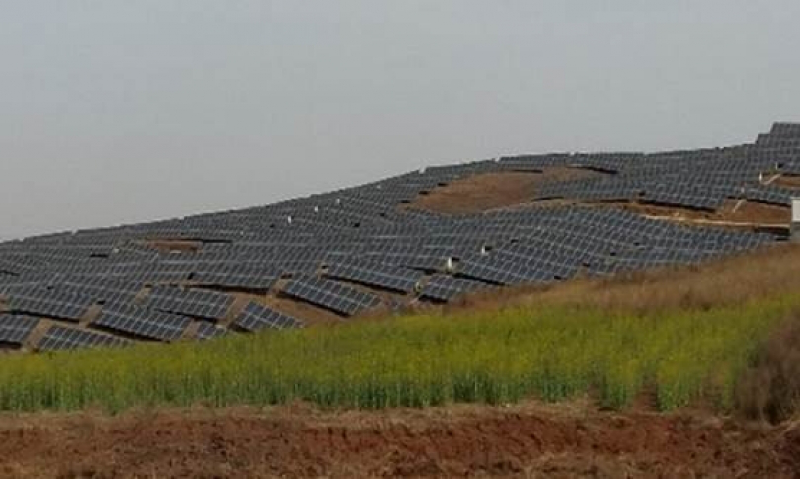
Banpu is actively moving towards the renewable power business, to continue asset growth. Banpu’s four solar projects in China’s Shandong province have an aggregate capacity of 90MW. Three of the projects – Jinshan, Huineng and Huoyuan – have started commercial operations with total generating capacity of 70MW.
The Huien project, with total generating capacity of 20MW, will have a commercial operation date this quarter.
The company has completed the acquisition of the Huineng project through its subsidiary. The remaining acquisitions are expected to be complete by the end of the year, subject to the satisfaction of certain conditions.
In addition, another eight solar projects in Japan, with total power-generating capacity of 74.4MW, will gradually start operating commercially between 2017 and 2018. At present, the Olympia and Hino projects are operating in that market, with generating capacity of 6.6MW.
Somruedee said that by 2025, Banpu planned to increase investment in the solar, hydro, wind and biomass sectors in the countries where it has already established a presence, as well as other locations to be selected according to their demand for renewable energy. They include China, Japan, Indonesia, the Philippines and the Greater Mekong Subregion.
Banpu reported that its coal sales in the first half totalled 19.57 million tonnes, down 6 per cent year on year. Banpu’s Australian mines accounted for sales of 6.45 million tonnes and Indonesian mines for 13.12 million tonnes. Coal accounted for $926 million, 91 per cent, of total sales revenue.
