
SEC not worried about impact of B/E defaults


THE SECURITIES watchdog has said it is not worried about defaults involving millions of baht worth of bills of exchange (B/E), saying the exposure is very low compared to the total bond market.
The Securities and Exchange Commission (SEC), however, has taken prompt action to mitigate nervousness in the private bond market.
The agency’s move was in response to Deputy Prime Minister Somkid Jatusripitak’s instruction to monitor the situation closely.
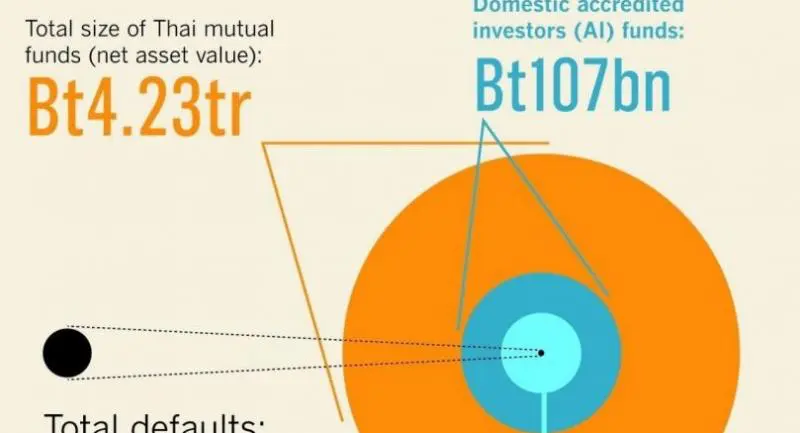
“Lately, the defaults accounted for Bt508 million [as some Bt500 million had already been honoured or rolled over], or only 0.47 per cent of the Bt107 billion total funds of accredited investors [AI],” said Rapee Sucharitakul, secretary-general of the SEC.
The past few weeks have seen defaults of more than Bt1 billion worth of B/E issued by several listed companies, raising fears that it might cause a domino effect in the financial market, as some of them have fallen in the hands of asset management firms.
Rapee said the funds under asset management firms, as of the end of last year’s third quarter, were valued at Bt4.23 trillion. Of the total, Bt107 billion were specific funds focusing on AIs and a half of the amount was invested in high-yield bonds, including B/Es that saw defaults to the tune of Bt1 billion.
The latest figures on defaults put the total amount at about Bt508 million, which was considered a small amount considering the size of the total debenture market, he said.
When compared with outstanding private bonds as of the end of the third quarter last year, the B/E defaults – as part of unrated private bonds of Bt260 billion – accounted for 0.38 per cent, added Rapee.
Moreover, he said the AI funds were not only limited to sophisticated investors, and they also conformed to the SEC’s sales conduct rule on explaining about the funds’ features and risks.
High net-worth investors – who are allowed to purchase the unrated private bonds – comprise big-ticket investors both individuals and companies, and institutional investors.
High net-worth investors are defined as those with more than Bt50 million in net assets or Bt4 million of income a year for in-dividuals, and more than Bt100 million shareholders’ equity or more than Bt20 million cash for securities investments for companies.
The SEC secretary-general said unrated debentures were also required to sell via sales conduct agents as intermediaries. Issuance by them was limited to not more than 10 investors and about 70 per cent of unrated private bonds were sold via only three selling agents with accountability.
“The unrated bonds were distributed in the limited circle of sophisticated investors,” said Rapee, adding that most of the funds focusing on unrated bonds had not been sold to retail investors.
He added that some of the B/E defaults were caused by internal problems, not the liquidity crunch. Many listed companies still recorded positive shareholders’ equities.
“The B/E defaults this time are neither from the economic situation nor a symptom of the economic slump,” insisted Rapee.
However, he said the defaults would have just short-term impact, pushing for market adjustment in that listed companies are starting to look for other sources of funding. Investors also would have realised more about risks to their investments.
He said the agency had asked for collaboration from companies that issued unrated debentures – most of them short-term debentures – to assess their financial status and monitor the market closely. The issuers should set aside other sources of funds in case they could not roll over their short-term debentures.
Sales conduct agents, Rapee said, were required by the SEC to give investors information regarding risks of the products.
