
The future of public relations in Asia Pacific


WHEN PEOPLE say “communications”, they could mean public relations, while in some places in this world public relations could mean communications. The two terms are interchangeable. They might also include marketing and advertising as well.
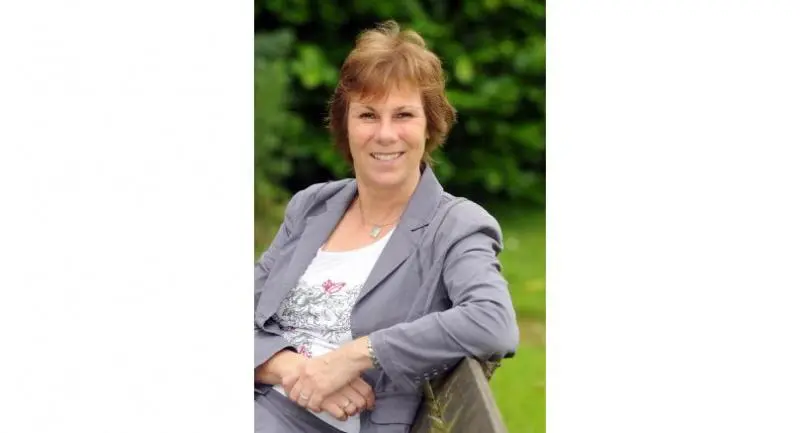
Anne Gregory, professor of corporate communications at the University of Huddersfield, England, spoke at a forum titled “The Strategic Contribution of Public Relations 4.0 to Organisations: Prospects and Problems”, where she said there were three things that are significant to us in the world of communications. Following is her speech at the event, held recently in Bangkok by the Faculty of Communication Arts, Chulalongkorn University.
“First, communication is a key to the changes in the world. We would never have known how the world turned out six months ago, with people in the United Kingdom voted to leave the European Union and one of the most interesting things to note as a communication scholar was how a few tweets from the man running for president could change the destiny of a nation. Communication has turned the world upside down.
The second thing is how organisations are forming nowadays. They used to be static and hierarchical. There were chief executives and management teams who devised strategies to impose the will of the organisation on the world. But now we see companies like Uber that are decentralised and have immediate contact with customers. It is the customers that form such organisations.
And last, going back to the first key, communication has been a catalyst to every change that surrounds us today, and without communication organisations don’t exist, and neither do societies.
Therefore, those who work in the field of communications should be considered enormously privileged, because they will be the masters of the destiny of organisations and societies in a way that has never been dreamed of before. And with that privilege comes enormous responsibility. So that is why communication in the “4.0 world” is very important.
According to the “Edelman Trust Barometer”, some of us are living in a world where institutions are suffering enormous problems of trust. Many countries have grown since last year in terms of trust. It is interesting that while many of those countries are Western nations, the top ones are India, Indonesia, China and Singapore.
There is something profound happening in organisations that are largely but not entirely based in the Western world where there is a lack of trust. Some of them have problems because in those parts of the world there are governments, the media, and non-governmental organisations causing those institutions to lose the levels of trust they once had.
The World Economic Forum has called for a new kind of leadership, responsibility and responsive leadership. If we look at some of the major issues facing the world today, for example economic quality, at the heart of these big issues the real problem is leadership, or the lack of it.
Credibility of chief executive officers is at an all-time low. CEOs are not leading. They have no credibility, which goes back to the trust issue. They are looking after their own interests and they are not focusing on important things.
And then there is political leadership. One of the things that characterised the political debate in the UK over the Brexit referendum was the number of lies that were told. And everyone knew they were lies, but still they were repeated. People didn’t know whom to believe. They keep asking for more information but in some words they are having too much information. In America we now have a president who was elected not by the popular vote but by the electoral college vote, and again the question arises about alternative facts, which some times ago were used to be called lies. And we also have other political leaders in Africa or in Turkey. Therefore, we could say that there is an issue about political leaders across the world.
Furthermore, we have a problem of who is to be trusted. With this era of social medias, we are creating bubbles that make facts have no matter anymore. According to Eddlemen, every one in two people will support politicians even when they know they're not telling the truth. They listen only to people who are like them, since in social media, it is the people like you who you believe most. Although this is perfectly understandable, it is not good because we have to embrace alternative points of views. If we only listen to people who are like us, then we will never understand the views of others. So we have a responsibility as communicators and public relation professional to break out of these bubbles and to make very conscious efforts to connect with people who are entirely the opposite from us. We should try to understand why they think as they think. If people have courage and integrity and are prepared to step-up as professional communicators, and behave in a way that can actually change things, communications would change things positively. It is our role to embrace leadership for the future. A leadership with communication at its heart. It is through communications that lead us to frame the ambitions of those who work with them, who set the context for our lives. We have a huge role in our organisations to interpret to leaders of our own institutions on what is going on in the world. The world is immensely complicated and someone in the organisation has to understand these differences. We need to understand and bring back our understandings so that chief executives and other management boards would make informed decisions. In business schools you are told that finance is important, that operations are important, that logistics is important, but you are not taught that communication is everything. You are taught about resources but you are not taught about what a huge resource communication is. In short, communications, which the most important thing, has not traditionally been taught in business school. And that is why we need to learn about this, because in the 4.0 world that is the most important thing of all.
Consequently, we need a new form of organisation. It is not only about rules and regulations anymore, but also about understanding expectations of the people. Doing the right thing and being a good organisation is driven by having profound respect for all your stakeholders, not only in terms of finance, but the good you are contributing to the society as well. Many of us learn about how to write business reports in communication schools, but nowadays associated press are writing their business releases by robot. They do it within seconds, they do it efficiently. We cannot make a career by writing anymore. There is a British company called Cambridge Analytica that works for Donald Trump on the last election campaign, analysing things people posted on social medias. They are one of many examples why we need people with integrity advising companies, organisations and governments about how they should behave.”
In response to this, Professor Anne has developed a “4x4 model,” consisting of four strands and four levels of communications to organisations. The four levels, explained below, are: societies, corporates, stakeholders, and functionals.
“The thoughts behind is, when looking at business people, we see them talk about strategies in different levels. First of all they think about organisations’ role in the world, then about the corporate strategy which is about corporate decisions we make in order for us to reach our goal. From that they continue with how a department makes contributions to meet the missions, and finally, they talk about how a project or element works to moves the organisation towards its goal,” she said.
Societies level: The key questions to ask are: ‘what are the accountabilities we have?’, ‘what are our obligations?’, and ‘what do our stakeholders expect of us?’ since in the 4.0 world the powers no longer held internally but externally. Our challenge is how to maintain the legitimacy of the organisation, making sure that people are going to support and it is acceptable in today’s world. So of course we the central of building th identity of our organisations since we are the one who know what the society’s trends are. Our job is to build organisations’ characters, and make sure that it will get all the suppress by the societies by doing the right thing and behaving properly.
Corporate level: This level is where CEOs and managers evaluate organisations’ competencies. They allocate their human resources and financial resources, and then decide how the business should be to achieve most effectively. Those decisions need to be a well-informed ones. We need to bring external perspectives into the organisation. How these decisions will be received, which stakeholders are going to agree, how will we prepare for those thing, these are sorts of questions we should ask internally. We have to coach our CEO managers to responsibly answer questions, so that they are not answering with alternative facts, but with truths from a different perspective. They have to understand ‘Why’ they hear what they hear. Our most powerful narrative is our day-to-day actions and behavior narrative itself.
There are researches about the value of things in organizatons, and it is very interesting that, in 1975, public relations worth 17 per cent , but now it is at 84per cent . There are many other tangible assets, of which we can sometimes make financial returns. If we are working by communicating, by building a culture that is solid and sound, that will make a contribution as well. O2, a telecommunication business in UK looks at World Economic Forum’s top ten issues and problems in the world and ask themselves, what can we do to help solving some of these issues. They do that every year, and usually find a few things they could help with.
Stakeholders level: this level is about the people we are working with. They could be suppliers, the colleagues, or the customers. We have to make sure that every touch points each department are making would have the value of the organisation. It is not about writing fancy journals about the company, but the everyday organisation narrative that is of real importances.
Functional level: most of the time, we do not have permission to operate with the high level. Some of us might be brilliant at what we do that someone notice and invite us to important meetings, but the majority of times it is about making sure we do and plan the general things properly, about evaluating our works and demonstrating values at all times. Be proud in the work we do and do the best. Ask for advises and ask of evaluations. Be absolutely outstanding. An then people would listen to you.
Another aspect of the model is the four stands. The first one is about understanding the brand. As a corporate communicator you must know your brand better than everyone else, about what it stands for, about its value. And in the 4.0 world, it is quite difficult to do that. Even if you think you know who owns the organisation, but who is behind it? It is our job and our narrative as part of an organisation to understand everybody who is connected to it. The next stand is leadership. As mentioned earlier, if we take everything out, all that is left is communication. It stands from 84 per cent of the company. We need to go out and lead since communication is not only a department, but the actual organisation itself. We need to educate people how to communicate well. People would come to us only when they have a really difficult problem, we need to reach out ourselves. In the 4.0 world we could not afford to have anyone within our organisation who does not know basic communications. The other thing is organisational narrative. Everything there is about the organisation. And the last thing is about planning, managing and evaluating communications to excellency. If we think about Twitter and what is happening in this second, we have to remember that we are a strategic function, and hence need to plan effectively. We have everything we need to communicate, and everything to contribute to the organisation. We have such a huge impact to the 4.0 world.”
