
Taiwan sees Thai fit with technology drive
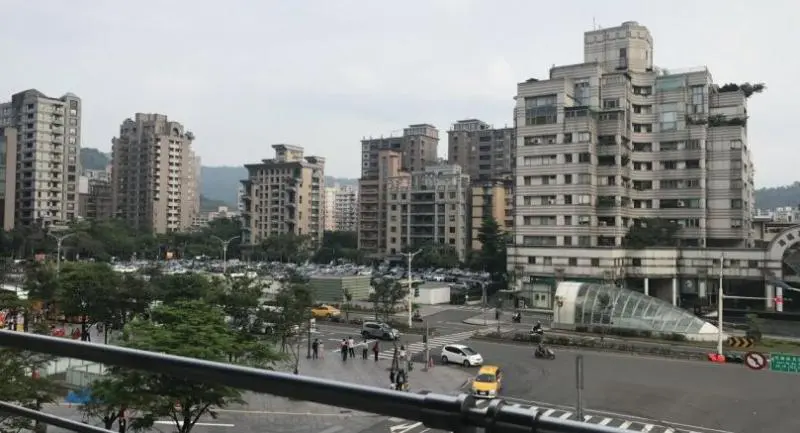


TAIWAN has been leveraging its information and computer technology to promote the biomedical industry and the island’s leader sees parallels with Thailand’s push to develop its healthcare industry along with other advanced industry fields.
While Taiwan’s initiatives are expected to deliver results soon as it lures overseas talent to support its industries, Thailand’s projects under its technology vision are still mostly on the drawing board.
“The Thai government has undergone restructuring by launching the Thailand 4.0 policy to develop high-value innovative industries, such as agriculture and biotechnology, medical care and smart electronics,” Taiwan President Tsai Ing-wen told The Nation during an interview to a group of reporters from Asean countries and India in Taipei last week.
“These industries are similar to those of Taiwan’s. So there is a lot of room for cooperation between the two countries, such as technology transfer and exchanging research and development experiences.”
Taiwan achieved notable success in developing its economy, starting out somewhat earlier than Thailand in the 1950s. Thailand’s first economic and social development plan was launched in the 1960s.
Taiwan’s gross domestic product is about US$519 billion (Bt18 trillion), compared with Thailand’s $390 billion. More important than GDP is annual income per head. Taiwan’s GDP per capita is $22,044, against Thailand’s $5,662.
Taiwan has achieved developed country status while Thailand is still struggling to escape the middle-income trap.
Taiwan with a population of 23 million is a relatively small, open economy that has relied heavily on exports.
Underscoring its manufacturing strength, Taiwan had 23 products ranking among the top three on the world market in 2015, and seven ranking No 1. These products were in the markets for semiconductor foundry, IC packaging and testing, high-end bicycles, glass-fibre cloth, green algae, functional textiles and portable navigation devices, according to the Taiwan National Development Council.
Exploiting its strong information and communication technology industry, Taiwan in recent years has been promoting its biomedical industry aimed at producing advanced medical devices and drugs and providing healthcare services.
Private companies in the Hsinchu Biomedical Science Park, near Taipei, have launched many research projects to produce medical devices and vaccines.
Medigen Vaccine Biologics Corporation has initiated research to produce vaccines for diseases such as H5N1 influenza, N7N9 influenza, dengue fever and EV71 hand-foot-and-mouth disease.
Executives of the company said their vaccines are expected to be available on the market soon.
Taiwan aims to be Asia-Pacific’s biomedical industry hub. Yet, Taiwan is facing a shortage of human capital as it has become an ageing society, conceded Cheryl Tseng, secretary-general of the National Development Council. The greying society has significantly impacted economic growth, as pension costs are spiralling upwards. The island has to take care of more and more senior citizens while the dwindling labour force is a drag on economic growth.
Against this backdrop, Taiwan has drafted a new economic policy that involves recruit talent from Southeast Asia and India where the young population is growing. After Tsai took office a year ago, she initiated the New Southbound Policy, which is aimed at strengthening cooperation with Asean and South Asian nations, as well as Australia and New Zealand.
Past southbound policies emphasised developing market and short-term business opportunities. “This time we are setting down a long-term policy agenda that places focus on wide-range cooperation,” a statement from the President’s Office said. “This mutually beneficial arrangement will put people at the heart of what the government does.”
Tsai said the government has been granting scholarships to foreign students for study in Taiwan. Enrolment of students from mainland China, Malaysia and Thailand reached, respectively, 41,981, 16,051 and 1,749 last year, out of a total of 99,760 overseas students.
The government has been working with private companies to provide more scholarships for overseas students, the island’s president said.
The government has encouraged foreign students who have completed their studies in Taiwan to work with local companies for a while before they go back to their countries, in recognition of the contribution these workers make to economic development in Taiwan.
