
Environmentally sound production chains


THE GLOBAL production value chain is in a critical stage of transitioning from dirty industries that have long polluted the Earth to clean ones that will be environmentally friendly.
More and more governments, large corporates, start-ups and consumers have join forces to create new kinds of production and consumption with the ultimate goal of saving the planet from a threat of climate change.
At the World Circular Economy Forum in Helsinki, Finland, early this month, many representatives from the public and private sectors showed what they were doing.
They were not discouraged by President Donald Trump’s announcement that the United States was pulling out of the Paris treaty on climate change.
Several US states have committed to working with the international community to tackle the global-warming threat.
Elizabeth Balkan, director of policy at the New York City Department of Sanitation, said the city had a goal to send zero waste to landfills by 2030, as waste will be fully recycled and used as raw materials to produce energy.
Funto Boroffice, founder and chief executive officer of Chanja Datti Ltd in Nigeria, said her recycling business generated jobs and reduced waste at the same time.
Ma Rong, deputy director-general of the Department of Resource Conservation and Environmental Protection at China’s National Development and Reform Commission, said her country also had committed to go ahead with clean energy projects.
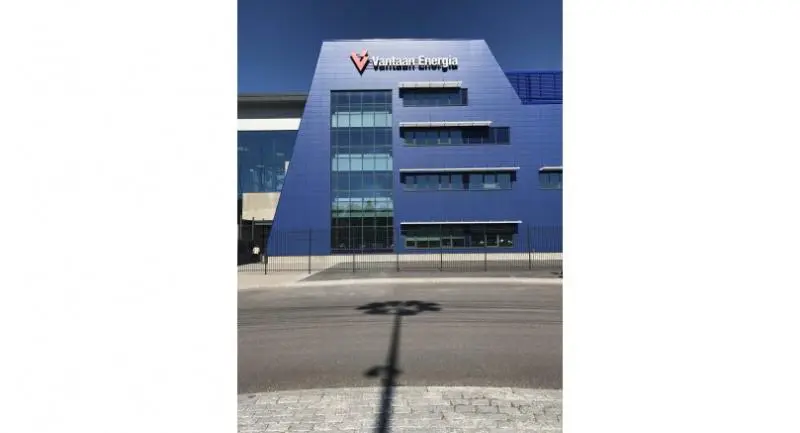
In Finland, the Vantaan Energia waste-to-energy power plant is running at full capacity supplying hot water to about 80 per cent of the city of Vantaa, population 219,000, and also generates electricity.
The plant uses household and industrial garbage as fuel for energy production. It applies many technologies from France, Italy, German and Sweden and parts made in Finland. The plant is owned by two cities, Vantaa and Helsinki.
Remeo, a Finnish waste-management company, uses robotics to separate waste automatically in order to recover materials that can recycled and then sells them to industry.
Neste, a Finnish energy corporation, has started to produce biodiesel and renewable products and supplying them to airlines and ship |operators that aim to cut carbon emissions. The Finnish Innovation Fund Sitra has identified 17 proven low-carbon solutions worldwide.
Renewable energy. There are five proven projects: solar water heating in China, grid solar power in Germany, off-grid solar power in Bangladesh, wind power in Denmark and Brazil, and bio-energy for heating in Finland.
Transport. There are two projects: vehicle-fuel efficiency in the European Union and bus rapid transit in Colombia.
Buildings and households. There are three solutions: building efficiency in Germany and Mexico, improved cook stoves in China, and appliance efficiency in Japan.
Industry. There are three proven projects: industry energy efficiency in China, industrial electric motors in the United States, and reducing fossil-fuel methane in the US.
Agriculture and forests. There are four projects: low-carbon agriculture in Brazil, cutting food waste in Denmark, reducing deforestation in Brazil, and reforestation in Costa Rica.
Sitra has calculated that should other countries adopt these 17 solutions, the world could cut global emissions by a quarter by 2030.
This is equivalent to the combined emissions of China and Japan.
Scaling up the 17 proven low-carbon solutions would reduce global emissions by 12 gigatonnes by |2030.
The research fund warned that current emission targets fall short of what is needed to limit global warming to the risk limit of 2 degrees Celsius above pre-industrial levels. The gap is 14 gigatonnes.
It is yet to been seen whether these green value chains of production will soon gain a momentum.
