
Saving tax on your assets


THE GOVERNMENT has been urging the private sector to invest more domestically through tax incentive measures it’s been issuing since last year.
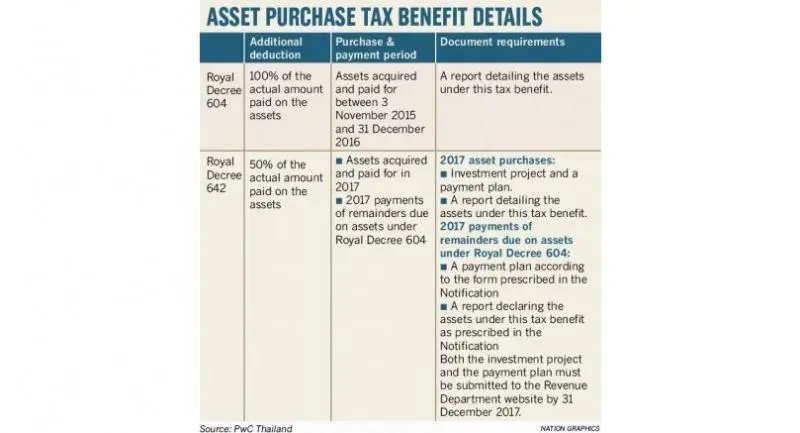
For assets acquired from November 3, 2015-December 31, 2016, Royal Decree No 604 allowed a 100-per-cent deduction for depreciation expenses over a specific period of years, depending on the type of asset.
To continue to stimulate the economy, Royal Decree No 642 was issued just last month to grant corporations an additional 50-per-cent tax deduction of depreciation in the same way as the expired decree. See table.
These conditions and benefits appear to be straightforward, but it’s not so cut and dried as it seems.
For instance, it’s unclear whether assets acquired in a foreign currency must be converted into baht using the exchange rate at the date the assets are capitalised or the date of payment.
If the capitalisation date is applied for an additional deduction amount and the amount converted from both rates are different, the amount in excess of the paid amount might be disqualified for this tax benefit.
Another grey area is the classification of leasehold improvements for different deduction periods.
Due to their nature, it’s difficult to distinguish between movable assets (furniture, fixtures and equipment) and immovable assets (permanent buildings). The decrees have different deduction periods for these assets.
It’s also still unclear whether leasehold improvements can qualify as assets under the decree because they may not fit any type of qualified asset.
Unlike Royal Decree No 604, the new decree also requires a company to submit an investment project and payment plan before this coming December to benefit from it.
Any difference between the actual tax return filed and the plan submitted may be unclear for tax practice.
For companies planning major future investment, this would be a good year to accelerate purchases, as there’s been no word from the government about granting an asset tax benefit next year. The total tax savings from this new decree is 10 per cent of the qualified investment value – total asset value times 50 per cent times 20 per cent of the tax rate. This could be considered as purchasing assets at a 10-per-cent cheaper price than the years without this tax incentive.
So you should manage your acquisition and payment plan well this year to maximise your tax benefits and be sure to comply with all of the terms and conditions to avoid the risks from issues involving practices used.
If you’re facing any of these issues, we recommend contacting your tax consultant for help.
This article was prepared by SIRISUK MANMETTAKUL, director, and SAJJAWAT JUNHOM, manager, of tax and legal services at PwC Thailand.
