
Berli Jucker ramps up Asean push


BERLI JUCKER PLC (BJC), a manufacturing and distribution company, yesterday revealed an aggressive plan to expand its retail network in the Asean region.
The push will include its hypermarkets and convenience stores, including the opening of Big C hypermarkets in Malaysia.
The retail network expansion, described by the company as downstream business, will help facilitate its upstream and mid-stream facilities, which are manufacturing, and distribution and logistics. It will provide a turnkey benefit in connecting all support functions within the supply chain, the company said.
Charoen Sirivadhanabhakdi, the group chairman, said that the company had been established in Malaysia for a long time by acquiring a local glass factory in 1966.
“We are evaluating the possibility in expanding our retail foothold in Malaysia in the near future,” he said.
Asawin Techajareonvikul, BJC president and chief executive of Big C Supercenter, said that the company was evaluating whether to expand its retail network in Malaysia or Vietnam as a priority, realising a maximum return to its shareholders.
“We plan to open Big C hypermarkets in Malaysia, which will be the first retail outlet opened by the company in the country. However, there are many competitors already existing in Malaysia,” Asawin said.
“Meanwhile, in Vietnam, we already operate 19 stores of MM Mega Market hypermarkets, as well as 173 B’s Mart convenience stores. The market, however, has a lot of potential.”
He said that there are between 200 and 300 hypermarkets operated by different players in Thailand. However, there are about 90 million people in Vietnam, but the number of hypermarkets in the country is quite small.
“Our strategy is to build ‘connectivity’ within our retail network,” said Asawin. “Our Big C stores are now covering all major provinces throughout the Kingdom. However, the transportation lead time from one store to another is currently at about three hours. We want to reduce such lead time to only one hour and that means we need to open more stores to fill the gap, especially in cities in border areas - such as Udon Thani and Ubon Ratchathani, Chanthaburi, and Trat - which will help connect with Asean consumers from neighbouring countries,” he said, adding that such expansion would not be only in Thailand but in all potential markets within Asean.
BJC operates 1,200 retail outlets in Thailand, Vietnam, and Laos, under different brands, including Big C in Thailand, MM Mega Market and B’s Mart in Vietnam, and M-Point Mart in Laos. BJC itself has more than 10 factories, including for packaging, in Asean.
“With such expansion in our retail network, we are not so much focused on the number of new stores being opened but on the return to our shareholders,” said Asawin. He added that the overseas contribution now stands at about 10 per cent following the acquisition of Big C Supercenter from Casino Group in 2016. However, with more aggressive regional expansion, the company expects a higher business contribution from overseas markets, especially Asean, in the near future.
He added that the opening of each hypermarket in Thailand, occupying retail space of about 3,000 square metres, will cost between Bt200 million and Bt300 million.
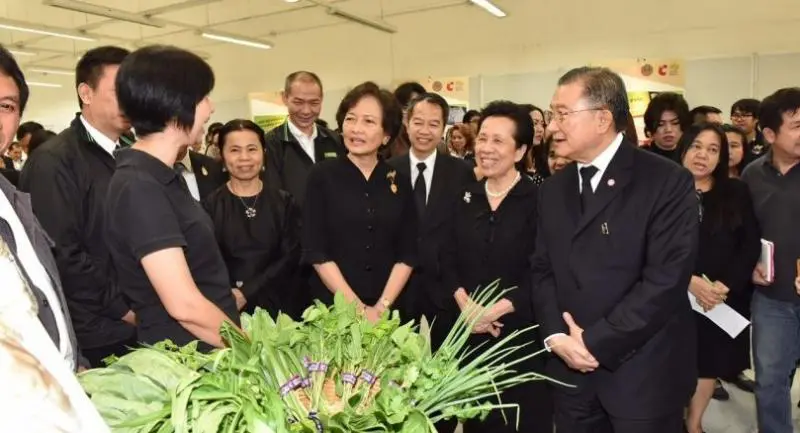
Big C Supercenter, in cooperation with the Ministry of Commerce, yesterday launched a campaign, entitled Big C Big Success, to carry out matching of local small and medium-sized enterprises (SMEs) with the company’s purchasing officers. This covers categories such as fruit and vegetables, consumer goods, home decoration, electrical appliances, and individual exporters.
Asawin said that with the group’s management know-how and efficient channels of distribution, those SMEs participating in the campaign would have a chance to expand the reach of the their products beyond Thailand, to potential markets in Asean as part of BJC’s retail network.
“The move is in line with the government’s Pracha Rath initiative aimed at encouraging mutual partnerships between community entrepreneurs, the government and private sectors,” he said.
