
Beyond the Factory Gate: EEC's Hospitality and Retail Bet on Lifestyle
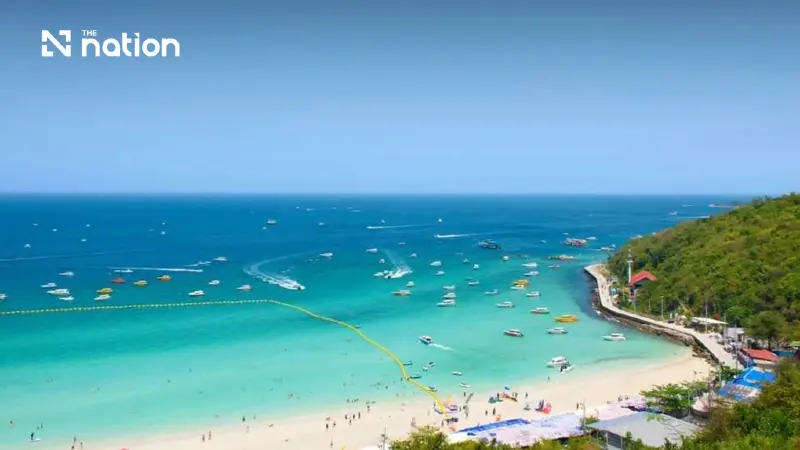


Hotel, retail and property leaders at the EEC roundtable argue its next growth engine is tourism, spending power and community life, not just factories
- Industry leaders argue that the Eastern Economic Corridor's (EEC) future growth depends on developing its tourism, retail, and community life, shifting the focus beyond its industrial base.
- Key strategies include upgrading U-Tapao airport to attract high-spending international tourists and significant private investment in a "lifestyle ecosystem" of hotels, entertainment, and wellness facilities.
- A major challenge is ensuring development benefits local communities and addresses a lag in social infrastructure, with calls to create a more liveable environment for the region's large workforce.
Hotel, retail and property leaders at the EEC roundtable argue its next growth engine is tourism, spending power and community life, not just factories.
While government officials at Monday's "EEC Never Stop: The Next Chapter" roundtable focused on industrial targets and infrastructure timelines, another strand of the discussion argued that the Eastern Economic Corridor's next phase depends as much on hotel rooms, shopping baskets, and public parks as it does on factory floors.
Industry leaders—including Thienprasit Chaiyapatranun (Thai Hotels Association), Nat Wongpanich (Thai Retailers Association), Ekanut Ungphakorn (Asset World Corporation, or AWC), and Meesak Chunharakchote (Thai Real Estate Association)—painted a picture of a region with untapped tourism and consumer potential.
However, they noted it still lacks the social infrastructure required to convert industrial wealth into a genuinely liveable environment.
Pattaya's lesson: connectivity decides who wins
Thienprasit noted that Pattaya was once more famous than Phuket, yet Phuket overtook it by securing an international airport capable of handling direct long-haul flights.
The implication for U-Tapao Airport is clear: if it can attract more direct flights from Europe, Russia, and inland China, hotel operators are ready to build luxury properties to capture higher-spending visitors.
In the meantime, the EEC's cost advantage remains a strong selling point. Living costs, food prices, and room rates are lower than in Phuket, making the corridor attractive for longer-stay travellers.

Thienprasit also highlighted an emerging synergy between industry and hospitality: young professionals and workers relocating to the region are generating demand for MICE (meetings, incentives, conferences, and exhibitions) facilities and recreational amenities.
He suggested positioning the EEC as a "Green Destination" that promotes cultural tourism and regional crafts, rather than relying solely on shopping centres.

Retail's SME dilemma
Nat questioned who truly captures the benefits of large-scale investment. He argued that major infrastructure spending must include local-content requirements from the outset, ensuring small and medium-sized enterprises (SMEs) gain a genuine share of the employment and trade generated around industrial zones.
He identified two distinct consumer segments emerging in the EEC: senior executives favouring premium goods and shift workers prioritising value and convenience.
Nat also highlighted an "online-to-offline" advantage for traditional retailers, allowing customers to view products in person before purchasing online—a trend expected to intensify as the EEC's consumer base grows.
His central proposal is for large developers and shopping centres to support local SMEs through revenue-sharing arrangements rather than long-term fixed rents. Meanwhile, the state should stimulate MICE events by offering discount vouchers for local restaurants and spas to distribute spending across the provinces.

AWC: building the "ecosystem" around industry
Ekanut outlined AWC's growing investment in the corridor's "egg white"—the areas surrounding industrial estates. The group currently operates two hotels in the EEC (totalling around 500 rooms) and plans to open several mega-projects over the next five years.
These include partnerships with global brands like JW Marriott and Moxy, alongside a large-scale DreamWorks waterpark developed with Universal, plus wellness facilities and a hospital.
He argued that investor confidence is not built on manufacturing progress alone; it relies on a broader quality-of-life ecosystem encompassing entertainment, recreation, wellness, and housing.
Ekanut noted that private players intend to continue building "destinations" with global partners, regardless of delays in state-led rail infrastructure, effectively driving the tourism ecosystem forward independently.

The dissenting note: who really benefits?
The most pointed critique came from Meesak. Reflecting on decades of development since the original Eastern Seaboard programme, he noted that while it dramatically lifted the Gross Provincial Product (GPP) in Chonburi, Sriracha, and Pattaya, a disproportionate share of that wealth has flowed to outside investors rather than local residents.
He argued that reported per-capita GDP figures of 600,000 to 800,000 baht mask the reality of much lower local household incomes.
He also highlighted the erosion of traditional community life as migrant workers settled in the area.
The social and environmental fabric outside industrial estates was never properly planned to support their recreational needs or long-term wellbeing—a pattern seen in former industrial cities across the US and Europe once their manufacturing bases moved on or automated.
Meesak called for a fundamental shift in urban planning: moving away from building places that are merely "somewhere to work day to day" towards creating cities that are "liveable and safe for a lifetime".
This requires greater state investment in green spaces, sports facilities, and recreational areas that reflect the region's original identity and tourism heritage.
A shared thread: don't wait for the train
A recurring theme was the refusal to let delayed state infrastructure dictate the pace of private investment.
Just as U-Tapao's construction has progressed without treating the high-speed rail as a precondition, Ekanut made it clear that AWC's investments will continue regardless of when—or whether—rail links materialise.
This reflects a broader confidence that direct flights, motorway connections, and organic demand can sustain momentum, even as businesses continue to lobby for clarity on the region's transport backbone.
Thienprasit's Pattaya-versus-Phuket comparison carried an implicit warning for policymakers: connectivity decisions made today will determine which parts of the EEC capture the next wave of high-value tourism.
With U-Tapao positioning itself around "manmade destinations" and premium experiences, hoteliers argued the region has a narrow window to build the necessary supporting ecosystem—restaurants, spas, and entertainment—to convert high-spending visitors into long-stay guests rather than day-trippers from Bangkok.

Catching up on the social side of the ledger
The tension Meesak raised echoes a broader critique: eight years of EEC development have concentrated on economic infrastructure, while social infrastructure for communities has lagged.
The EECO's response is the planned "EEC City" project in Bang Lamung district—a smart-city prototype featuring at least 30% green space, a sports complex, an international convention centre, and a financial hub.
This represents a shift towards a people-first model. With over a million migrant workers now living in the EEC, panellists agreed that converting this population into a durable consumer and lifestyle economy will be just as important to the corridor's next chapter as any new factory or port expansion.
