
FTI opens war room to coordinate 3-stage flood response
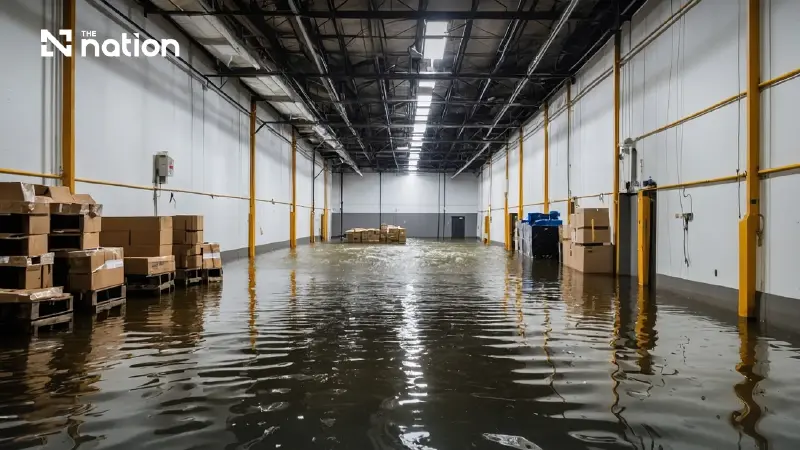


Thailand’s industry federation plans to propose soft loans, debt holidays and tax relief to help flood-hit businesses fund repairs and resume operations.
- The Federation of Thai Industries (FTI) has established a flood-response "war room" to act as a central coordination point for assessing damage and directing aid to businesses.
- A three-stage "Respond, Rescue, and Recover" plan has been created to help businesses prepare before floods, receive assistance during inundation, and restore operations afterward.
- As part of the plan, the FTI will propose financial relief measures to the government, including low-interest loans, tax relief, and flexibility on delivery penalties for affected companies.
The Federation of Thai Industries (FTI) has established a flood-response war room and a three-stage support plan to help businesses in Thailand prepare for flooding, obtain emergency assistance and restore operations as damage spreads through supply chains.
FTI chairwoman Pimjai Leeissaranukul said the response must address both immediate needs and recovery. The federation would work with provincial industry councils, industry groups and regional networks to establish what problems businesses faced, how severely they were affected and which assistance they needed most.


FTI war room brings together local damage reports
The FTI’s war room will serve as a central coordination point, linking information and meetings with provincial industry councils and networks in every region. Assessments will focus on three areas: problems on the ground, the impact on businesses and recommendations from affected areas.
The FTI will use those findings to develop assistance measures and coordinate with relevant agencies, directing support towards the problems identified by businesses.
Many businesses have suffered damage to premises, machinery, equipment, raw materials and goods, according to the FTI. Production and transport have temporarily stopped in some areas, disrupting supply chains, deliveries, orders and exports.

The impact on Thai businesses extends beyond premises directly inundated by floodwater, the FTI said. Raw-material suppliers, parts manufacturers and transport providers are also affected, alongside workers unable to reach their workplaces.
Businesses face substantial recovery costs even after floodwater recedes, the FTI said. Cleaning, removing contaminants and inspecting electrical systems and buildings require considerable time, personnel and funding before normal operations can resume.
FTI outlines preparation, emergency assistance and recovery
The FTI’s Respond, Rescue and Recover plan sets out support for businesses before flooding arrives, while premises are inundated and after water levels fall.
- Respond: Prepare before flooding. In areas not yet flooded, local FTI networks will identify suppliers of flood-protection equipment, water pumps and other essential tools, and compile information on service providers. The aim is to help businesses obtain protective equipment and prepare in advance.
- Rescue: Assist affected businesses. In flooded areas, the FTI will assess actual damage, source and coordinate pumps and drainage equipment, and mobilise its networks to deliver assistance quickly. Problems and requests from businesses will be passed to government agencies and relevant partners.
- Recover: Restore business operations. After floodwater recedes, the FTI will focus on getting buildings, electrical systems, machinery, raw materials and transport systems ready for operations to resume. Repair and maintenance specialists will advise on machinery inspections before equipment is restarted, reducing risks and preventing further damage. The FTI will also monitor supply-chain disruption and coordinate information between businesses to restore production and transport links as quickly as possible.
FTI to propose financial relief and delivery flexibility
The FTI plans to compile constraints reported by affected businesses and submit proposals to relevant agencies to reduce costs and improve liquidity during recovery.
- Finance. The FTI will propose low-interest loans and debt repayment holidays to help businesses fund their recovery.
- Taxes and fees. The FTI will request relief on taxes and fees, including land and building tax, alongside measures to ease the cost of repairing business premises.
- Logistics. The FTI will request flexibility over delivery conditions when businesses cannot meet deadlines. It will also ask relevant parties to consider waiving or reducing penalties for transport delays caused by force majeure.
Pimjai said industrial recovery meant more than reopening factories: machinery, workers, transport and supply chains needed to resume safe, connected operations. The FTI would continue monitoring the situation and coordinating with all sectors to minimise the impact on industry and Thailand’s wider economy.
