
Thailand plans farm KPIs to measure gains in income and exports
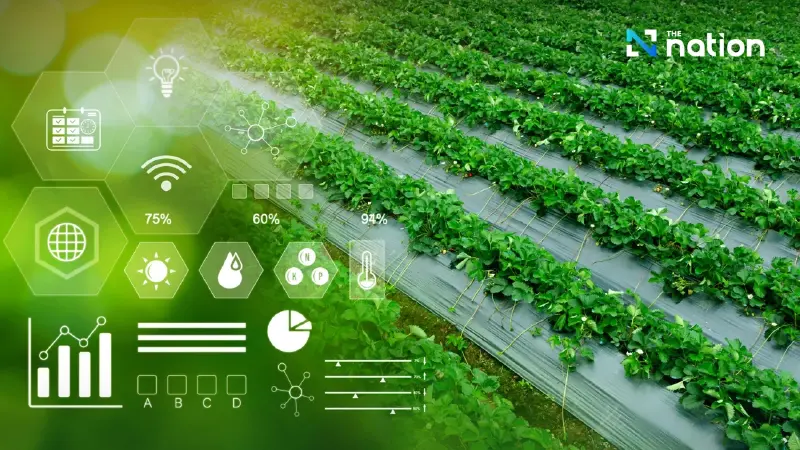


Thailand's Agriculture Ministry plans 2027–2028 performance targets measuring farmers' incomes, debt reduction and exports as part of an 11-point reform agenda.
- Thailand's Agriculture Ministry is introducing Key Performance Indicators (KPIs) for 2027-2028 to measure the success of its farming policies.
- The new metrics will track tangible results such as annual increases in farmers' net incomes, reductions in their debt, and overall productivity gains.
- A key focus will be on export performance, requiring agencies to identify new overseas markets and measure the trade value generated.
- This represents a strategic shift from simply counting the number of projects implemented to measuring their real-world impact on farmers and the agricultural sector.
Thailand's Agriculture Ministry is preparing key performance indicators (KPIs) and objectives and key results (OKRs) for 2027–2028 to track farmers' net incomes, debt reduction, agricultural productivity and export performance, shifting its focus from the number of projects implemented to measurable results.
Rapeepat Chantharasriwong, permanent secretary of the Ministry of Agriculture and Cooperatives, outlined the approach at Post Today's Thailand Agri Future 2027: The Big Reset From Agriculture to Future Industry seminar on Thursday (November 19), held at the Renaissance Bangkok Ratchaprasong Hotel.

KPIs and OKRs to track farm incomes and debt
“We will not simply count projects,” Rapeepat stressed, calling for performance indicators that show how much farmers' annual net incomes rise, whether their debt burdens fall and how their quality of life improves.
The proposed indicators would measure annual improvements in farmers' net incomes, reductions in farmers' debt, productivity gains across crops, livestock and fisheries, and increased value from processed agricultural products.
Agencies would also have to specify the agricultural products and target areas concerned, along with measures to improve productivity, reduce production costs and increase the value of processed goods.
Agricultural cooperatives would face greater scrutiny of their financial transparency, operating efficiency and management of funds to ensure they can better support farmers and agricultural businesses.
Export performance would become another measure of success, with agencies expected to identify products for new overseas markets and estimate the trade value those markets could generate.

Three major resets to transform Thai agriculture
At the same seminar, Deputy Minister of Agriculture and Cooperatives Watcharaphon Khaokham called for an urgent transformation of Thailand's agricultural sector through three priorities: Reset Technology, Reset Production and Reset Sustainability.
He highlighted mounting challenges from technological disruption, climate change, an ageing agricultural workforce, declining natural resources and outdated regulations.
Watcharaphon argued that Thailand must move beyond increasing production volumes towards greater efficiency, improved quality and higher-value agricultural goods.


Reset technology: smarter farming through data
Watcharaphon identified technology as the first priority, advocating data-driven farming supported by artificial intelligence (AI) rather than decisions based primarily on experience and historical weather patterns.
“The goal of smart agriculture is not to have farms equipped with the most technology, but to give farmers as much information as possible to make informed decisions,” he explained.
He highlighted several existing technologies, including the Land Development Department's Nong Din Dee LINE chatbot, which he described as allowing farmers to identify plots, obtain information about soil salinity and minerals, and receive crop recommendations without waiting two to three months for laboratory results.
Other examples include Light Detection and Ranging (LiDAR) technology used by the Agricultural Land Reform Office, providing surveying accuracy of approximately 3–5 centimetres.
The Royal Irrigation Department's Smart Irrigation system and the Hydro-Informatics Institute's Thai Water platform support water forecasting and management.
Meanwhile, the Office of Agricultural Economics' data systems help farmers select crops, estimate production costs and calculate potential monthly net profits against income targets. Watcharaphon illustrated this with an example of a farmer aiming to earn THB30,000 per month.
Watcharaphon emphasised that technology should complement traditional agricultural knowledge, enabling farmers to make better decisions and improve productivity.
Reset production: responding to market demand
The second priority is to replace production based on established habits with farming guided by market demand.
Watcharaphon compared agricultural supply management to water management, arguing that poor planning could result in an oversupply of agricultural products.
He advocated a shift towards high-value products, including herbs, rice, coffee, fruit and rubber, supported by improvements in quality and production efficiency.
He also called for faster advances in research and innovation to help Thailand maintain its agricultural competitiveness and contribute to global food security as other countries strengthen their capabilities.
Watcharaphon cited the rubber industry as an example, noting that Thailand remained the world's largest producer while Côte d'Ivoire had overtaken Indonesia to become the second-largest producer.
“If we continue thinking in the same way, we will achieve the same results. We must change how we think, how we work and how we create value for agricultural products, combining technology with traditional knowledge,” he stressed.
Reset sustainability: protecting farmers and resources
The third priority focuses on supporting farming communities, restoring natural resources and reforming government systems to achieve long-term sustainability.
Watcharaphon highlighted the urgent need to attract younger generations into agriculture as the existing workforce ages.
He cited mulberry cultivation and silkworm farming in parts of Nakhon Ratchasima and Sakon Nakhon provinces, where annual earnings can exceed THB1 million, but noted that these activities remain largely dependent on older farmers.
His sustainability proposals also include restoring aquatic populations and planting trees. He reported that more than 300 million aquatic animals had been released into natural waterways over the preceding four to five months.
He also called for revisions to outdated laws and administrative procedures that hinder agricultural development.

Eleven reform priorities to strengthen competitiveness
Rapeepat's broader reform agenda comprises 11 priorities, including expanding AI applications across soil, water, weather, crop production, fisheries and livestock.
The ministry has already begun establishing agricultural drone training schools with private-sector partners, while promoting clean energy and electric machinery to reduce production costs and dependence on labour.
Another priority is raising agricultural safety and quality standards. Rapeepat cited grade-AAA longan as an example of produce that continues to attract buyers, illustrating the importance of quality alongside production volume.
The existing National Agricultural Big Data Centre, operated by the Office of Agricultural Economics, would serve as a shared information platform, connecting government agencies through standardised datasets and application programming interfaces.
Improved irrigation infrastructure and AI-based water management would support farming both inside and outside irrigated areas, with water storage and distribution projects ranging from small to large-scale facilities.
Another priority is developing farmers into entrepreneurs by encouraging younger people to return to their communities and equipping them with financial, accounting and marketing skills, alongside better access to finance and opportunities for business ownership.
The ministry also aims to develop agricultural products for the longevity and health economy, including functional foods, plant-based products and food designed for older consumers.
Research priorities include gene-editing technology to develop disease-, heat- and flood-resistant crops, particularly rice and cassava, alongside greater use of biological crop protection products and biofertilisers.
Low-carbon production and stronger export systems
Rapeepat highlighted the importance of digital traceability and verifiable environmental standards in strengthening Thailand's agricultural exports.
The green agriculture strategy covers reduced fossil fuel use, agricultural waste management, low-carbon production and potential carbon-credit opportunities.
He stressed that environmental claims must be supported by measurable methods, recognised standards and verifiable evidence, particularly for products entering international markets.
Improvements to agricultural logistics, particularly refrigerated storage and transport between farms and export packing facilities, form another priority. The plans also include digital trading channels and agricultural collection and distribution centres.
The reform agenda also includes reviewing agricultural state enterprises, including the Marketing Organisation for Farmers and the Dairy Farming Promotion Organisation of Thailand, reducing bureaucratic duplication, integrating government databases, decentralising administrative authority and continuing agricultural development projects based on royal initiatives.
Watcharaphon emphasised that Thailand's position as a major agricultural producer could only be maintained through cooperation between the government, businesses and farmers.
“Thailand is among the world's leaders in agriculture, but the challenge is how to maintain that position. This requires cooperation from the public sector, private businesses and farmers, who must adapt together,” he concluded.
