
Thailand Banks Flood Study, Hospital Aid and Tax Treaty at IMF Meetings
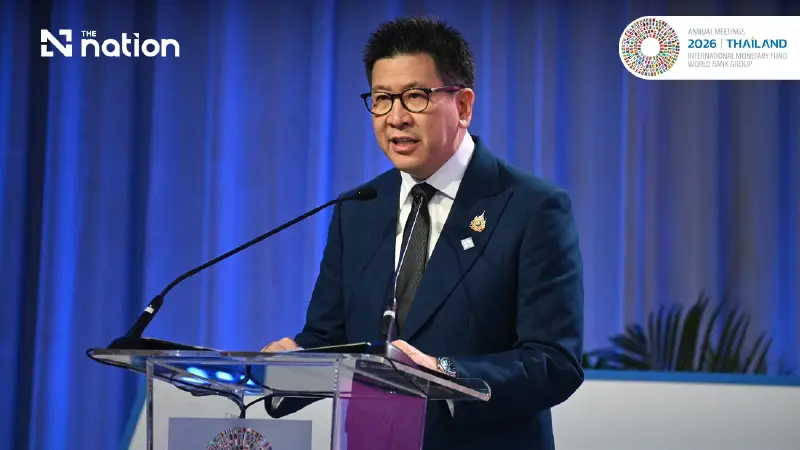


World Bank funds Chao Phraya flood study, ADB backs greener hospitals and Norway tax treaty signed as finance minister vows to turn summit into policy
- Thailand secured funding from the World Bank for a study on flood and disaster protection along the Chao Phraya and Pa Sak river basins.
- An agreement was reached with the Asian Development Bank (ADB) to support the expansion and green upgrades of hospitals.
- A double taxation agreement was signed with Norway, aimed at improving access to European markets.
- These agreements were announced by the Finance Minister as key outcomes of the IMF-World Bank Annual Meetings held in Bangkok.
World Bank funds Chao Phraya flood study, ADB backs greener hospitals and Norway tax treaty signed as finance minister vows to turn summit into policy.
Thailand has secured World Bank funding for a study into flood and disaster protection along the Chao Phraya and Pa Sak river basins, as well as Asian Development Bank (ADB) support for bigger, greener hospitals, as the IMF-World Bank Annual Meetings drew to a close in Bangkok, Deputy Prime Minister and Finance Minister Ekniti Nitithanprapas said on Saturday (October 17).
Ekniti said the flood study was a direct result of the week’s talks. The country spends heavily each year on relief after floods and other disasters, he said, and fixing the problem at the source through infrastructure would be cheaper.
World Bank President Ajay Banga told him privately that the bank had confidence in the Thai government’s plans, he added, and that Thailand was finally set to act on a long-discussed issue.
Beyond the flood work, Ekniti said the World Bank would work with Thailand and other countries on systems to manage disaster risk, which should unlock more funding.
Hospitals and tax treaty
Thailand also signed agreements with the ADB to support care for an ageing population. They cover hospital expansion and upgrades to make hospitals greener, and Public Health Minister Pattana Promphat attended the signing.
Separately, Bangkok signed a double tax agreement with Norway, which Ekniti described as a gateway to European markets. He said talks with Luxembourg, which he called Europe’s financial centre, would help connect Thailand to Europe and develop the domestic capital market.
Luxembourg welcomed closer ties, and Ekniti said Thailand was ready to become a financial hub in its own right.

Borrowing costs
Ekniti said Thailand’s fiscal discipline was one reason it had been praised at the meetings. He said the 10-year government bond yield in the US stood at just over 5%, against just over 2% in Thailand, because foreign investors trusted the Thai economy and its record of discipline.
Public debt was a major theme of the week, he said, with the IMF warning governments to keep their finances in order. Debt in many Western economies is around 100% of GDP, he noted, while Thailand’s is in the low 60s as a percentage of GDP.
Thailand should not be complacent, he said. It has no plans for additional borrowing because it has sufficient domestic and foreign sources of funds.
Revenue and spending
On the budget, Ekniti said the government would reform spending, targeting duplication and cutting high recurrent costs. On revenue, he said the government would use digital tools and artificial intelligence to widen the tax base, bringing those outside the system into it.
He pointed to an IMF Fiscal Affairs report that reached the same conclusion and said the aim was fairness for existing taxpayers.
He said the government would also look at excise taxes and at higher taxes on foreign small and medium-sized enterprises that, in his words, were entering the Thai market unfairly.
The aim, he said, was fair competition for Thai businesses.
AI, jobs and data centres
Ekniti said the World Bank’s message on employment was that countries should train workers to use AI to raise their incomes. The bank’s “Small AI, Better Jobs” theme, on which he spoke for Thailand, favours practical tools over glamorous projects.

He cited Nok Krasip, a Thai tool that records sales for small traders and helps them reach finance under the “Thais Help Thais Plus” scheme. He said Banga mentioned it at almost every forum.
He also cited India’s use of small AI to advise farmers on when to plant and how much fertiliser to use and said he had discussed an exchange of ideas with India’s finance minister.
On data centres, he said Thailand would keep promoting AI investment.
IMF Managing Director Kristalina Georgieva described Thailand as one of seven Asian countries making a leap into the AI supply chain, he said, and countries outside it risk being left behind.
Data centres would be regulated, he said, and welcomed only if they benefit Thailand, do not harm the environment and do not burden Thai people through their use of resources.
Investors and diplomacy
Ekniti said he held around 50 meetings during the week, including bilateral talks with about 20 countries and groupings.
He said Middle Eastern investors, including representatives from Bahrain and the Islamic Development Bank, wanted to move investment to Thailand. He said he would link them with Thailand’s Islamic bank to develop Islamic finance, using Thailand as an ASEAN base.
On Europe, he said Thailand wanted closer ties, partly because the EU’s Carbon Border Adjustment Mechanism is coming and Europe has expertise in energy transition and carbon markets. He proposed an ASEAN-Europe finance ministers’ meeting.
He also said Thailand would present its proposals at the ASEAN leaders’ meeting. He said he had spoken to Singapore about joint projects, ahead of Thailand’s ASEAN chairmanship in two years’ time.
Private-sector talks will continue at the World Economic Forum, in what he called a “Bangkok to Davos” follow-up.
Visitors and a Thai showcase
Ekniti said almost 20,000 delegates from 191 countries attended, a record for the annual meetings. Everyone he met said they would return, he said.
Thailand also used the event to showcase the Royal Pavilion, which presents the development philosophy of King Rama IX, carried on by King Rama X.
Tote bags and panels made from Thai fabric by more than 30 communities sold briskly to foreign visitors, he said, and several leaders told him they wanted Thai goods to take home. Thailand also presented Muay Thai along with other Thai traditional performances as a cultural showcase.
Looking ahead
Asked what ordinary people would gain, Ekniti said the benefits would build up gradually, as Georgieva said in her closing remarks, echoing King Rama IX, and would not change Thailand overnight.
He compared the meetings with the 1991 edition hosted by Thailand, which helped the economy take off but was followed by recklessness and the 1997 financial crisis.
This time, he said, Thailand has learned the lessons. He said the debt and jobs issues discussed at the meetings would now be passed to ministries and the government to turn into concrete measures.
“Thailand is back in the spotlight,” he said, summing up the week.
