
Hormuz reopening is positive but global energy crisis is not over, IMF warns
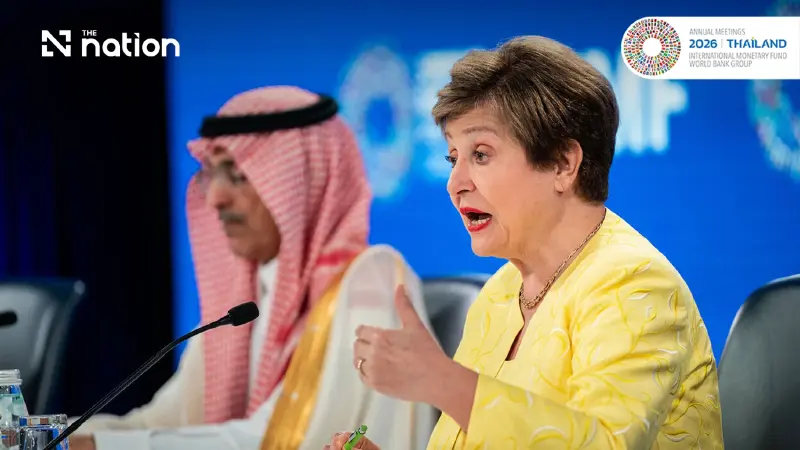


IMF chief Kristalina Georgieva warns that Middle East disruptions could keep global growth and inflation under pressure even if the Strait of Hormuz reopens.
The reopening of the Strait of Hormuz would be a positive step but would not immediately end the global energy and economic crisis, International Monetary Fund (IMF) leaders warned as the 2026 IMF-World Bank Annual Meetings drew to a close in Bangkok.
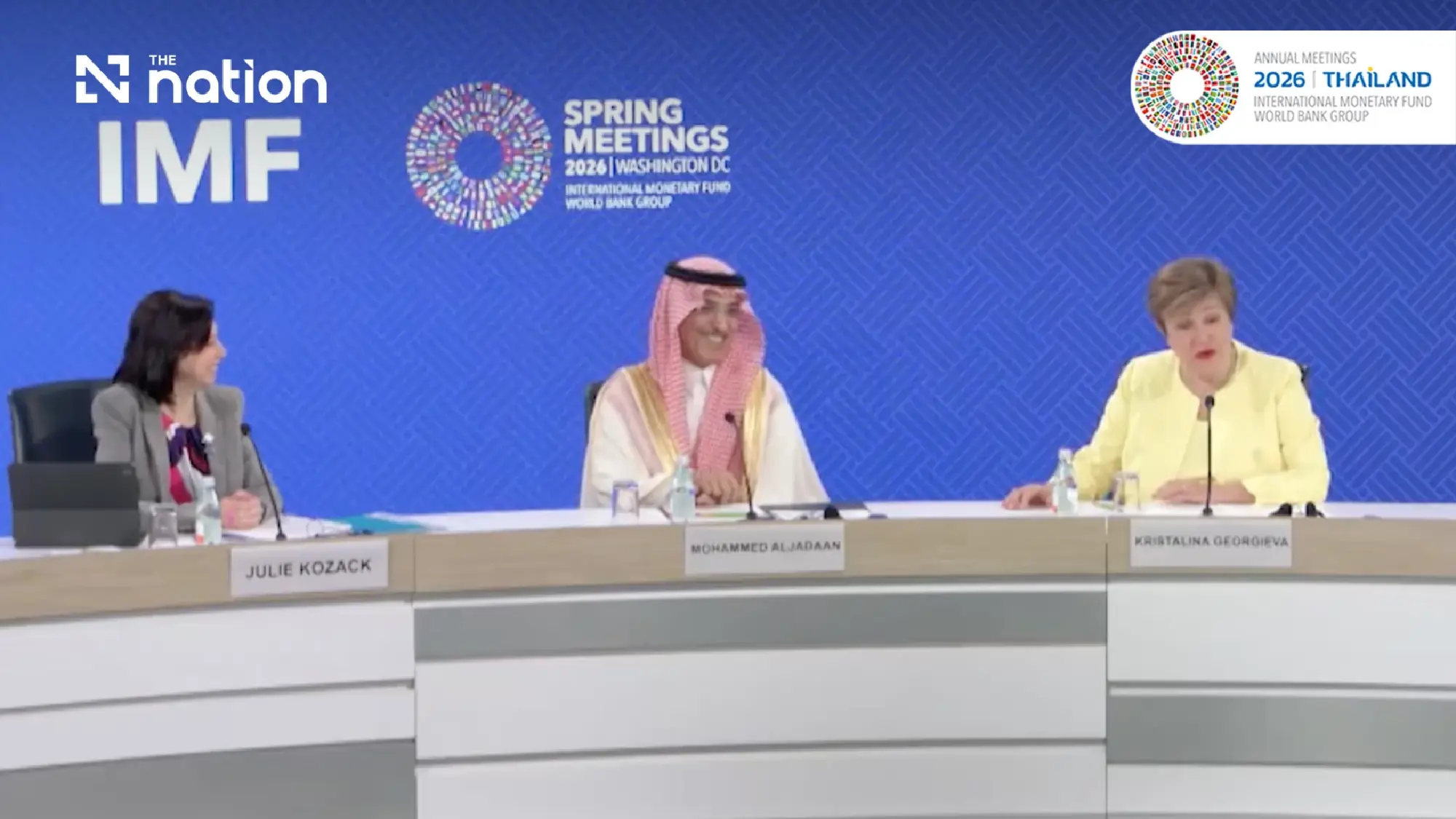
IMF Managing Director Kristalina Georgieva, speaking alongside Saudi Finance Minister and International Monetary and Financial Committee (IMFC) Chair Mohammed Al-Jadaan, said the effects of the Middle East conflict could linger even if fighting were to stop quickly because of damaged infrastructure and severe disruption to global supply chains.
The comments came after the IMFC, the IMF’s principal policy advisory body, concluded its Bangkok meeting amid concern over war-related shocks, high energy prices and rising financing pressures on vulnerable economies. The committee said risks to the global economy remained tilted to the downside.

War could leave a long economic tail
Georgieva’s first key message was that an end to hostilities would not immediately restore normal economic conditions.
Even if the Middle East conflict were to stop, damage to infrastructure and interruptions to shipping and supply chains would continue to affect economies, with poorer countries and vulnerable households facing the greatest burden.
She stressed that time was critical because every day that tankers remained unable to sail added to delays in delivering oil, gas and other essential products.
The disruption extends beyond crude oil and natural gas to products such as naphtha and fertiliser, raising the risk of a combination of slower global growth and persistent inflation.
The IMF has previously warned that each day tankers are unable to depart can add at least 40 days to the eventual delivery schedule, underscoring the lag between an improvement in security conditions and the restoration of physical supplies.
Cooperation becomes more important as policy buffers shrink
Georgieva’s second message focused on international cooperation.
The Bangkok meetings attracted exceptionally strong participation, which she said demonstrated that governments recognised the need to work together as economic shocks become more frequent and national policy options more constrained.
Many countries now face tighter budgets, higher debt and depleted fiscal buffers, leaving less room to absorb another external shock.
Member states are therefore seeking practical solutions while reaffirming the IMF’s role in supporting global financial and macroeconomic stability.
The IMFC’s concluding statement similarly called for greater support for countries facing short-term financing difficulties caused by the spillovers from wars and high energy prices.

IMF urges targeted aid, not blanket measures
The third message was directed at governments and central banks.
Georgieva cautioned against broad, untargeted measures such as export restrictions or across-the-board tax cuts, which could distort markets, prolong shortages or worsen inflation.
Instead, governments should focus assistance on households and groups most exposed to rising living costs while preserving fiscal discipline.
The IMF has repeatedly advocated targeted and fiscally prudent support for vulnerable people rather than blanket measures in response to energy shocks.
Central banks, meanwhile, face a difficult balancing act: tightening monetary policy too quickly could weaken already fragile growth, while waiting too long could allow inflation to become entrenched.
Georgieva also stressed the importance of structural reform and higher productivity, arguing that stronger underlying growth provides one of the most effective defences against future shocks.
IMF sees potential financing needs of US$20bn–US$50bn
The fourth issue concerns financial assistance for vulnerable countries.
The IMF has estimated that additional financing needs linked to the Middle East energy shock could range between US$20 billion and US$50 billion, through new programmes or increases to existing arrangements.
It has also called for sufficient resources for the Poverty Reduction and Growth Trust (PRGT), which provides concessional support to low-income countries.
The US$20 billion-US$50 billion range was first set out by Georgieva during the IMF’s 2026 Spring Meetings as the Fund assessed the likely impact of the Middle East crisis.
Which countries need IMF assistance?
During the question-and-answer session, Georgieva was asked how many countries might require additional support.
She said around a dozen countries had been discussing the need for new assistance, with many potential new programmes concentrated in Africa.
A further five to eight countries with existing IMF programmes could require additional financing, depending on how economic conditions develop.
The IMF also plans to work closely with the World Bank to determine the most appropriate form of support for vulnerable countries, combining IMF lending with other instruments, including World Bank assistance where appropriate.
Georgieva has previously said many of the countries facing the greatest pressure are in sub-Saharan Africa, where governments have limited fiscal space and are particularly exposed to higher energy and food costs.
Does reopening Hormuz mean the crisis is over?
Asked whether reopening the Strait of Hormuz would allow the global economy to return to normal, Al-Jadaan said it would be a welcome development but not sufficient by itself.
Even after Iran announced the reopening of the strategic waterway, uncertainty remained because any ceasefire would need to prove durable.
Shipping companies and insurers could remain reluctant to return immediately if they believed security risks persisted.
Al-Jadaan said the central problem was not necessarily a shortage of oil-production capacity but the ability to transport supplies safely.
Some countries could also require considerable time to repair damaged energy infrastructure.
The real test would therefore be whether tankers resumed normal operations and whether insurers returned to the market at economically viable rates.
Will IMF upgrade its global outlook?
Georgieva said the IMF was not yet changing its economic scenarios simply because financial markets had responded positively to recent developments.
Under the IMF’s more favourable scenario, global growth is projected at around 3.1%, but the outlook could deteriorate if peace proves temporary or shipping through Hormuz fails to return to normal on a sustained basis.
The IMF’s latest World Economic Outlook also projects global growth of 3.1% in 2026, while warning that Middle East disruption and renewed energy shocks remain major downside risks.
Al-Jadaan added that financial-market prices were not necessarily an accurate reflection of conditions in the physical energy market.
Even if benchmark prices fell, buyers could still face high costs to secure actual deliveries of oil and gas.
Confidence would return only when ships were moving normally and insurance was again available at reasonable prices, he said.
IMF prepares to deepen engagement with Venezuela
Another question focused on Venezuela and the IMF’s possible role in rebuilding its economy.
Georgieva said the Fund was ready to provide technical expertise after years of severe economic contraction, mass migration and triple-digit inflation.
The IMF’s priorities would include rebuilding reliable economic statistics, strengthening public institutions and, if requested, considering financial support in coordination with the World Bank and Inter-American Development Bank.
The IMF confirmed earlier this month that it was seeking to establish an office in Venezuela, although the Venezuelan government had not at that stage formally requested an IMF financing programme.
Do governments actually follow IMF advice?
Georgieva was also asked whether governments genuinely acted on the Fund’s recommendations, particularly when reforms were politically difficult.
She said many countries did take IMF advice seriously, with some shifting towards more targeted support for vulnerable groups and paying greater attention to fiscal sustainability.
However, she acknowledged that listening to recommendations and implementing them were two different things.
Governments often face difficult trade-offs when several crises occur simultaneously and debt burdens are already high.
The closing message from Bangkok was therefore one of guarded caution: positive developments such as the reopening of critical shipping routes can reduce immediate pressure, but they do not erase the economic damage already caused.
For the IMF, a durable recovery will depend on lasting peace, restored trade and energy flows, targeted support for the most vulnerable and policy reforms capable of lifting productivity and rebuilding depleted economic buffers.
