
Thai developers tap sports economy valued at 238.8bn baht in 2025
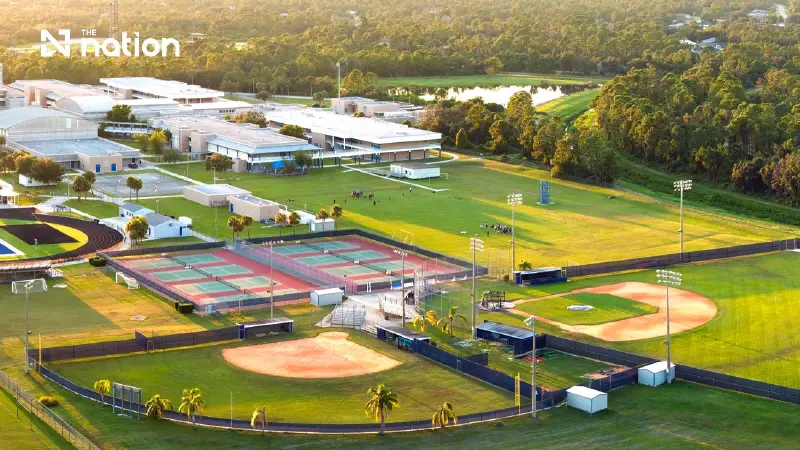


Savills identifies sports complexes as a new source of recurring income for Thai property developers, with major projects planned around Bangkok.
- Thai property developers are integrating sports complexes into their projects to capitalize on the country's sports economy, which is valued to reach 238.8 billion baht in 2025.
- Over 10 billion baht has been collectively invested in at least six major projects, ranging from exclusive membership clubs to public facilities integrated into residential and retail developments.
- These new developments, led by companies like Sansiri and Index Living Mall, are primarily located in suburban Bangkok to attract families and a broad customer base with facilities for sports like tennis, padel, and football.
- The strategy aims to generate recurring income from fees and services while increasing the value and appeal of the surrounding properties by attracting more visitors.
Thai developers are making sports complexes a core feature of property projects to generate recurring income and increase land values, drawing on a sports economy that Savills valued at 238.782 billion baht in 2025.
Savills (Thailand) identifies six or more sports complexes and property projects incorporating sports facilities with disclosed investment, which it puts collectively at more than 10 billion baht. The developments range from private membership clubs for affluent customers and families to public facilities offering court bookings and organised activities.
Developers bring sport into housing and retail
Sports facilities are increasingly being used to attract visitors to residential and retail developments, encourage longer and more frequent visits, and support spending at restaurants, cafés, shops and health services.
Sansiri is developing S QUARTER in Krungthep Kreetha with investment of approximately 100 million baht. The 3.84-hectare site will offer football, tennis, padel and pickleball facilities, activity studios and cafés, with completion scheduled for the fourth quarter of 2026.
Index Living Mall has invested approximately 80–100 million baht in Talent Sport Academy at The Walk Ratchapruek. Two sports buildings covering about 7,000 square metres accommodate tennis, pickleball and basketball, targeting families and pupils at nearby international schools.
Proud Real Estate plans to redevelop the former Big C site in Bang Yai, covering more than 4.32 hectares, into a mixed-use project with an arena, sports club and sports complex serving sports tourism and wellness customers.
K.E. Group’s Crystal Sports project beside the Ram Inthra expressway is planned as a premium tennis community with nine indoor courts.

Private clubs and public sports centres expand
Eden Country Club is among the major membership developments, with approximately 2.4 billion baht earmarked for a 3.84-hectare site on Bang Na–Trat Road. Tennis and padel courts, a racket sports centre, swimming pools and wellness facilities are planned, with full operations targeted for 2028.
Reignwood Sports and Performance Center represents investment of about 1.4 billion baht within Reignwood Park. The wider development combines the exclusive Robinswood Golf Club, housing and an international school.
Among facilities accessible to the public, The O2 Bangkok in Bang O, near an MRT station, is a four-storey sports building covering approximately 10,200 square metres. Its investment is about 200 million baht, with badminton, basketball, five-a-side football, fitness and rehabilitation facilities.
Sterling Sport & Wellness on Sukhumvit soi 24 combines tennis, padel and pickleball with exercise studios and physiotherapy. THEA Sports Club is planned for the Phran Nok–Kanchanaphisek area in western Bangkok.
A broader customer base supports demand
Figures presented by Savills show participation in physical activity rising from 87.26% in 2024 to 89.7% in 2025 and 91.7% in the first half of 2026, an increase of 4.44 percentage points over that period. The share not exercising fell to 8.3%.
Reported average sports spending per person was highest among people aged 30–39, at approximately 7,700 baht, followed by those aged 40–49 at 7,600 baht and those aged 60–69 at 7,300 baht.

Working adults, families and older people bring different requirements, from health and recreational sport to rehabilitation and wellness, giving operators scope to serve several customer groups.
Demand extends beyond gyms and organised sport to walking, running, cycling and outdoor recreation. The range of activities creates demand for fitness centres, sports grounds, pools, running tracks, green spaces and outdoor activity areas within residential developments.
Thailand’s sports economy accounted for 1.26% of gross domestic product in 2025, its highest recorded share, according to figures presented by Savills.
Data from the National Sports Development Fund and the Tourism and Sports Ministry put direct economic value at approximately 176 billion baht and indirect value at about 62 billion baht.
Sports-related economic activity extends beyond competitions to sporting goods, fitness facilities, sports grounds, food and beverages, hotels, tourism and travel to sporting activities, creating opportunities across consumption and services.
A 2026 assessment by the World Economic Forum and Oliver Wyman puts the global sports economy at approximately US$2.3 trillion annually, with a projection of US$3.7 trillion by 2030.
Suburban land supports larger sports cities
Most projects identified by Savills cluster around suburban Bangkok, particularly Bang Na–Trat and Krungthep Kreetha in the east, Ratchapruek and Phran Nok–Kanchanaphisek in the west, and Bang O on the Thon Buri side.
Suburban locations offer larger plots and development costs below those in the central business district, while remaining close to family housing and international schools. Sports complexes require substantial space for courts and multiple activities, making land availability more restrictive than for conventional commercial projects.
Larger developments are taking the form of sports cities combining sport, health, education, housing and services. Woraluk Property’s AREA 340 in Bang Sai district, Phra Nakhon Si Ayutthaya, covers approximately 192 hectares, with planned investment exceeding 5 billion baht.
AREA 340 will include sports grounds, golf, housing, educational and health facilities, and community spaces. Cooperation with Kasetsart University covers the development of sports science and sports management courses, with project completion planned for 2029.
Savills’ disclosed investment tally comprises AREA 340, Eden Country Club, Reignwood Sports and Performance Center, The O2 Bangkok, S QUARTER and Talent Sport Academy. Investment values have not been disclosed for THEA Sports Club, Crystal Sports and Arena Bangkok Club.
Savills expects further investment in 2027, particularly in suburban locations and economically important cities capable of accommodating larger developments.
For landowners, sports facilities can improve land use, attract residents, visitors and related businesses, and increase surrounding property values. Membership fees, court hire and health services can provide recurring revenue.
Savills cautions that success depends on location, local purchasing power, the customer catchment, the selection of sports and facilities, and operating partners’ capabilities. Projects require both substantial initial investment and sustained operations, making the business model as important as demand for sport.
Source: Thansettakij
