
Thailand plans CO2-based vehicle taxes to bolster EV hub status
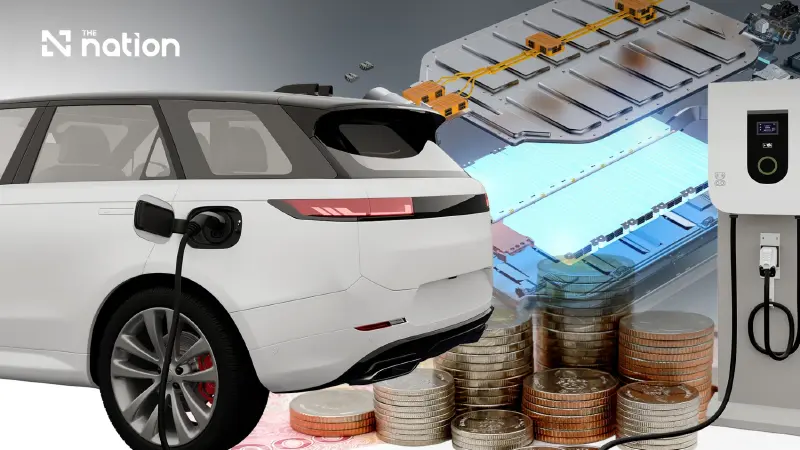


Thailand plans a CO2-based vehicle tax overhaul covering EVs, hybrids, batteries and local content as it seeks to protect jobs and expand EV exports.
- Thailand is planning to base its vehicle excise tax on CO2 emissions, rather than specific engine types like electric or petrol.
- The policy aims to encourage all manufacturers, including those of traditional combustion-engine cars, to adopt cleaner technologies and transition towards hybrid and electric models.
- This tax reform is a key part of a strategy to establish Thailand as a regional manufacturing and export hub for electric and eco-friendly vehicles.
- Incentives will be offered to manufacturers who invest in local production facilities, use domestic components, and produce vehicles for export.
The Finance Ministry is considering lower excise taxes for manufacturers that invest in production bases in the country, use domestically produced raw materials or components and have begun manufacturing for export.
The proposed incentives would be available to both established and new manufacturers of internal combustion engine (ICE), hybrid and electric vehicles.
Pornchai Thiraveja, Director-General of the Excise Department, explained that the department plans to use carbon dioxide (CO2) emissions as the main benchmark for classifying vehicles and determining tax support, rather than restricting incentives to specific types of vehicle.
The approach is intended to limit the impact on existing ICE manufacturers while encouraging the automotive industry to shift progressively towards cleaner energy and technologies.
A key feature of the vehicle excise tax structure under consideration is that incentives would not be confined to battery electric vehicles (BEVs). Manufacturers of conventional combustion-engine vehicles would also have opportunities to transition towards hybrid technologies, including hybrid electric vehicles (HEVs), plug-in hybrid electric vehicles (PHEVs) and extended-range electric vehicles (EREVs).
The department believes this approach could support the transition without placing excessive pressure on the competitiveness of Thailand’s established automotive industry or its employment levels.
“This approach will allow assembly plants and parts manufacturers in the traditional combustion-engine vehicle industry to apply their existing skills and capabilities as they gradually make the technological transition, while helping to retain the existing workforce,” Pornchai explained.
Environmental tax restructuring to include vehicle batteries
The Excise Department is also reviewing the excise tax structure for products related to environmental protection and clean energy, particularly components used in vehicle manufacturing.
The review will not be limited to automotive batteries but could also cover other products that the department determines can genuinely help address environmental problems from the start of the production process.
“The Excise Department places emphasis on clean energy. Anything that creates less pollution is considered clean energy. We will focus on CO2, and whatever results in the lowest CO2 emissions is what we should support,” Pornchai noted.
He added that the EV 3.0 and EV 3.5 incentive programmes were introduced to encourage consumers to learn about and become familiar with electric-vehicle technology, while requiring participating manufacturers to establish production facilities in Thailand rather than relying solely on imports of fully built vehicles.
The programmes have now achieved several of their main objectives. Thailand has attracted around eight to 10 major EV manufacturers to set up production bases in the country, including BYD and MG, while about 170,000 electric vehicles are currently in use domestically.
Cumulative investment in the EV and automotive-parts industries has reached THB140 billion, with total potential production capacity of up to 380,000 vehicles a year and more than 25,000 jobs created.
Three goals for Thailand’s automotive transition
Pornchai noted that electric-vehicle technology is evolving rapidly, meaning the Finance Ministry does not intend to stop at the progress achieved so far. Instead, it plans to continue developing the industry to generate longer-term benefits for the economy and businesses.
The Excise Department has been assigned three main policy priorities by Deputy Prime Minister and Finance Minister Ekniti Nitithanprapas to guide the next phase of tax reform and the development of Thailand’s EV industry:
1. Investment-Driven Import
Thailand will not focus solely on importing fully built electric vehicles for domestic sale. Instead, imports will be used as a means of attracting long-term investment.
During the initial stage, manufacturers could be allowed to import new models featuring advanced technologies for study and trial use in Thailand. The aim would be to encourage technological learning and upgrading before progressing towards domestic production.
2. Regional Export Hub
Thailand previously established itself as a major centre for the production and export of combustion-engine vehicles, earning its reputation as the “Detroit of Asia”.
The next goal is to expand production capacity and strengthen the automotive industry so that Thailand can become a regional export hub for electric vehicles and environmentally friendly vehicles.
3. High Value-Added Local Content
The Excise Department will encourage Thai supply chains and manufacturers to upgrade their capabilities and increase the use of higher-value domestically produced materials and components.
The policy will move beyond basic manufacturing activities, such as leather seat stitching or rubber components, by encouraging Thai businesses to work with foreign investors to develop key technologies for the country’s electric-vehicle systems.
“Today, this is no longer simply about whether excise tax should be reduced or increased, because that would mean looking at only one point in time,” Pornchai concluded.
“This has been part of the Finance Ministry’s plan since EV 3.0 began. We want people to look at the bigger picture and see it as a dynamic process, because our goal is to develop Thailand into an export hub, attract foreign investment and, at the same time, raise the level of domestic investment.”
Source: Bangkokbiznews
