
Thai Excise Department plans two clean-energy vehicle subsidies
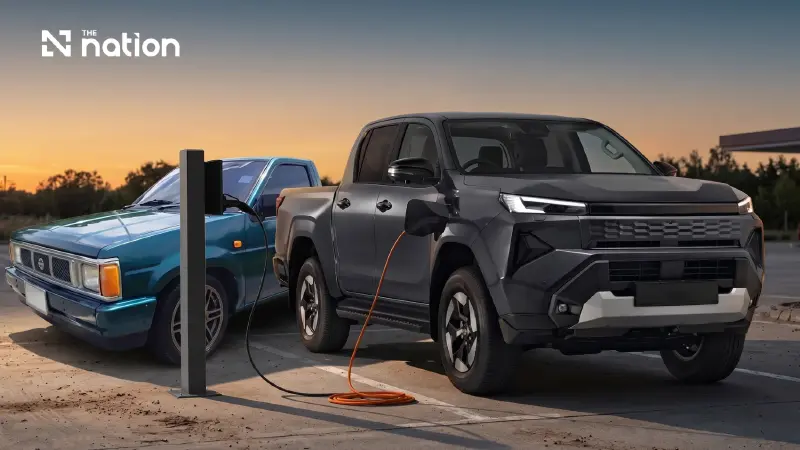


Proposed subsidies would help motorists replace old vehicles with electric or B20-compatible pickups and buy electric motorcycles manufactured in Thailand.
- The Thai Excise Department is proposing two new subsidy schemes, each with a THB 6 billion budget, to promote clean-energy vehicles.
- One scheme is a trade-in program to help owners replace old vehicles with new electric pickups or pickups compatible with B20 diesel, targeting around 150,000 vehicles.
- The second scheme will provide a direct subsidy for the purchase of new electric motorcycles, with the requirement that the motorcycles must be manufactured in Thailand.
- Both initiatives are part of a larger government effort to reduce PM2.5 pollution and carbon emissions, moving the country towards a clean energy society.
Government support for the energy transition is becoming clearer, with several projects set to go before a screening subcommittee under the emergency decree authorising the Ministry of Finance to borrow.
They fall within the latter THB200 billion tranche earmarked for the energy transition.
The measures range from a public solar programme, which opened for registration on Tuesday (October 27, 2026), to the latest drive to shift all types of road vehicles to electric power, covering cars, pickups, motorcycles, lorries and public transport such as buses, vans and taxis.
Pornchai Thiraveja, director-general of the Excise Department, said the department was preparing to submit two new schemes requiring total borrowing of about THB12 billion, or THB6 billion each.
The first, an old vehicle trade-in scheme for new pickups, aims to replace old vehicles with around 150,000 electric pickups or pickups compatible with B20 diesel.
The other would subsidise purchases of domestically manufactured electric motorcycles, initially targeting hundreds of thousands of vehicles.
Both schemes aim to accelerate reductions in fine particulate matter (PM2.5) pollution and carbon emissions, and move Thailand towards a clean energy society.
If the schemes clear the screening subcommittee, they must go to the National Electric Vehicle Policy Committee, known as the EV Board, for approval before being submitted to the Cabinet for consideration.
Meanwhile, the department is preparing systems to disburse the borrowed funds and supporting legal provisions in parallel, so the schemes can begin and benefits reach the public promptly once the Cabinet gives its approval.
“The Excise Department’s aim is to use every tool we have, both tax policy and financial support policy, to improve air quality in Thailand and people’s living conditions … We want to see a change in what is on the roads, in keeping with the decree’s name: borrowing for the energy transition.”
Old vehicle trade-in scheme for new pickups
The THB6 billion trade-in scheme would encourage owners of all types of four-wheel vehicles used on the roads for many years, including saloons, pickups and vans, to replace them with new pickups.
Participants would have to deregister their old vehicles and permanently withdraw them from use to prevent their return to the roads.
However, they could sell the scrapped vehicles to licensed vehicle recycling plants (code 105), receiving market prices for scrap metal and parts.
Eligible new vehicles would have to be electric pickups or pickups compatible with B20 diesel, regarded as clean energy.
This is in line with the Multi Pathway strategy’s mixed approach to the transition, which aims to protect the environment while preserving the production base and supply chain for pickups, one of Thailand’s flagship products.
The department’s preliminary estimate puts the state subsidy at about THB40,000 per vehicle, which is expected to support around 150,000 new pickups.
Pornchai added that participants would receive three benefits: the state subsidy, discounts from participating vehicle manufacturers, and proceeds from selling their old vehicles for scrap.
The scheme also has support from state financial institutions, including Government Savings Bank, and private finance companies.
They would help manage the flow of funds and suitable lending arrangements, making new pickups easier for the public and farmers to buy.
Electric motorcycle purchase subsidies
The THB6 billion electric motorcycle scheme would pay subsidies directly to buyers without requiring an old vehicle to be traded in.
It aims to cover hundreds of thousands of electric motorcycles.
Only models manufactured in Thailand would qualify, to encourage investment and protect the domestic electric vehicle industry.
The scheme would not prohibit buyers from reselling the motorcycles or transferring ownership, with the aim of increasing the share of electric motorcycles in actual use on the roads.
Financial institutions and finance companies would also support instalment loans to broaden public access to electric vehicles.
Finance permanent secretary outlines wider transition and B20 requirements
Lavaron Sangsnit, permanent secretary for finance, gave an update on Thailand’s policy to shift its automotive industry towards clean energy.
He said the Excise Department was preparing to submit key vehicle transition projects to the screening subcommittee, after the screening body closed project submissions on September 30.
The Ministry of Finance’s main objective is to encourage the public and businesses to replace old, polluting vehicles with clean energy vehicles in a systematic and practical way.
The trade-in scheme would initially focus on pickups and transport vehicles.
The government has stipulated that owners of pickups used for 15 years or more would be eligible to replace them with new pickups.
However, pickups and commercial transport vehicles cannot all switch immediately to electric power.
New vehicles in the scheme would therefore have to support clean energy, particularly B20 high-speed diesel, whose price the government already subsidises and supports.
The government would have manufacturers prepare B20-compatible models for the scheme.
“The new vehicles we want people to switch to must meet fuel requirements that place greater emphasis on B20. Although these vehicles cannot yet switch to electric power, they still have to meet clean energy objectives. At a minimum, they must transition to B20, in line with government policy.”
All vehicles traded in would have to be destroyed and recycled within Thailand at recycling plants meeting the required standards, with capacity for tens of thousands of vehicles annually, to prevent old vehicles from returning to the roads.
Addressing household debt concerns over new vehicle purchases, Lavaron said replacing an old vehicle was a worthwhile long-term investment because a new vehicle could be used for another 15 years and would reduce spending on repairs and maintenance for ageing vehicles.
Financing arrangements and loan guarantees from the Thai Credit Guarantee Corporation would also support businesses and members of the public seeking loans to replace their vehicles, helping them obtain suitable credit.
Alongside the Excise Department’s schemes, Lavaron mentioned other vehicle transition proposals covering lorries and public transport, including buses, taxis and vans, being submitted to the screening subcommittee.
He did not provide firm details of funding limits or subsidy conditions.
Source: Bangkokbiznews
