
Petronas Pledges Reliable LNG Supply as Southeast Asia Demand Surges
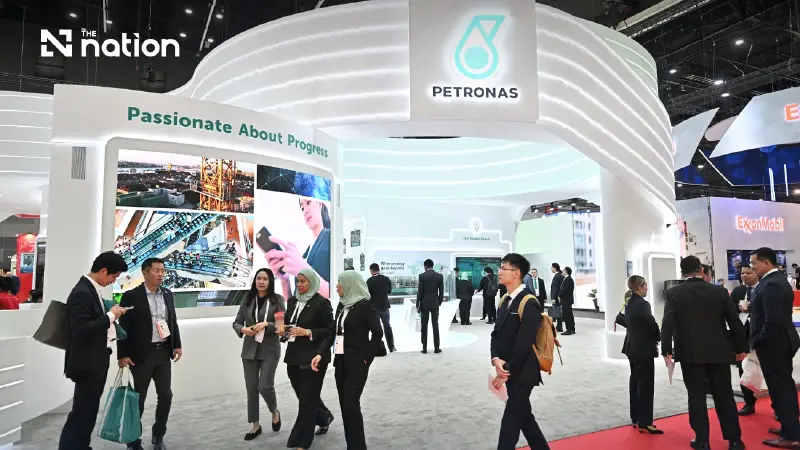


Petronas LNG chief Rosdi Ab Rahman pledges diversified supply and flexible contracts to secure Southeast Asia's growing energy needs
- Petronas is positioning itself as an anchor LNG supplier for Southeast Asia, where demand is projected to grow from 49 million tonnes per annum (MTPA) in 2028 to 80 MTPA by 2035.
- To ensure a reliable supply and shield the region from shocks, the company is diversifying its sources with production in Malaysia and Canada, plus offtake agreements in the US, Australia, Qatar, and Egypt.
- The strategy also involves accelerating upstream production, modernizing liquefaction plants, expanding its shipping fleet, and offering flexible contract terms to customers.
Petronas LNG chief Rosdi Ab Rahman pledges diversified supply and flexible contracts to secure Southeast Asia's growing energy needs.
Petronas is positioning itself as the anchor supplier of liquefied natural gas to Southeast Asia, promising diversified sourcing, decades of operational experience and flexible contract terms to shield the region from the kind of supply shocks now rippling out of the Middle East.
Speaking to reporters on the sidelines of the Gastech event in Bangkok on Wednesday (September 16th), Rosdi Ab Rahman, chief executive officer of PETRONAS LNG Ltd, said the Malaysian state energy group was accelerating upstream production, modernising its liquefaction plants and expanding its shipping fleet to keep pace with a region he expects to become a net energy importer within the next few years.
"We are one of the largest LNG producers, with more than 40 years' experience as an LNG provider," Rosdi told journalists, noting that Petronas delivered its first cargo to Japan's Tokyo Gas and Tokyo Electric Power in 1983. "Since then we have evolved. We have delivered more than 15,000 LNG cargoes around the world."
A region turning to gas amid rising demand The briefing, Rosdi's first extended media engagement since taking charge of Petronas's LNG portfolio on 1 July, comes as Southeast Asia's appetite for gas accelerates.
Citing internal projections, he said regional LNG demand is expected to climb from around 49 million tonnes per annum (MTPA) in 2028 to roughly 80 MTPA by 2035 — a compound annual growth rate of close to 10%.

Independent industry estimates broadly support that trajectory.
The International Energy Agency and several regional utilities have flagged Southeast Asia as one of the fastest-growing LNG import markets globally through the 2030s, driven by rising electricity consumption linked to industrialisation and digitalisation, alongside declining domestic gas output in countries such as Malaysia, Indonesia and Thailand.
Rosdi said Petronas's own analysis points to the region tipping into net energy importer status as early as 2032, with LNG demand potentially rising by around 30% by that point.
"Demand is increasing due to electricity requirements — this involves digitalisation and so on," he said. "We also look at declining domestic gas production that will require certain countries within Southeast Asia to start to import LNG."
He added that the shift is compounded by what he called an "energy trilemma"—the balancing act countries face between energy security, affordability and the push towards decarbonisation.
Middle East disruption sharpens the case for diversification
Rosdi's remarks were framed against the backdrop of ongoing disruption to Middle Eastern energy supply, which he said had removed roughly a fifth of global supply from the market, with around 90% of that volume normally destined for Asia.
The episode, he argued, underscores the risks of over-reliance on any single source.
"Concentration is risk," he said. "Whether you are a consumer or a producer, you must have a resilient portfolio in order to go through all these challenges."

To guard against similar shocks, Petronas has been broadening its supply base beyond its traditional Asia-Pacific stronghold.
The company's original production hub remains the Petronas LNG Complex in Bintulu, Sarawak, which houses nine liquefaction trains and has anchored its export business since 1983.
Alongside it sit two floating LNG facilities — PFLNG SATU, the world's first such facility, which came online in 2017 with capacity of 1.2 MTPA, and PFLNG DUA, added in 2021 with 1.5 MTPA of capacity.
A third floating facility is under construction and due to enter service in the second half of 2027.
Petronas has also built a second production hub on Canada's Pacific coast, where it holds equity of close to 3 MTPA in a joint venture with international partners producing around 14 million tonnes a year in total.
Rosdi noted the strategic logic of the two hubs: cargoes from Bintulu reach Southeast Asia in around three days, while Canadian volumes take roughly 15 to 17 days — both routes ultimately feeding Asian demand.
The company has layered further diversification through offtake arrangements in Australia, Qatar and Egypt, as well as roughly 4.1 million tonnes of offtake secured from US Gulf Coast projects including Sabine Pass, CP2 and Commonwealth LNG.
"These are all pointing towards the big LNG demand," Rosdi said. "We are diversifying for and on behalf of our customers."

Track record and customer relationships as a competitive edge
Beyond volume, Rosdi pointed to Petronas's contracting record as a differentiator.
The company currently has more than 34 buyers and close to 90 active contracts spanning spot, mid-term and long-term arrangements and has delivered more than 200 cargoes within Southeast Asia alone since 2017.
"We always believe that a long-term relationship is the most prudent approach," he said. "We don't want only to supply—we want to grow and expand together with our partners."
That philosophy extends to contract structuring. With spot LNG prices having spiked sharply following the Middle East disruption, Rosdi acknowledged buyers are re-examining the balance between term contracts and spot exposure.
"There is no one-size-fits-all solution," he said. "It's about sitting down with our partners to understand their risk appetite and finding a value proposition that is commercially and operationally viable for both parties."
He cited Japan as an example of the benefits of diversification, noting that only a small single-digit share of the country's LNG imports typically originates from the Middle East — a buffer that has helped cushion it from the current disruption.
On specific markets, Rosdi said Petronas was in active dialogue with counterparts in the Philippines, where ageing coal plants and declining output from the Malampaya gas field have tightened power supply, and reaffirmed the company's decades-long relationship with Thailand's PTT, including monitoring infrastructure development at Map Ta Phut.
He named Thailand, Vietnam and Cambodia, alongside Malaysia, as among the region's fastest-growing gas markets, noting that Singapore's market is comparatively mature.

Fleet, training and the path to lower-carbon
LNG Supporting the supply strategy is a shipping fleet that now includes vessels of up to 174,000 cubic metres, alongside smaller-scale delivery options such as ISO tank shipments for harder-to-reach markets.
Petronas has also assisted with 14 commissioning cargoes for new import terminals coming online across the region — a process Rosdi said demands close coordination between supplier and buyer. The company runs an annual week-long LNG training course in Kuala Lumpur for term buyers, including site visits to its Bintulu complex, which Rosdi described as part of an effort to build partnerships that go "beyond supply".
On sustainability, Rosdi outlined steps including using LNG rather than bunker fuel to power its own vessels, hydro-based electrification at its Bintulu operations, a target of zero routine flaring and venting, and a goal of reaching 5 million tonnes of initial carbon capture and storage capacity by 2031.
The group is also examining clean ammonia as a marine fuel and ammonia and hydrogen co-firing at power plants, alongside broader low-carbon initiatives run through its clean energy arm, Gentari.
Asked whether "resilience" implied a commitment to expanding production capacity, Rosdi said the answer was more nuanced than simply adding capital expenditure.
"It doesn't mean you need to put in more capex," he said. "It's about making sure we have a diverse and robust portfolio — whether through direct investment or third-party offtake — that allows us to support the region through emergencies."
He closed by calling for deeper cooperation among Southeast Asian governments on trade frameworks, regulation and infrastructure readiness, pointing to the upcoming Energy Asia conference as a further platform for regional dialogue.
"The continuous engagement between Southeast Asian countries should continue," he said. "Managing the relationship and understanding each other is also very key."
