
Thai Airways CEO Admits Fault for Baggage Crisis and Sets 72-Hour Clearance Target
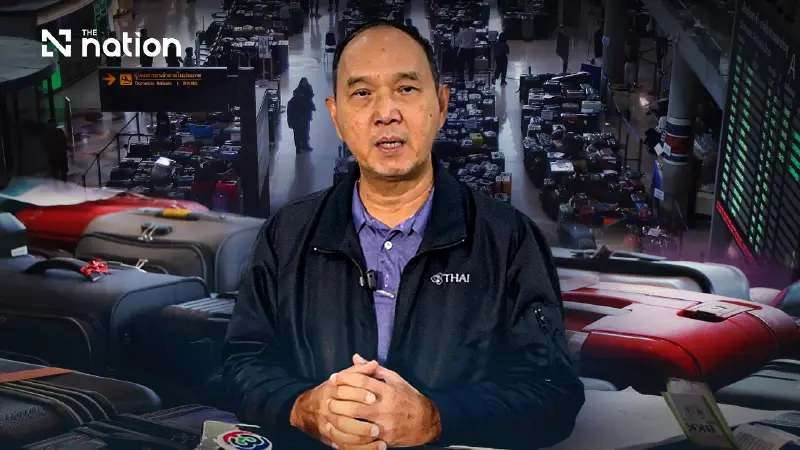


Chai Eamsiri admits failings, says flights will be cut by up to 40% and outlines a 72-hour plan to reunite stranded passengers with their luggage
- Thai Airways CEO Chai Eamsiri has publicly apologized and taken responsibility for the baggage chaos at Suvarnabhumi Airport.
- A 72-hour target has been set to clear the backlog of over 5,000 stranded bags and deliver them to affected passengers.
- To stabilize operations, the airline will temporarily cut its flight departures from Bangkok by 30% to 40% in the coming days.
- The CEO stated the core problem was a severe shortage of skilled ground staff, which was exacerbated by heavy flooding that prevented workers from reaching the airport.
Chai Eamsiri admits failings, says flights will be cut by up to 40% and outlines a 72-hour plan to reunite stranded passengers with their luggage.
Thai Airways has apologised to passengers and customers, admitted responsibility for the disruption and promised to work flat out to fix it.
Chief executive Chai Eamsiri made the pledge in his first public response to days of baggage chaos, stranded travellers, delays and cancellations at Suvarnabhumi Airport.
Speaking in a live broadcast on Tuesday (September 29), Chai began with an apology. He rejected suggestions that senior management had been complacent, saying executives had been working on site at the airport for three days.

"The problem today is on the ground, in operations, not a problem of policy," he said, adding that the airline's financial and staffing support was unlimited.
He said the airline had prepared for the situation but that its scale exceeded expectations.

Near-total delays
Chai said flights over the past two days had been delayed almost across the board, with fewer than 3% departing on time. He conceded that the airline could not sustain its current schedule.
To stabilise operations, Thai Airways will cut departures from Bangkok by roughly 30% to 40% in the coming days. It has already asked other operators to take over some of the workload and has moved some passengers onto other airlines.
He said flights would be reduced so that those still operating could run more punctually. He said Thai Airways was hit harder than rivals because Bangkok is its home hub.
Foreign carriers, he explained, largely load their bags at the point of origin, whereas everything for Thai Airways has to be handled in Bangkok.

Shortage of licensed staff
The core problem, he said, was a shortage of skilled ground workers, especially those who need special licences. He said the airline had not foreseen that outside labour would be so badly affected.
Load masters, who supervise loading beside the aircraft, are a critical gap. Chai said about 45 were needed at any one time, but only around 20 were available.
Only about half the required workforce had turned up on a typical day. Licensed executives had stepped in to supervise aircraft loading themselves, but that was still not enough.

Some employees had personal difficulties, he said, and managers were contacting them individually, in some cases visiting their homes, to help them return to work. Military-backed vehicles had gone into hard-to-reach neighbourhoods to bring workers in.
He said he had seen claims on social media but did not believe staff had acted out of ill will. Cargo compounded the problem.
Freight facilities at Suvarnabhumi were overflowing because customers could not collect goods, which in turn blocked equipment the airline needed for baggage.

Seventy-two hours to clear the backlog
Chai said he wanted all stranded luggage cleared from the terminal within at least 72 hours.
According to his figures, more than 5,000 bags were still waiting. Staff are separating the backlog from newly arriving baggage so the two do not mix.
Passengers who registered via QR code will have bags delivered to their homes by three couriers, including Thai Post, which was arranged with help from Airports of Thailand.
Others can collect bags in person from the main terminal, matching them against their tags. Baggage from flights on 26 and 27 September can be collected at Gate 1 of the arrivals hall on the second floor.
Thai Airways will publish which flights' baggage is ready through Facebook and its website. Around 100 personnel from the Royal Thai Air Force and the Ministry of Defence have been drafted in to help.
Office staff, including senior colleagues, are also helping, though Chai acknowledged that frontline employees were exhausted after three days.
Help desks for baggage and delays will be set up inside and outside the terminal this afternoon.
The crisis began on 26 September, when heavy flooding around Bangkok disrupted travel for ground staff heading to Suvarnabhumi Airport. Reports say defective baggage carts compounded the staff shortages. The airport itself did not close, and its two other ground handlers continued operating normally.
Thai Airways handles baggage for both its own services and third-party partner airlines at the airport, which is why the failure spread so widely. Baggage from 52 flights operated on 26–27 September is being delivered to passengers who have registered their details.
The airline has also faced criticism over poor communication, with reports of scant information and conflicting updates on when bags would be returned. Thai Airways announced flight cancellations on Tuesday morning, and a Thai Examiner report put the day's tally at 34 delayed and eight cancelled services.
