
Thai Airways under fire over outsourcing after baggage and cargo chaos
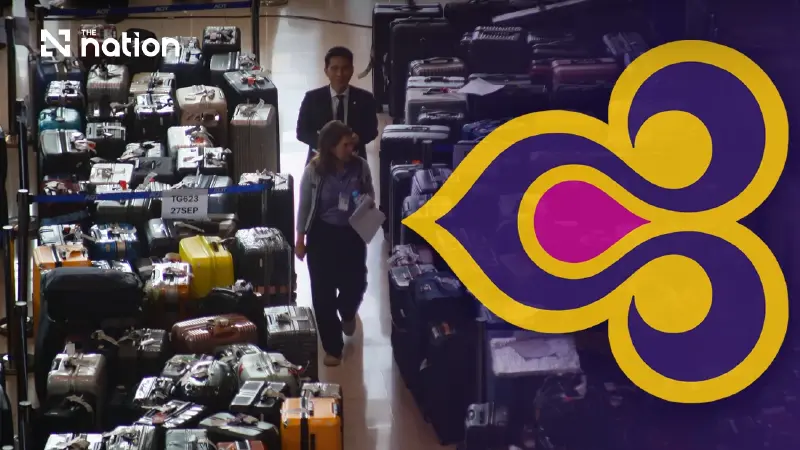


Thai Airways’ baggage crisis raises questions over outsourced labour, staffing cuts and emergency readiness, as a former employee urges reform
- Thai Airways is under scrutiny for its heavy reliance on an outsourced workforce following major baggage and cargo disruptions at Suvarnabhumi Airport.
- The crisis was reportedly worsened because the staffing contractor uses temporary workers with poor pay and benefits, who were not compelled to report to work during recent flooding.
- A former employee argues that extensive staff cuts and outsourcing have eroded the airline's reserve capacity and the organizational commitment from long-term staff needed to manage emergencies.
- The airline's focus on financial recovery through workforce reduction is being questioned for potentially compromising its operational resilience and ability to handle unexpected disruptions.
Thai Airways’ baggage crisis at Suvarnabhumi Airport has put its reliance on outsourced labour under scrutiny, as a former employee questioned whether staff cuts and restructuring had left the airline sufficiently prepared for emergencies. Nation TV reported on October 1, 2026, that employment arrangements at a staffing contractor had contributed to labour shortages. Separately, Post Today published a former employee’s assessment of the airline’s crisis planning and the relationship between financial recovery and operational resilience. The reports followed baggage and cargo disruption at Suvarnabhumi Airport in late September, when flooding prevented employees from reaching work, passengers faced lengthy waits for their belongings and Thai Airways reduced some flight services.
Staffing contractor faces questions over employment practices
Nation TV reported that Thai Airways had subcontracted ground-handling work covered by its concession at Suvarnabhumi to a company established in 2010 to provide personnel and outsourced services supporting the airline’s operations.
The report described a company owned 49% by Thai Airways International Plc and 51% by Phuket Air Catering Co Ltd, or PACCO.
According to Nation TV, Thai Airways reduced permanent staffing during rehabilitation and subsequently used outsourced workers to replace some of those positions, increasing the volume of work handled by the contractor.
Nation TV also reported that former personnel from several Thai Airways divisions served as directors of the company, raising questions about potential conflicts of interest and access to inside information.
The report alleged that the contractor increasingly hired workers on a daily or freelance basis, in some cases without employment contracts or permanent appointments. It described pay as low and benefits as absent, with employment conditions comparing unfavourably with those offered by other airlines.
Nation TV further claimed that some temporary workers declined to report for duty during the floods and that their employment arrangements left the company unable to compel attendance, worsening shortages affecting baggage and cargo handling.

Former employee questions whether flooding explains the crisis
In the separate account published by Post Today, Dr Rungradit Kongyoungyune, who described a career of more than 32 years with Thai Airways, argued that flooding might have triggered the disruption without explaining all the weaknesses behind it.
“If flooding were the whole cause, why were we able to get through worse crises in the past?” Rungradit asked.
Rungradit recalled working through the major floods at Don Mueang in 2011 without returning home for more than two months. He contrasted that experience with the thousands of bags left awaiting processing during the current disruption.
Rungradit stressed that his purpose was to examine the organisation’s systems, rather than assign personal blame to employees or executives.
Drawing on the “Swiss cheese model” used in safety management, Rungradit explained that a major failure often develops when weaknesses accumulated across several layers of an organisation align, allowing an initial incident to escalate into a crisis.
For Thai Airways, Rungradit identified three areas requiring examination: the consequences of workforce reductions and outsourcing, the allocation of staff during emergencies, and whether financial rehabilitation had been accompanied by sufficient operational preparation.
Staff cuts raise questions about reserve capacity and commitment
Rungradit acknowledged that restructuring after the airline’s 2020 crisis, including workforce reductions and changes to working arrangements, had helped lower costs and support its recovery.
However, Rungradit questioned whether reducing employee numbers had also reduced the organisation’s reserves of experience, skills and people available when normal operations were disrupted.
“When we reduced the workforce, did we also reduce the organisation’s reserve capacity?” Rungradit asked.
Rungradit referred to organisational citizenship behaviour, or OCB: employees voluntarily contributing beyond their formal duties without being compelled or required to do so by their contracts.
During the 2011 floods, Rungradit recalled, employees continued working without anyone ordering them to stay or counting the hours they worked beyond their normal responsibilities. Many acted out of a feeling that “this is our home”.
Rungradit argued that such commitment developed through long-term relationships between employees and their organisation. It could not simply be ordered into existence or purchased through daily wages.
Outsourced workers should not be blamed for having a different employment relationship, Rungradit emphasised. Their responsibilities were defined by their contracts, and an organisation should not expect every category of worker to have the same attachment as employees who had spent much of their working lives there.
“The lesson is not that outsourcing is bad,” Rungradit wrote. “The organisation must know which jobs should be outsourced and which require it to retain knowledge, experience, reserve capacity and commitment internally.”
Emergency plans need clear staffing thresholds
Rungradit argued that staffing resilience depended on how people were deployed during a crisis, as well as how many were employed.
When resources became insufficient, Rungradit proposed that Thai Airways protect its core operations first, then determine what secondary work or services for other airlines could continue with the remaining capacity. Attempting to maintain every commitment while staff availability fell sharply would create bottlenecks.
Rungradit suggested setting decision thresholds in advance: what action to take when staffing fell below 80%, which activities to reduce below 60%, and which tasks to suspend or transfer immediately below 50%.
These percentages were examples of proposed crisis triggers, rather than a description of existing Thai Airways policy.
Rungradit also called for frontline and middle managers to have sufficient authority to adjust operations promptly, without waiting for instructions to pass through multiple management layers as problems worsened.
Financial recovery must be matched by operational readiness
Recalling the rehabilitation measures developed during 2020–2021, Rungradit described plans to cut costs, reduce the fleet, restructure operations and lower staffing from about 29,000 employees to a target of no more than approximately 15,000.
Rungradit accepted the commercial reasons for those measures and their contribution to the airline’s financial survival. The question, he argued, was whether Thai Airways had also built the capacity to maintain operations during unexpected disruption.
An organisation operating with just enough staff for normal daily workloads might have low costs, Rungradit observed, but could struggle when floods, pandemics or transport interruptions prevented people from attending work.
“Do we still have reserve staff, reserve skills and the authority to make decisions when needed?” Rungradit asked.
From the perspective of a safety management system, or SMS, Rungradit argued that workforce reductions, restructuring and increased outsourcing should be assessed through a formal management-of-change process, rather than considered solely in terms of cost.
Changes to personnel also altered part of the organisation’s safety system, Rungradit maintained, making their operational consequences essential to examine.
Five proposals to strengthen crisis preparation
Rungradit proposed five measures to improve Thai Airways’ readiness:
1. Set emergency staffing thresholds. Establish in advance which activities should continue, be reduced, transferred or temporarily suspended when available staffing falls below specified levels.
2. Include people in business continuity planning. Plans should cover accommodation near the airport, transport through flooded areas, reserve teams and staff trained to work across departments, alongside backup information technology systems and premises.
3. Maintain a minimum core workforce. Functions directly affecting safety, operations and the passenger experience should have an appropriate minimum number of core employees, with staffing decisions considering more than cost alone.
4. Rebuild trust between employees and the organisation. Commitment should be supported through transparent communication, fairness, recognition of employees’ value and practical care when they face a crisis.
5. Examine the incident through the safety management system. The investigation should identify weaknesses that allowed the disruption to develop and address them before another emergency, rather than focus solely on assigning blame.
Rungradit maintained that rehabilitation had been necessary and had helped Thai Airways regain its footing. However, recovery needed to strengthen the airline’s finances, systems and people together.
The current disruption should prompt a question beyond why flooded employees could not reach work, Rungradit argued: had the organisation prepared for a foreseeable situation in which half its workforce might be unavailable?
Rungradit concluded that experienced employees who understood their responsibilities and were willing to contribute beyond their job descriptions remained particularly valuable during a crisis. Those qualities depended on time, trust and mutual care, rather than an employment contract alone.
“Rehabilitation enabled Thai Airways to survive,” Rungradit wrote. “The key question now is how to ensure Thai Airways is ready when the next crisis returns.”
