
Siam Motors Group Debuts Highgate’s First Overseas Campus in THB 95B Market
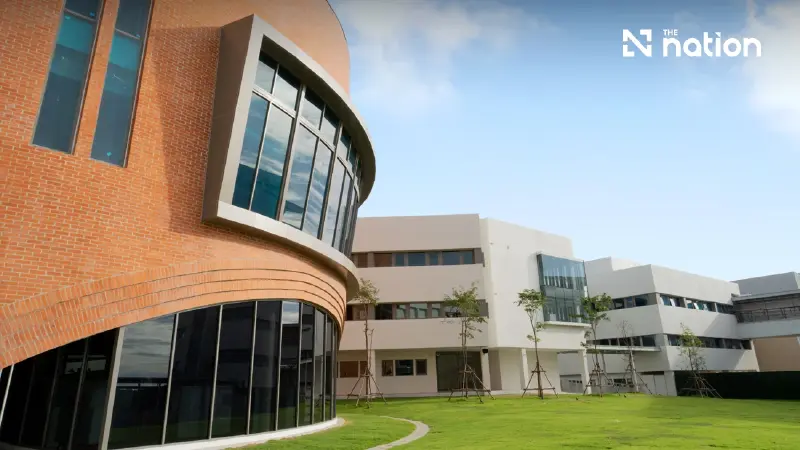


London's 460-year-old Highgate School goes overseas for the first time, partnering with the Phornprapha family's Siam Motors Group in Chonburi
- Siam Motors Group has partnered with London's 460-year-old Highgate School to launch its first-ever overseas campus, located in Chonburi, Thailand.
- The school enters Thailand's international education sector, a market projected to grow to THB 95 billion, which is expanding despite a decline in the country's overall private school enrolment.
- Strategically located in the Eastern Economic Corridor (EEC), the campus targets affluent families and executives with a premium, quality-focused approach rather than mass enrolment.
- The venture marks a significant diversification for the automotive-focused Siam Motors Group, which leveraged its experience with the Yamaha Music School network to secure the historic partnership.
London's 460-year-old Highgate School goes overseas for the first time, partnering with the Phornprapha family's Siam Motors Group in Chonburi.
For more than seven decades, the Phornprapha family has built an industrial empire through Siam Motors Group, maintaining a quieter, parallel interest in education via the nationwide Yamaha Music School network.
On Wednesday (October 7), the conglomerate moved decisively beyond its core automotive footprint, inaugurating Highgate International School Thailand in Chonburi province.
The launch marks a historic precedent: it is the first time in Highgate School, London’s 460-year history, that the elite British institution has put its name to a campus outside the United Kingdom.
Presided over by Privy Councillor Palakorn Suwanrath, the opening ceremony featured musical performances by Year 4 pianist Jao-Kha and Year 5 cellist Narin before the official ribbon-cutting. Yet behind the ceremonial fanfares lies a calculated move into one of Thailand’s most lucrative and rapidly evolving sectors.
The venture exemplifies a broader structural shift in the kingdom's private education landscape—where major industrial conglomerates, foreign operators, and private equity groups are pouring capital into elite international education even as the country faces severe long-term demographic headwinds.
A Grandfather’s Vision, a Granddaughter’s Execution
For Tanyaporn Phornprapha Tangcravakoon, chair of the School Board, the project bridges corporate diversification with family heritage. Her grandfather, Dr Thaworn Phornprapha, founder of Siam Motors Group, long advocated that learning should extend far beyond formal schooling.

"One of their core values is building a 'lifelong love of learning'. This aligns directly with the philosophy of my grandfather... who always emphasised that education shouldn't stop at school but continue throughout life," Tanyaporn said.
The 74-year-old group's track record in running the Yamaha Music School network proved instrumental in securing Highgate’s global partnership over competing regional suitors.
"Highgate wanted a trusted, stable partner," Tanyaporn noted. "Seeing Siam Motors Group's history in education with Yamaha Music School and our shared philosophy on education, they trusted us as their first global choice."
Framing the long-term nature of the investment, she added, "Over more than seven decades, Siam Motors Group has grown alongside Thailand, and we have always believed that the most worthwhile investment is in people and education. Today, we are not just opening a new school—we are opening doors to the future."
Market Divergence: The Upper Tier Thrives
Amid Demographic Decline Highgate enters the market at a crucial juncture. According to market research from Kasikorn Research Centre, Thailand’s international school business is projected to swell to THB 95 billion, up from THB 85 billion, with the total number of registered institutions reaching 257. This sustained expansion runs directly counter to Thailand's broader private education crisis.

Data from the Office of the Private Education Commission (OPEC) reveals a stark structural divergence across the education sector between 2019 and 2024:
Private Schools in Decline: The total number of private general education schools fell by 4.8% (from over 4,100 to 3,946) as lower- and middle-income household budgets contracted. Overall private school enrolment dropped by over 9%, shrinking from 2.24 million to 2.03 million students across the country.
International Schools Expanding: In contrast, international school campuses expanded by over 20%, rising from 207 in 2019 to nearly 260 today. While international enrolment experienced a temporary slump during the COVID-19 pandemic, student numbers have rebounded strongly to around 78,000 nationwide.
This polarisation underlines a fundamental market reality: while Thailand’s national birth rate contracted by an average of 4.5% annually between 2020 and 2024, the purchasing power of the upper-tier addressable market continues to expand.
Data from LH Bank indicates that the number of High-Net-Worth Thais (assets exceeding US$1 million) is projected to reach 162,000, growing at an average rate of 11.7% annually.
Simultaneously, foreign executives and specialists admitted under Section 62 visas grew by 13.4% in the first 11 months of 2025 alone.
Together, these two segments form an affluent, recession-resilient customer base that views international education as a non-negotiable investment.
Strategic Location: The EEC Growth Corridor
Rather than crowding into Greater Bangkok—where over 50% of the country's international schools are located—Siam Motors Group selected a 70-rai site on family-owned land in Chonburi, at the heart of the Eastern Economic Corridor (EEC).
Approximately 65–70% of the site is given over to state-of-the-art facilities, with the remainder preserved for green spaces and athletics.
"We wanted a school with generous space where students can live their lives to the fullest—with green spaces, Olympic-sized swimming pools, FIFA football pitches, close to nature, and good air quality," Tanyaporn said. "We felt Chonburi was an ideal location because there are many high-potential families seeking quality international education."
The target demographic mirrors the shifting economic geography of the region: C-suite executives working within the EEC industrial hubs, business owners, digital nomads, and affluent local households across Chonburi and Rayong.
The campus sits 30 minutes from Pattaya and U-Tapao International Airport, 40 minutes from Si Racha, and 90 minutes from Suvarnabhumi Airport.
LH Bank notes that major operators are increasingly abandoning broad geographical rollouts in favour of highly selective locations with high purchasing power—such as the EEC, Bangkok’s prime residential suburbs, Phuket, and Chiang Mai.

Quality over Scale in a Tightening Market
Highgate’s fee structure places it firmly in the premium tier, with annual tuition starting at THB 590,000. However, rather than chasing volume, the partners are pursuing a controlled, quality-first strategy.
The school is targeting an inaugural cohort of 100 students, split evenly between Thai and international families, with a long-term capacity cap set between 600 and 800 pupils.
Class sizes are strictly controlled: capped at 12 pupils in Early Years, 20 in Junior School, and 22–25 in Senior School.
Head of School Ben Keeling emphasised that Highgate is positioning itself away from mass-enrolment competitors.
"I think Highgate is distinct within the group of schools that we exist in primarily because of a focus upon intellectual growth and intellectual interests," Keeling said. "We're also a quality-first school, so we're very committed to delivering what is the very highest possible quality."

Governance, Academic Rigour, and Brand Protection
Highgate London was named Independent School of the Decade by The Sunday Times Schools Guide in 2021 and ranked among London’s top 10 independent schools for academic performance in 2025.
Institutional records highlight 34 Oxbridge admissions and a 96.2% pass rate at grades 7–9 for GCSE entries in 2026, alongside an 86.5% A*–A rate at A-Level. To safeguard this brand value, governance is tightly integrated.
The Head of Highgate in London holds a seat on the Thai governing board and conducts quarterly operational reviews. Faculty recruitment was conducted jointly over a 12-month period, drawing educators from the UK, Singapore, Hong Kong, and leading Bangkok schools.
"All of our teachers are UK-trained, UK-qualified, and UK-experienced. It's an experienced and quite extraordinary group of teachers," Keeling noted.
The curriculum follows the English National Curriculum leading to IGCSEs and A-Levels, adapted to include Thai and broader Asian perspectives.
Addressing concerns over academic pressure, Tanyaporn referenced her evaluation of the London campus: "Highgate is one of the top 10 schools in the UK, sending around 30 students per year to Oxford and Cambridge. But achieving these results every year isn't exchanged for student stress. I saw that students were happy, wanted to come to school, and enjoyed being challenged academically, in sports, and in music."
Keeling added that the school's core philosophy, Learning Beyond Boundaries, focuses on developing curiosity and critical thinking: "We believe in curiosity and rigor because we believe that learning and challenge is enjoyable and that young people are often more capable than they imagine."

Consolidation and the Future Outlook
While premium heritage brands like Highgate bring significant clout, the broader market is entering an era of consolidation. Industry leaders warn that escalating operational overheads and demographic contraction will squeeze smaller or less-differentiated operators.
Chang Yao-Lang, chairman of Wells International School—which is preparing for a mid-2026 IPO to fund its own regional expansions in Chonburi, Phuket, and Chiang Mai—noted that nearly 10% of smaller international schools closed last year.
He expects survival to favour well-capitalised institutions with established operating histories, predicting a surge in mergers, joint ventures, and strategic acquisitions.
Recent moves by foreign educational groups reflect this confidence in localised pockets of growth. Singapore’s EtonHouse Group recently launched Middleton International School Bangkok in Pinklao, spanning 20,000 square metres.
Chief Executive Ng Yi-Xian cited long-term family settlement patterns as the primary driver for their expansion despite macroeconomic volatility. This shifting environment has highlighted three key strategies currently shaping the industry:
Targeted Expansion: Operators are moving away from broad campus rollouts, choosing instead to cluster in high-demand zones such as the EEC, Phuket, Chiang Mai, and prime Bangkok residential suburbs.
Consolidation and M&A: Strategic partnerships, joint ventures, and mergers are increasing between local industrial groups and heritage global educational brands to share financial risks and capital costs.
Technology Integration: Schools are heavily deploying EdTech and blended learning models to raise academic quality and operational efficiency without necessarily expanding their physical footprints.
For Siam Motors Group, Highgate represents a long-term play on quality over volume.
The Pre-Prep and Junior Schools (ages 2 to 11) welcomed their first pupils in August 2026, equipped with an Olympic-sized swimming pool, a FIFA-standard football pitch, a three-level central library, and sports academies partnered with Manchester City FC and Siam Country Club. The senior school and sixth form will open in August 2027, followed by boarding facilities for 100 to 150 students in 2028.
