
Nvidia shares rise 31.48% on 23 Nov as Huang returns as CEO
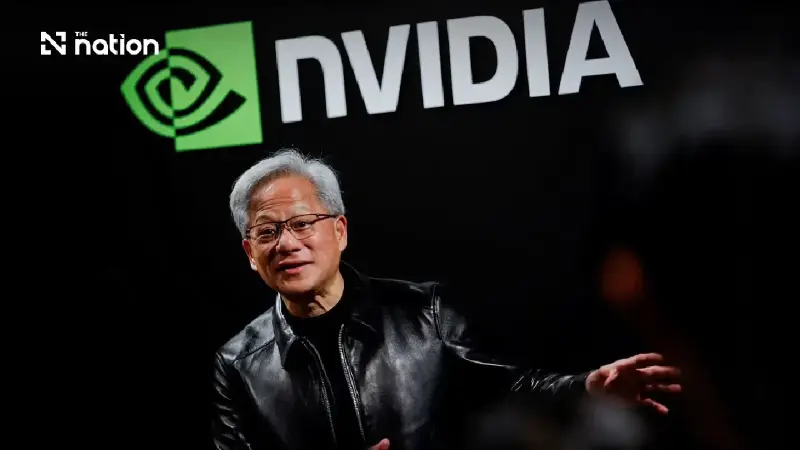


US President Donald Trump says he pressed Nvidia’s board to bring back Jensen Huang while independent directors continue a security inquiry.
- Nvidia shares rose 31.48% on November 23, adding $952 billion to its market value, after the company announced Jensen Huang was returning as chief executive.
- Huang's reinstatement came after he had resigned on November 11 amid an internal investigation into his conduct and a potential national security risk.
- US President Donald Trump stated he had spoken to Huang and urged Nvidia's board to reinstate him, believing it would help stabilize financial markets.
- The stock's gain was its largest one-day percentage increase since May 2003, but it only recovered a portion of the $1.5 trillion in value lost since concerns about Huang's conduct first emerged.
Nvidia shares closed 31.48% higher in New York on 23 November 2026 after the US chipmaker announced Jensen Huang’s return as chief executive, president and a board member. US President Donald Trump said he had spoken to Huang and urged directors to reinstate him.
Nvidia closed at US$165.05, up from US$125.53 on 20 November, adding US$952 billion to its market value. It was the stock’s biggest one-day percentage gain since May 2003, according to Dow Jones Market Data. Even that rally recovered only part of the roughly US$1.5 trillion that Nvidia had lost since concerns about Huang’s conduct became public on 8 November.
Trump says he pressed Nvidia’s board to bring Huang back
Trump told CNBC that Huang had shown poor judgement but had done “nothing wrong”. A source told CNN that Trump had pressed advisers and officials for Huang’s return because he believed it would help steady financial markets. Nvidia declined to comment to CNN on the president’s intervention.
Trump’s own investment portfolio has held millions of dollars in Nvidia shares. A Washington Post review of his financial disclosures estimated the stake at between US$13 million and US$62 million at the end of August. The White House says outside financial institutions make the investment decisions and Trump does not direct the trades.
Nvidia reinstates Huang before its security inquiry concludes
Nvidia’s board voted unanimously on 22 November to reinstate Huang with immediate effect, according to a US securities filing. Directors said that after meeting Huang they were satisfied he had been candid with them and could lead the company. They said assurances from senior US government officials gave them confidence that his return posed no national security risk. An independent board committee will continue its investigation into whether a foreign intelligence service targeted him.
Huang acknowledged infidelity after reports of a relationship with an executive at a major Nvidia customer. CNN reported that US officials suspected the woman might have worked with Chinese intelligence. China’s foreign ministry rejected the allegation. The New York Times separately reported that Huang had a relationship with an Nvidia executive who reported directly to him. Huang has pledged to cooperate with the board’s inquiry.
Nvidia’s directors had unanimously accepted Huang’s resignation on 11 November and announced his departure the following day. Finance chief Colette Kress took over temporarily, and Harvey Jones, a director since 1993, became the company’s first board chair. Jones subsequently told investors that directors had no plans to reinstate Huang. Jones remains chair and Kress continues as chief financial officer.
Governance experts question Nvidia’s reliance on Huang
Jeffrey Sonnenfeld, senior associate dean for leadership studies at the Yale School of Management, said Nvidia had enough management talent to prepare a successor. In his view, the failure to have someone ready left directors with little leverage once the share price fell and investors and business partners rallied behind Huang. “The board should resign. Every one of them,” Sonnenfeld told CNN.
Huang helped turn graphics processors into the chips that power much of today’s artificial intelligence computing. He had also spoken about how closely Nvidia’s management reflected his own way of working. “Our company was built so that I know how to run it,” Huang told Bloomberg in 2023. CNN’s analysis raised the prospect of a shareholder revolt and identified an option directors had earlier in the process: placing Huang on leave while the inquiry ran its course.
Nell Minow, chair of governance advisory firm ValueEdge Advisors, said directors should ask whether they would dismiss a middle manager for the same conduct. In her view, the reported relationships warranted dismissal regardless of the security inquiry. Minow said presidential pressure may have left directors feeling they had little choice, though she feared a mass resignation would allow Huang to choose directors even less willing to challenge him.
Bill George, a former Medtronic chief executive and an executive education fellow at Harvard Business School, told CNN that Nvidia’s directors had put Huang above the company’s own governance standards. He questioned whether the board was still in control.
Brittany Rogers, a partner at law firm O’Melveny & Myers who advises boards, said directors ultimately had to decide whether they trusted Huang and whether shareholders were best served by his return. Lawrence Cunningham, director of the University of Delaware’s Weinberg Center for Corporate Governance, said he would give directors the benefit of the business judgement rule and presume they had acted in good faith on the information available. Directors could have learnt something between the two votes that justified changing course, he said.
Nvidia says its independent directors have retained outside lawyers to help finish the inquiry. The company is also recruiting a chief compliance officer who will report to the board’s nominating and corporate governance committee.
Source: CNN
