
Good News for Ashton Asoke as Council of State Clears Legal Path for MRT Access
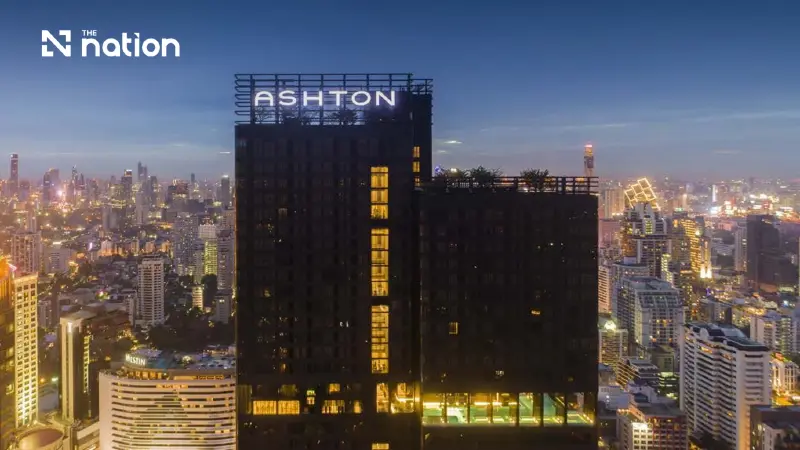


Legal clarification gives MRTA a basis to consider access across expropriated land, offering a potential way forward for residents after years of uncertainty.
Residents of Ashton Asoke could be one step closer to resolving a long-running dispute over access to their homes, following a legal opinion from Thailand’s Council of State that clarifies when expropriated land may be used as an access route to private property.
The opinion, published by the Office of the Council of State in Memorandum No. 1218/2569, addresses a question at the heart of the condominium’s access problem: can the Mass Rapid Transit Authority of Thailand (MRTA) permit private parties to use land acquired through expropriation as a passageway or entrance and exit, while the land continues to serve its original public purpose?
The seven-page memorandum sets out the legal principles governing such arrangements, providing a clearer framework for the MRTA to consider requests of this nature.
In its submission to the Council, the MRTA asked whether it could authorise private parties to use expropriated land to reach their own properties where the land had already been put to use, and continued to be used, in accordance with the purpose of the expropriation and the Authority’s own objectives.
The Council of State’s Special Committee explained that expropriation is an exercise of state power to acquire private property for public purposes. It noted that, since the 1978 Constitution came into force, land acquired through expropriation may be put to additional uses once the responsible government agency has used it for its original purpose within the prescribed period — provided those additional uses do not interfere with the purpose for which the land was acquired.
This principle allows government agencies to make fuller use of expropriated land, including by generating benefits or serving additional public purposes, so long as the original objectives remain intact.
For land held by the MRTA, however, any permission granted to private parties to use it as a passageway or access route must comply with Section 37 of the Constitution and the applicable expropriation laws. The key consideration is whether the land continues to be used for the purpose of the expropriation and in line with the Authority’s objectives.
The committee further clarified that the MRTA may consider granting permission if the facts establish that the land remains in use for those purposes and the proposed access would not undermine the original intent of the expropriation. Nor could permission be granted solely to benefit a private business in circumstances that would prevent the MRTA from using the land as intended under normal operating conditions.
Where these conditions are met, the Authority may consider granting permission under Clauses 6 and 8 of its regulations governing the use of MRTA property.
The opinion marks an important clarification of the legal position. It indicates that the use of expropriated land for private access is not automatically ruled out; rather, it may be permitted where the relevant legal conditions are satisfied and the land’s original purpose is preserved.
The same principles could also provide a basis for the MRTA to consider applications from other private parties facing similar circumstances. The issue now is how the Authority will apply the clarified framework and what steps it will take next.
For residents of Ashton Asoke, who have endured prolonged uncertainty, the key question now is how quickly the MRTA will move forward with a concrete solution, now that the legal position has been clarified. The future of the project, and residents’ hopes for a resolution, will depend on the MRTA’s decision as the authority directly responsible for the matter.
With the legal considerations now more clearly defined, the next move rests with the Authority responsible for deciding the matter. Its decision will be crucial not only to the future of Ashton Asoke, but also to residents who have been waiting for a workable resolution.
The memorandum was signed by Mr. Noppadol Pheriruek, Secretary-General of the Council of State, and published on the Office of the Council of State’s website in October 2026.
