
GC-SCGC plan petrochemical venture to counter China’s oversupply
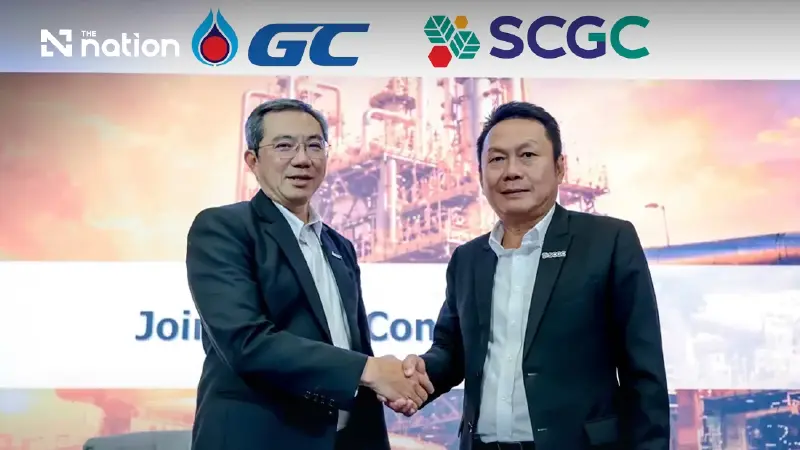


PTT Global Chemical and SCG Chemicals target a Thai venture with 7.1 million tonnes of annual olefins capacity, subject to approvals.
- PTT Global Chemical (GC) and SCG Chemicals (SCGC) are forming a joint venture by combining petrochemical assets worth 180 billion baht to strengthen Thailand's position in the market.
- The primary motivation for the venture is to counter a global petrochemical downturn caused by excess capacity and intense price competition, specifically from expanding Chinese supply.
- The combined entity aims to become one of the world's top 10 polyolefins producers and the largest in ASEAN by production capacity.
- By integrating their plants, the companies expect to improve efficiency, reduce costs, and increase their focus on higher value-added specialty products to compete more effectively.
PTT Global Chemical (GC) and SCG Chemicals (SCGC) plan to seek Thai competition approval in the first half of 2027 for a joint venture combining petrochemical assets worth 180 billion baht. The companies announced their proposed combination of Thai olefins and polyolefins businesses on October 29, 2026.
The GC-SCGC venture would have annual olefins capacity of 7.1 million tonnes. The partners aim to rank among the world’s 10 largest polyolefins producers and first in ASEAN by production capacity, while strengthening Thailand’s position against expanding Chinese supply.
GC to hold 56% of venture through asset contributions
GC would contribute assets worth 100 billion baht, including 3.7 million tonnes a year of olefins capacity, for a 56% controlling stake. SCGC would contribute 80 billion baht of assets and hold the remaining 44%.
The proposed transaction would transfer Thai olefins and polyolefins businesses, assets and stakes in related joint ventures into a new company without cash consideration. The transaction values would draw on assessments by an independent financial adviser.

The assets covered by the proposal are:
1. SCGC: Olefins plants operated by Rayong Olefins (ROC) and Map Ta Phut Olefins (MOC); polyethylene facilities under Thai Polyethylene (TPE); and investment stakes in Siam Polyethylene (SPE), Siam Synthetic Latex (SSLC), Bangkok Synthetics (BST) and Thai MMA (TMMA).
2. GC: Five olefins plants, polyethylene production facilities and its investment in HMC Polymers (HMC).
GC would consolidate the venture’s financial statements because of its controlling stake, while SCGC would account for its investment using the equity method. The proposed venture targets dividend payments of at least 60% of net profit.
GC and SCGC expect annual operating benefits of US$150–200 million, or approximately 5–7 billion baht. About 30% of the benefits are expected in the first year, with the full potential reached roughly three years after the venture is established.
SCGC expects oversupply pressure to persist for two to three years
Sakchai Patiparnpreechavud, chief executive officer and president of SCG Chemicals, described the venture as a response to a global petrochemical downturn marked by excess capacity and intense price competition, particularly as China continues expanding production.

Sakchai expects those pressures to persist for another two to three years, creating greater difficulties for producers with high costs or limited operating flexibility. Producers across several regions are restructuring and improving efficiency to remain competitive.
Chinese producers continue supplying olefins and aromatics to global markets, putting pressure on prices and margins. The Middle East conflict has compounded the industry’s difficulties through an oil shock, particularly for Asian producers dependent on feedstock shipped through the Strait of Hormuz.
Sakchai argued that greater scale would support specialty grades and products with higher added value, where technology and collaboration with customers matter alongside price.
“Being among the world’s 10 largest polyolefins producers and No.1 in ASEAN is a ranking based on production capacity,” Sakchai said. “It does not automatically mean the joint venture will have the largest market share or the highest profitability.”
“Long-term success depends on cost management, product development and customer retention,” Sakchai added.
Map Ta Phut plants offer scope to cut costs and develop products
GC and SCGC expect the proximity of their plants in Map Ta Phut, Rayong, to allow production and existing infrastructure to be connected without building a new system. The integration is intended to improve efficiency, reduce unit costs, increase flexibility and raise the share of products with higher added value.
For petrochemical producers, feedstock, energy and logistics costs, together with plant utilisation, directly affect profitability. Those factors become particularly important when product prices and margins are weak.

Narongsak Jivakanun, chief executive officer of GC, explained that the partners bring different but complementary capabilities:
1. GC manages a varied feedstock mix, including naphtha, liquefied petroleum gas (LPG), propane and ethane. Its refinery business supports sourcing flexibility during energy and petrochemical market volatility, while its research and development capabilities help meet customer needs and turn feedstock into products with greater value.
2. SCGC contributes strengths in products with higher added value, technology and innovation. Its integrated i2P Center (Ideas to Products) works with customers to turn market needs and ideas into commercial products suited to practical applications.
The partners expect their combined capabilities to expand the customer base and develop solutions for automotive manufacturing, solar energy, construction materials and specialist industrial products. Their worldwide customer and export networks would support entry into new markets, particularly ASEAN, where they see long-term growth opportunities. The combination would also help them compete in markets with more demanding product specifications.
Supporting information for the venture says resins from the olefins and polyolefins businesses account for 70% of raw materials used in the downstream plastics activities covered by that information.
GC and SCGC expect a larger upstream business with more flexible feedstock management to improve supply security, reduce production constraints and support more reliable deliveries to domestic customers. For small and medium-sized enterprises and downstream plastics manufacturers, dependable supplies and a wider product range would help production planning, cost control and competitiveness.
The partners also aim to develop Map Ta Phut into an ASEAN petrochemical manufacturing hub by connecting production with their research and development capabilities. The proposed venture would support Thai businesses in adding value to products and competing in domestic and export markets.
Shareholder votes planned for December 3 before regulatory filing
GC and SCGC plan to seek shareholder approval on December 3, 2026, before submitting the proposed combination to competition authorities and other regulators. The stated timetable is:
1. November 18, 2026: Send notices of the extraordinary shareholder meetings.
2. December 3, 2026: Hold the extraordinary meetings to consider approval.
3. First half of 2027: Apply for approval from the Trade Competition Commission of Thailand and other relevant regulators.
4. Second half of 2027: Complete the transaction and establish the strategic joint venture, subject to the necessary approvals.
The competition commission’s office was monitoring the proposed combination, which would require prior approval under Section 51(2) of the Trade Competition Act because it could create market dominance.
The approval rules cited in the report include a sales threshold of at least 1 billion baht for a potential monopoly. One market-dominance test is a share of at least 50% of the relevant market and sales of at least 1 billion baht in the preceding year.
The Trade Competition Commission has 90 days from receiving an application to consider approval, with an extension of up to 15 days if necessary. Its assessment must consider reasonable business necessity, benefits to business operations, whether the deal would cause serious economic harm and its effects on consumers’ legitimate interests.
