
Thailand urged to fast-track new PDP as energy transition becomes industrial survival test
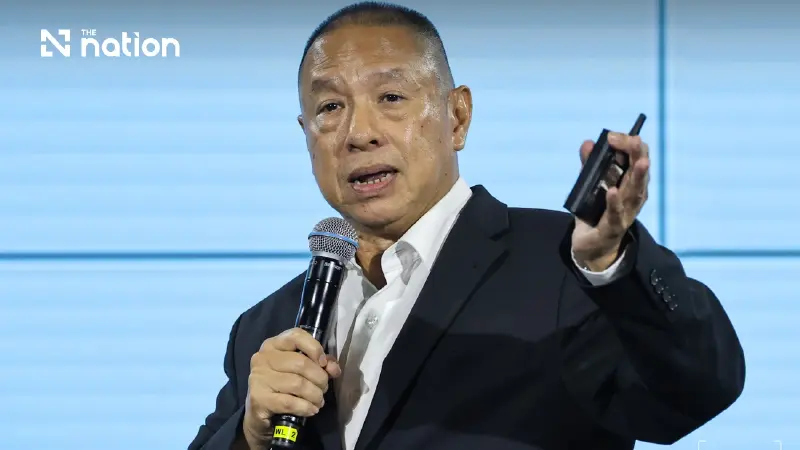


Thai industry leaders are calling for a revised Power Development Plan to accelerate clean energy reform, open electricity markets and protect traditional manufacturing from global carbon rules.
Thailand’s energy transition is entering a decisive phase, with industrial leaders warning that the country must urgently modernise its Power Development Plan (PDP) or risk losing competitiveness in a rapidly decarbonising global economy.
Speaking at the “Energy Transition: Thailand’s shift towards a low-carbon economy” seminar, Natee Sithiprasasana, Chairman of the Renewable Energy Industry Group at the Federation of Thai Industries (FTI), said Thailand’s clean energy growth between 2020 and 2025 has been modest at around 14–17%, lagging behind the Asia-Pacific average.

He noted that renewable energy currently accounts for only around 10% of Thailand’s power generation mix, while natural gas still dominates at more than half of total supply, with fossil fuels overall accounting for up to 70%.
By contrast, regional peers such as Vietnam have rapidly expanded solar capacity over the past decade, highlighting the impact of clear and consistent policy direction in attracting investment and scaling clean energy infrastructure.
However, Thai industry leaders argue that the challenge is no longer environmental alone — it is economic survival.

Global trade rules are shifting fast. The European Union’s Carbon Border Adjustment Mechanism (CBAM), which begins impacting energy-intensive industries such as steel, will gradually expand over the next three to four years, increasing pressure on exporters to decarbonise production or face additional costs.
At the same time, multinational corporations are accelerating their own net-zero timelines. Companies such as Toyota and Denso have brought forward their renewable energy targets to 2035, while firms like Delta Electronics aim to cut Scope 1 and 2 emissions by up to 90% by 2030.
Natee warned that Thai factories are already feeling the pressure, particularly as carbon credit instruments such as I-REC are not yet fully recognised under EU CBAM frameworks or aligned with SBTi accounting standards, limiting their use for emissions offsetting.
He also clarified misconceptions around renewable energy surcharges, noting that policy-related costs such as Adder and feed-in tariffs account for only a small share of electricity pricing. The larger burden comes from long-term capacity payments for large power plants and volatile fuel costs, particularly imported LNG.

Industry data suggests fuel costs alone can account for more than half of Thailand’s electricity pricing structure, making energy security and diversification a key national priority.
Another concern raised is access to green electricity. Under the current UGT system, large-scale data centres and new foreign investors are often given priority access to green power capacity. Meanwhile, long-established industries such as automotive and aluminium — which have contributed to Thailand’s GDP for decades — are still waiting for affordable access to renewable electricity.
Natee stressed that Thailand must avoid a “first-come, first-served” imbalance and ensure equitable access across sectors, noting that data centres themselves do not necessarily require 100% renewable power from day one.
To address these structural issues, the FTI is urging the government to accelerate reforms to the PDP with four key priorities:
- Opening up Third Party Access (TPA) and Direct Power Purchase Agreements (Direct PPA), allowing private sector electricity trading through the national grid to increase competition and reduce system constraints.
- Restructuring expired renewable energy incentives, with more than 2,500 MW of projects transitioning out of Adder schemes, enabling cheaper redistribution of renewable supply.
- Promoting next-generation technologies, including small modular nuclear reactors (SMRs), energy storage systems (ESS) and smart microgrids to enhance long-term grid stability.
- Broadening investment participation in energy infrastructure through public infrastructure funds rather than concentrated ownership.
Natee warned that if the new PDP fails to reflect these structural changes, Thailand risks missing a critical opportunity in the global energy transition.
“Energy policy is not just regulation — it is a competitive tool,” he said. “If Thailand gets this right, it can unlock a more open, efficient and sustainable energy future for both industry and the wider economy.”
