
ASEAN rises as a new beauty economy hub for global cosmetics
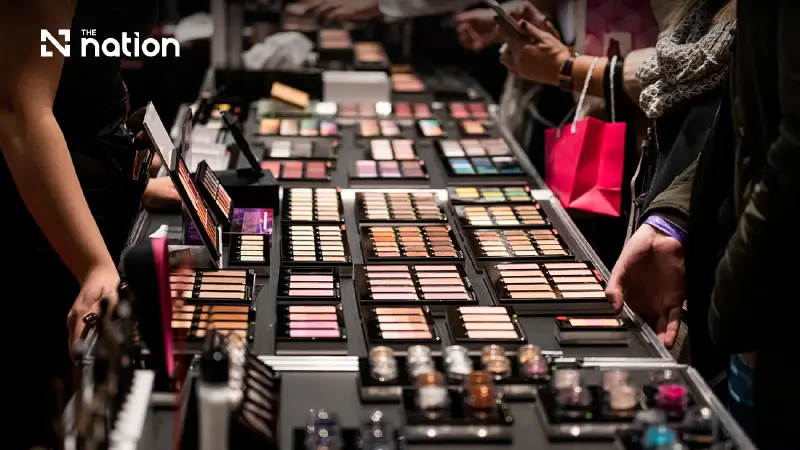


ASEAN is emerging as a beauty economy powerhouse, with Thailand’s combined domestic and export cosmetics market projected to reach 200 billion baht in 2026.
- The ASEAN beauty market is experiencing significant economic growth, with projections valuing it at over US$9 billion by 2031, led by key markets like Indonesia and Thailand.
- The region's rise is fueled by increasingly informed and selective consumers whose diverse, country-specific demands are shaped by factors like scientific credibility, halal certification, and cultural trends.
- ASEAN's unique hot and humid climate is a primary driver for beauty innovation, necessitating the development of specialized product formulations that are lightweight, fast-absorbing, and offer sun protection.
- Research and development is evolving beyond the lab to meet consumer demand for transparency, requiring brands to communicate complex scientific information about ingredients and product performance clearly and credibly.
The global beauty industry is no longer being shaped only by Western markets. Southeast Asia, once seen largely as a follower of K-Beauty, J-Beauty and European brands, is now positioning itself as a beauty economy hub with growing influence over the direction of the global industry.
According to Statista, ASEAN’s beauty and personal-care market is expected to grow strongly, with market value projected at US$7.4 billion in 2026 before rising to more than US$9 billion by 2031.
Separate Statista projections show Indonesia, one of the region’s largest beauty markets, expanding from US$11 billion in 2026 to US$14 billion by 2031.
Thailand is also becoming an important part of this regional growth story. Krungthai Compass has valued Thailand’s overall cosmetics market, including domestic sales and exports, at more than 160 billion baht, or around US$4.79 billion.
The research house expects the market to continue expanding in 2026, supported by both domestic demand and exports, with total value projected to reach about 200 billion baht, or US$5.99 billion.
The domestic cosmetics market accounts for around 78% of Thailand’s total cosmetics sector and is expected to be worth about 160 billion baht in 2026. This underlines the strength of local beauty demand as a major engine for the industry.

Informed consumers redefine ASEAN beauty demand
ASEAN’s rise is not being driven solely by population size or purchasing power. A more important force is the changing behaviour of consumers, who are becoming more informed, selective and demanding about the products they use.
“Consumers in this region know what they want, care about ingredient safety and make careful purchasing decisions,” noted Dominique Petruzzi, a beauty and personal-care industry expert at Statista.
Tanapatr Barameesangpet, senior R&D leader at Unilever Beauty & Wellbeing Thailand, highlighted that each country has its own distinct beauty behaviour, shaped by culture, climate, trust and consumer priorities.
Thai consumers tend to look for value for money, scientific evidence and brand credibility. In Indonesia and Malaysia, halal certification and community trust play a central role in purchasing decisions.
Singaporean consumers often seek scientific information and transparent clinical testing, while Vietnamese consumers prioritise product effectiveness and ease of use. In the Philippines, pop culture and community opinions have a strong influence on beauty choices.
Climate becomes a beauty design challenge
Beyond consumer behaviour, climate is becoming one of the most important factors shaping beauty innovation in ASEAN. Tanapatr noted that Southeast Asia faces a combination of heat, humidity, high UV exposure, pollution and PM2.5 dust, all of which directly affect skin and hair health.
This is why technologies and formulations developed in Europe cannot always be applied directly to consumers in this region, he explained. Many products designed for cooler climates can feel too heavy, sticky or oily in tropical weather.
Chiratchaya Vamasiri, senior vice-president of business development at Milott Laboratories, also identified hot and humid weather as a key factor changing what brand owners and formula developers need to create.
Products must now be lighter, faster-absorbing and more resistant to heat and humidity than traditional formulas.
More cosmetics manufacturers are also adding sun-protection benefits to wider product categories, reflecting stronger consumer awareness of UV exposure and long-term skin health.
R&D moves beyond the lab
Another major trend is the growing importance of ingredients and scientific information.
Modern consumers study product labels, understand active ingredients and look for clinical evidence that can prove product performance. Scientific credibility has therefore become a key part of brand trust.
At the same time, online shopping behaviour is changing quickly. Consumers can search for information, compare product features, check test results, watch livestreams and make a purchase within minutes.
As a result, research and development teams are no longer responsible only for creating formulas. They must now be able to translate complex scientific information into language that is simple, creative and credible enough for consumers to understand.
That shift is forcing brand owners to do more homework on ingredients, formulation and innovation to meet increasingly specific market demand, Chiratchaya added.
