
ONWR orders dynamic water plan as Thailand rainfall is 12% below normal
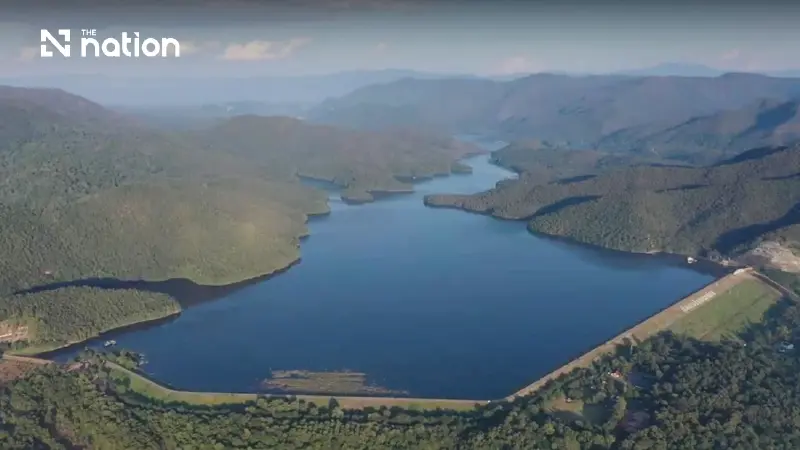


Agencies were told to prioritise rainwater and conserve reservoir supplies, with dry spells forecast in some areas from July's second week.
- Thailand's nationwide rainfall is 12% below normal, with total water storage at 55% of capacity, prompting the Office of the National Water Resources (ONWR) to take action.
- The ONWR has ordered an immediate adjustment to water management plans under a "Dynamic Operation Curve" in response to the low rainfall and forecasts of dry spells starting in July.
- The new plan prioritizes the use of rainwater as the main source while retaining water in reservoirs as a supplementary supply to prepare for potential drought.
- Agencies like the Royal Irrigation Department and EGAT must now manage large reservoirs within the new criteria, aiming to store as much water as possible.
The Office of the National Water Resources (ONWR) has disclosed the outcome of an urgent meeting with relevant agencies after natural hazard warning signs were detected from the start of 2026, with cumulative rainfall nationwide 12% below normal, except on the South’s west coast, where rainfall was 18% above normal.
Compounding the concern, the Thai Meteorological Department and the National Science and Technology Development Agency (NSTDA) forecast that dry spells could begin in some areas from the second week of July 2026, prompting an immediate order to adjust water management plans nationwide under the Dynamic Operation Curve, with agencies told to prioritise rainwater and retain water in reservoirs as a supplementary source in times of crisis.

Chayan Muangsong, secretary-general of the Office of the National Water Resources (ONWR), said after chairing the Water Resources Management Steering Subcommittee meeting that monitoring of cumulative rainfall in 2026 from the start of the year to the present showed nationwide cumulative rainfall was 12% below normal, except on the South’s west coast, where cumulative rainfall was 18% above normal.
Current water conditions as of Tuesday (June 23, 2026) showed Thailand had total stored water of 44,794 million cubic metres, or 55% of capacity, 293 million cubic metres less than at the same time in 2025.

The Thai Meteorological Department and the Hydro-Informatics Institute (Public Organisation) also reported that dry spells could begin in some areas from the second week of July.
He therefore stressed that all relevant agencies must manage water in reservoirs in line with the situation, particularly reservoirs with low water levels, comprising:
15 large reservoirs and 79 medium-sized reservoirs.
However, 60 reservoirs with high water levels still need to be monitored, comprising four large reservoirs, Mae Ngat Somboon Chon, Kiu Lom, Mae Chang and Lam Pao, as well as 35 medium-sized reservoirs and 21 small reservoirs, so that water discharge can be planned appropriately.
The meeting resolved to approve the Royal Irrigation Department and Electricity Generating Authority of Thailand (EGAT) managing water in large reservoirs within the Dynamic Operation Curve criteria, alongside close monitoring and assessment of water situation trends, so that storage, discharge and allocation plans can be adjusted in line with available water reserves.
The aim is to store as much water as possible to prepare for potential drought, use rainwater as the main source and reservoir water as a supplementary source during dry spells or when necessary, while continuously reporting implementation results to ONWR to support efficient national water management.

To prepare for dry spells during the 2026 rainy season, ONWR has coordinated agencies to monitor areas at risk of water shortages so guidelines can be drawn up to address problems promptly.
Forecasts identified areas at risk of shortages of water for consumption and domestic use within the Provincial Waterworks Authority (PWA) service area at 21 branches in 18 provinces, and outside the PWA area in 24 provinces, 48 districts and 60 subdistricts.
PWA has accelerated assistance by laying water pipelines, pumping water from reserve sources, building temporary weirs, dredging and procuring raw water from private sources.
In agriculture, the Department of Agricultural Extension has continued to monitor rice paddies, field crops and vegetables, finding that water is sufficient until harvest.
For fruit orchards and perennial trees, provincial agriculture offices have worked with the Royal Irrigation Department to assess water conditions and inform farmers in areas with low water volumes of the situation, while advising them to dredge orchard channels to retain water.
On water quality, six PWA branches in four provinces were found to be at risk of water shortages, and PWA has prepared measures by receiving tap water from neighbouring branches and buying tap water and raw water from private suppliers.
ONWR and relevant agencies will manage water in line with local conditions and possible trends to prepare for all scenarios, helping prevent and ease impacts on the public as much as possible.

