
Thailand Eyes September Finish Line for EU Trade Deal as It Recalibrates Ties With Beijing
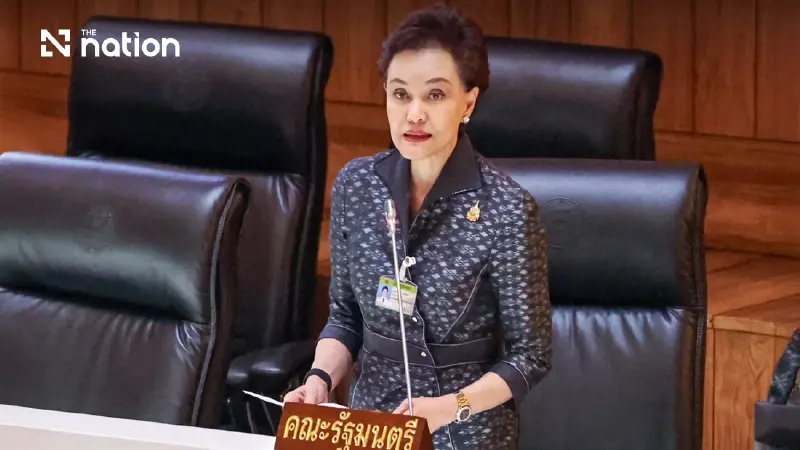


Commerce Minister Suphajee charts a course to conclude an EU trade deal by September while pressing Beijing for fairer commercial terms
- Thailand aims to finalise a free trade agreement with the European Union during a tenth round of talks scheduled for September, with approximately two-thirds of the deal already settled.
- To correct a lopsided trade relationship with Beijing, Thailand is pushing for three specific changes: increased local content from Chinese investors, better e-commerce access for Thai businesses, and agricultural technology transfers.
- These parallel negotiations are part of a broader Thai strategy to diversify its economic partnerships and reduce its reliance on single major powers like the United States and China.
Commerce Minister Suphajee Suthumpun says Thailand is two-thirds of the way through concluding a free trade agreement with the European Union and is pressing Beijing on three fronts to correct an increasingly lopsided trade relationship — all part of a wider strategy to reduce Thailand's reliance on any single major power.
While the bulk of public attention has been fixed on Thailand's tariff negotiations with Washington, Commerce Minister Suphajee Suthumpun told editors from the Nation Group that two other relationships — with the European Union and China — are just as central to her ministry's strategy for insulating the Thai economy from the volatility of US trade policy.
EU FTA: "we're not just aiming to finish, we're aiming to finish on the right terms"
Thailand and the EU have just wrapped up a ninth round of free trade agreement negotiations, which the minister described as further advanced than commonly appreciated: roughly eight of the agreement's chapters are essentially settled, leaving around a third of the substantive issues still to be resolved. She said Thailand is aiming to close the agreement at a tenth round of talks in September.
She credited a personal intervention by the European Commissioner for Trade, Maroš Šefčovič, with unlocking momentum in the talks.
According to her account, after a one-on-one meeting on the sidelines of the ninth round, Šefčovič instructed his own negotiating team to match Thailand's pace — a shift she said has since made previously stuck issues easier to resolve, even accounting for the complexity of coordinating a position across all 27 EU member states.

She was careful, however, to frame the acceleration as being about speed rather than concessions.
"Whatever we conclude, it has to be something we can live with — not just something we rushed to sign," she said, adding that several points remain firmly contested with EU negotiators, without elaborating on specifics.
The strategic logic, she said, is straightforward: Thai exports remain heavily concentrated on the United States and China, with Europe still a comparatively small share of total trade. A concluded EU FTA would not only open a genuinely large market but would also push Thai regulatory standards upward across areas including digital trade, government procurement, IT, intellectual property and sanitary and phytosanitary (SPS) rules for agriculture — benefits she said exist independently of the current tariff dispute with Washington.

Rebalancing the China relationship
On China, the minister was candid about the scale of the imbalance Thailand is trying to correct, describing a large and continuing bilateral trade deficit that she said needs to be addressed through deliberate policy rather than left to widen.
She said she had turned to Dr Arm Tangnirundorn, a Thai academic known for his work on Chinese economic strategy, to help her team understand the logic behind Beijing's current five-year plan and the trade practices flowing from it – including subsidised export pricing that she said Chinese producers can deploy against small- and mid-sized economies like Thailand but not against larger markets such as the US or the EU, which are able to resist it.

Rather than simply lobbying for a smaller deficit in the abstract, Suphajee said she raised three specific requests with Chinese Vice Premier He Lifeng during a meeting on the sidelines of the APEC summit in South Korea in May, which she has since continued discussing with China's Commerce Minister, Wang Wentao, most recently during a visit to Beijing:
1. Local content and rules of origin — asking Chinese manufacturers investing in Thailand, particularly in the electric vehicle sector, to source more components and raw materials domestically, rather than importing nearly complete kits, so that Thai-made goods can more credibly meet "new origin" requirements when exported onwards to third markets, including the United States. She noted this is a long-term undertaking – citing the two decades it took Japanese carmakers to build a genuine domestic supply chain in Thailand – but said Chinese officials had agreed in principle to a transition period.
2. E-commerce access — seeking a route for Thai small and medium enterprises to sell directly on major Chinese e-commerce platforms as a way of offsetting the flow of Chinese consumer goods into the Thai market via the same platforms.
3. Agricultural technology transfer — inviting Chinese investment in food-processing technology using Thai agricultural raw materials so that Thailand can export higher-value processed goods to China rather than relying almost entirely on exports of raw produce.
She said Vice Premier He responded positively in principle to all three points and that the two sides have agreed to establish a joint committee, expected to convene in early 2026, with a working-level team – led on the Thai side by the Department of ASEAN Affairs – reporting progress ahead of a further meeting between the two principals.

Balancing two great powers
Asked directly how Thailand squares closer economic engagement with China against its parallel negotiations with the United States, the minister said the country has consistently declined to let either power dictate exclusivity.
She pointed to her own recent travel schedule — flying from Washington to Beijing and on to New York for a separate engagement in the space of a few days — as a deliberate signal to both sides that Thailand negotiates independently.
"We're not going to be told that if we don't like someone, we have to not like them too," she said, adding that Thailand continues to honour its purchase commitments to the US under the earlier framework agreement while simultaneously pursuing a closer economic relationship with Beijing, a balance she described as unavoidable for a country of Thailand's size sitting between two much larger economies.

Looking beyond the big three
The minister said Thailand's longer-term export strategy should not stop at the US, China and the EU.
She singled out Latin America and Africa as markets Thailand should not overlook despite the distance involved, citing a recent visit to South Africa where she said there was strong interest in Thai software development, digital content and intellectual property – an early sign, she suggested, of demand for Thailand's growing creative economy sector, which she is separately overseeing as chair of one of five industry "cluster" committees the government has set up under the Deputy Prime Minister's office, alongside clusters covering tourism, agriculture, community enterprise and international trade.
