
Krugman assesses four Trump policies before November 3 vote
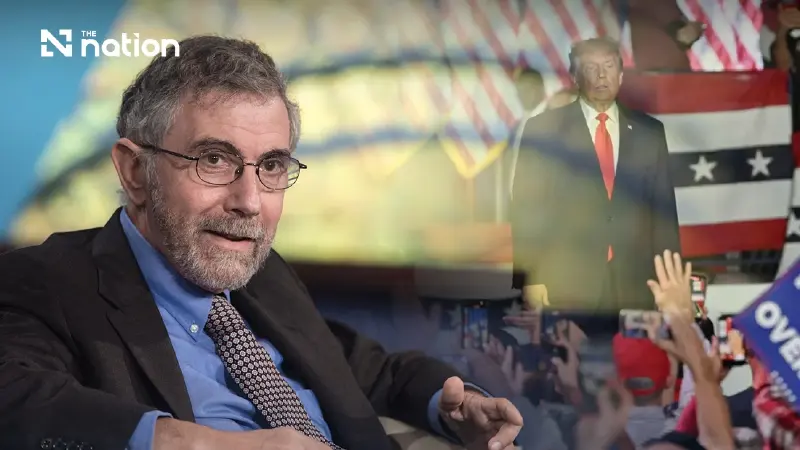


Paul Krugman says US economic strains reflect broken Trump pledges, warning that damage to healthcare and long-term prosperity runs deeper
- Economist Paul Krugman argues that President Trump's policies on energy, immigration, tariffs, and healthcare have failed to deliver on campaign promises and threaten long-term economic damage.
- Krugman claims Trump's tariffs have raised costs for consumers and manufacturers without reviving industry, while his energy policy has failed to lower prices and has ceded clean-energy leadership to China.
- The assessment states that the administration's immigration crackdown has created labor shortages without boosting employment for US-born workers.
- Krugman concludes that cuts to healthcare subsidies and Medicaid have increased financial strain on households, causing millions to lose insurance or face higher premiums.
Nobel Prize-winning economist Paul Krugman has criticised President Donald Trump’s record on four policy areas in an assessment published on November 1 ahead of the United States’ November 3, 2026 midterm elections. Krugman argues that the economy has avoided an immediate catastrophe, but that Trump’s policies threaten deeper, lasting damage.
Krugman’s Substack essay, “Trumponomics: A Midterm Report Card”, subtitled “Promises made, promises betrayed”, examines energy, immigration, tariffs and healthcare. The assessment explores the gap between Trump’s economic promises and the experience of American households.
The US economy is not in a disastrous condition, Krugman acknowledges: unemployment remains relatively low by historical standards, and inflation, although uncomfortable, is below the levels seen during the supply-chain disruptions of 2021–2022 and the stagflation of the 1970s.
For many households, utility and healthcare costs have nevertheless become a serious affordability problem, according to Krugman’s analysis. Krugman argues that the Consumer Price Index does not fully capture the financial pressures families face.

Krugman attributes much of the public anger to two gaps: the difference between Trump’s promises and his record, and the contrast between the president’s claims of a “Golden Age” and ordinary Americans’ strained finances. Many swing voters who supported Trump in 2024 expected him to reverse the price increases following the Covid-19 supply-chain crisis, Krugman says, citing polls showing sharply weakened approval of his economic management.
Krugman also alleges that Trump’s family and associates have amassed billions of dollars through corruption while households struggle. He cites polling to argue that corruption has become a significant political issue.
Trump inherited a strong economy from former president Joe Biden, Krugman argues, disputing the administration’s description of an economic disaster. By late 2024, inflation was approaching the Federal Reserve’s 2% target without the unemployment surge economists had feared, while employment was growing briskly, according to Krugman.
Inflation has been higher over the past two years than during the preceding two, Krugman says, blaming steep tariffs and the energy shock caused by the war with Iran. He also argues that hiring has nearly stalled, with unemployment held down partly because deportations and fear among immigrants have reduced the supply of workers.
Trump’s energy pledge remains unfulfilled, Krugman says
Trump’s campaign promise to halve energy prices within a year has not been fulfilled, Krugman says. Trump argued that support for wind and solar power was constraining domestic oil production and presented the country’s underground oil resources as “liquid gold”.
US oil production in 2024 exceeded its 2019 level, Krugman notes, challenging the claim that Biden’s clean-energy policies had obstructed output. Instead of delivering a 50% reduction in oil prices, Trump’s war with Iran pushed prices higher, Krugman argues.
Trump’s hostility towards clean energy, including claims that solar panels harm animals, and the influence of fossil-fuel interests supporting Republicans are leaving the United States behind China in clean-energy technology, Krugman contends. He argues that this approach damages the environment and will raise US energy costs over time.
Deportations have not boosted US-born employment, Krugman argues
The immigration crackdown has not delivered the promised employment gains for US-born workers, Krugman argues. He characterises the policy as driven more by ideology and intimidation than by economic reasoning.
The foreign-born workforce expanded by more than one million people annually in 2023–2024 before growth stalled and turned negative under Trump, according to official figures cited in Krugman’s analysis. Employment among working-age US-born Americans did not rise as promised, Krugman says.
Immigrant and US-born workers often complement one another, Krugman argues, with immigrants frequently filling jobs Americans are unwilling to take. Raids by US Immigration and Customs Enforcement have aggravated labour shortages in construction and agriculture and begun to affect food security, according to Krugman.
Restricting the arrival of younger foreign workers also weakens the future tax base, Krugman warns. He argues that the resulting pressure on public finances will undermine infrastructure and benefits for older Americans.
Tariffs raise costs without reviving manufacturing, Krugman says
Trump’s tariffs have increased costs for American consumers and manufacturers rather than delivering the promised industrial revival, Krugman argues. He describes the duties as the highest since the Smoot-Hawley era and says the administration has abandoned international trade commitments upheld for decades.
The Trump administration maintains that foreign countries bear the tariff burden and that import barriers will revive US manufacturing. Krugman counters that import prices, even excluding petroleum, have risen, undermining the claim that overseas suppliers are absorbing the cost.
Manufacturing investment has fallen sharply, Krugman says, blaming the rollback of clean-energy support under Biden’s Inflation Reduction Act and poorly designed tariffs. Duties on Canadian aluminium are one example of measures that raise US production costs and weaken competitiveness, according to Krugman.
Healthcare cuts deepen the affordability squeeze, Krugman warns
Healthcare policy is adding to household financial strain, Krugman argues, citing reduced insurance assistance and Medicaid cuts associated with Trump and congressional Republicans. His criticism also covers cuts to public-utility funding alongside healthcare under the One Big Beautiful Bill Act, the administration’s major tax-cutting legislation.
The enhanced Affordable Care Act insurance subsidies expired at the end of 2025; the underlying premium tax credit remains available to eligible households. Krugman criticises Trump and congressional Republicans for failing to renew the expanded assistance, arguing that the loss of support has driven sharp premium increases.
The One Big Beautiful Bill Act also introduced work requirements for certain Medicaid beneficiaries. The federal requirements generally take effect on January 1, 2027, although states may implement them earlier; Krugman argues that complicated eligibility rules will push low-income and disadvantaged people out of coverage.
Millions of Americans have already lost health insurance, according to Krugman’s assessment, while many who retain coverage face sharply higher premiums. He distinguishes those losses from further effects of healthcare cuts that have yet to take effect.
The erosion of coverage may represent the intended outcome of reducing government support rather than an unintended policy failure, Krugman argues. He contends that such retrenchment runs against the public’s wishes.
The artificial-intelligence boom has helped sustain the wider economy, Krugman acknowledges, preventing the immediate damage from becoming more severe. He nevertheless argues that short-term indicators understate the harm Trump has done to legal norms, international alliances, technological leadership and America’s future prosperity.
Krugman expresses hope that the midterm elections will produce a new Congress and that a new administration elected in 2028 will repair the damage. Without that change, he warns, Trump’s second term could be remembered as the end of the United States as Americans have known it.
