
PTT targets 15m tonnes a year in global LNG trading by 2035
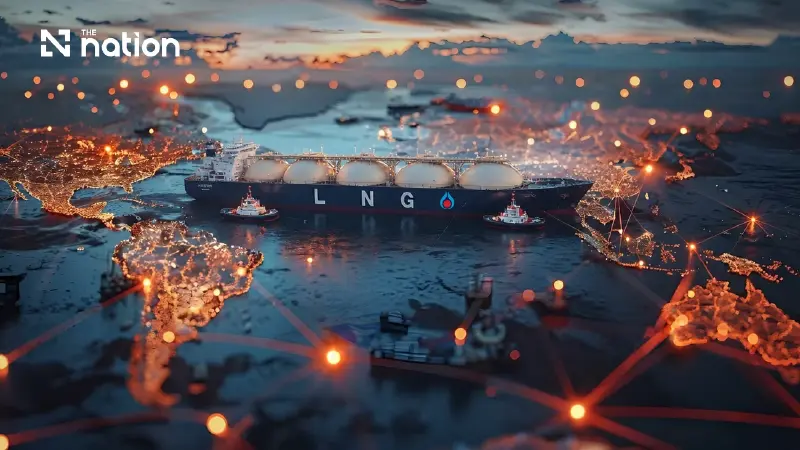


Thailand’s PTT aims to trade 10 million tonnes of liquefied natural gas a year by 2030, using global sourcing to support growth and supply security.
- PTT aims to increase global liquefied natural gas trading to 15 million tonnes a year by 2035, from about 3–4 million tonnes currently.
- PTT’s trading targets cover its worldwide portfolio, not Thailand’s gas imports alone.
- PTT plans to invest in finding new gas resources in the Gulf of Thailand, neighbouring countries and other promising locations worldwide.
- PTT president and chief executive officer Kongkrapan Intarajang expressed confidence that the company could manage energy-supply risks arising from potential disruption in the Strait of Hormuz.
PTT Public Company Limited aims to expand its global liquefied natural gas (LNG) trading volume to 15 million tonnes a year by 2035, from about 3–4 million tonnes currently, according to president and chief executive officer Kongkrapan Intarajang. Speaking at Gastech in Thailand, Kongkrapan outlined an interim target of 10 million tonnes a year by 2030.
Kongkrapan stressed that the targets apply to PTT’s global LNG trading portfolio, not Thailand’s LNG imports alone. The expansion is intended to give PTT greater flexibility in sourcing supplies worldwide while supporting the company’s international business growth.
PTT plans new gas sourcing and wider LNG trading
PTT plans to invest in finding new natural-gas resources in the Gulf of Thailand, neighbouring countries and other promising locations worldwide, while continuing to expand its international LNG trading business, Kongkrapan said.
PTT’s expansion strategy remains guided by the “energy trilemma”, balancing energy security, competitive pricing and sustainability.
At Gastech, PTT is holding discussions with partners and energy traders from around the world on investment, gas-field development and future cooperation in LNG trading.
PTT uses global trading network to manage supply risks

Kongkrapan said PTT’s strength extends beyond securing domestic oil and gas supplies to its trading network in London, Singapore, the United Arab Emirates and Houston. These operations allow PTT to source energy from different countries during crises and reduce excessive reliance on any single supplier.
According to Kongkrapan, the Middle East previously accounted for about 70% of Thailand’s crude-oil imports, compared with around 30% now. Greater sourcing from the United States and West Africa has significantly reduced geopolitical risk, he said.
Addressing Middle East tensions that could affect the Strait of Hormuz and oil prices, Kongkrapan said PTT was prepared to manage the risks and expressed confidence that Thailand would not face an energy shortage.
PTT has regularly rehearsed contingency plans and invested in advance in oil refineries to allow greater flexibility in processing feedstocks from different regions, according to Kongkrapan. These include crude from the United States, West Africa and other sources worldwide.
PTT’s trading operations also enable the company to procure oil and gas through multiple routes when shipping restrictions or regional conflicts affect supply movements, Kongkrapan said.
As a state enterprise, PTT has a responsibility to support the government in ensuring that Thailand has sufficient energy feedstock, Kongkrapan said. Shortages would affect downstream industries across the country, including refining, petrochemicals and other manufacturing sectors.
PTT sees gas remaining important for another 20–30 years
Kongkrapan expects natural gas and LNG to remain important fuels in the global energy system over the next 20–30 years, even as many countries accelerate their energy transitions to meet greenhouse-gas reduction targets.
Thailand continues to rely on natural gas as a principal fuel for electricity generation and industry, Kongkrapan said. Gas from the Gulf of Thailand accounts for about 50% of national gas consumption, while more than 10% comes from Myanmar and over 30% is LNG purchased on the global market.
“Natural gas is recognised as the cleanest fossil fuel compared with coal and oil, both in terms of carbon emissions and availability, while its price remains appropriate. It therefore helps strike a balance between energy security, cost and sustainability,” Kongkrapan said.
PTT nevertheless recognises that natural-gas combustion still releases carbon dioxide, despite producing less carbon than other fossil fuels. PTT is therefore developing carbon-reduction technologies, particularly carbon capture and storage (CCS), alongside continued gas use to support a more sustainable transition towards cleaner energy.
“The energy transition cannot happen in a single day or within just a few years. Natural gas will therefore remain necessary during the transition, while carbon reduction must be accelerated at the same time,” Kongkrapan said.
PTT showcases LNG cold-energy uses at Gastech
PTT is showcasing the use of cold energy from imported LNG to support tulip and strawberry cultivation in Rayong, alongside its natural-gas and carbon capture and storage businesses. PTT said the application demonstrates how energy infrastructure can generate additional value.
Kongkrapan described Thailand’s hosting of Gastech, the global natural-gas conference and exhibition, as an opportunity to demonstrate the country’s capabilities in the international gas industry. The event brings together tens of thousands of participants, including leading energy companies, government agencies and ministers from several countries, a turnout he said reflected gas’s continued importance to the global economy.
PTT is also promoting Thai soft power through food activities involving Michelin-level chefs and a MasterChef Thailand champion. The programme is intended to give international participants an experience of Thailand’s culinary strengths alongside its energy capabilities.
PTT said it would continue to balance national energy security, shareholder returns and carbon-emissions reductions as it prepares for the long-term transition of the global energy industry.
