
Thailand Sets 30-Day Deadline to Wire Private Sector Wish List Into Government Fast-Track System
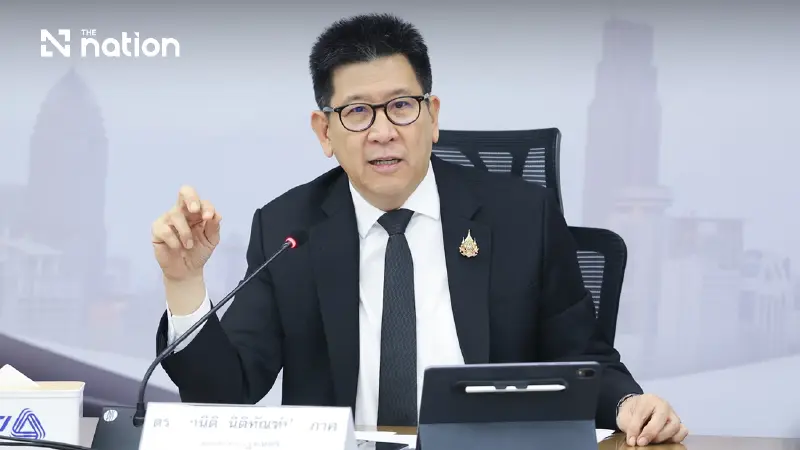


Deputy PM and Finance Minister Ekniti links seven priority industries to named government owners as Thailand shifts investment promotion from volume to value
- Thailand's government has assigned specific state officials as "owners" for seven priority industries to ensure accountability and directly integrate the private sector's investment goals into government operations.
- The reform shifts the country's investment promotion strategy from focusing on volume to prioritising value, such as high-skill job creation, technology transfer, and integration with local small and medium-sized enterprises (SMEs).
- A key component is the Board of Investment's "Thailand FastPass" framework, which accelerates strategic industrial projects by establishing strict service-level agreements and timelines to eliminate bureaucratic delays.
- The initiative establishes a clear governance structure with measurable KPIs and aggressive timelines, including a four-week deadline to finalise and present an action plan to the Prime Minister.
Deputy PM and Finance Minister Ekniti links seven priority industries to named government owners as Thailand shifts investment promotion from volume to value.
Thailand’s government has moved to close the chronic gap between what business leaders request and what state machinery delivers, formally wiring the private sector’s investment wish list into government operations — while fundamentally rewriting how the kingdom courts foreign capital.
At a joint press briefing on Monday (September 21), Deputy Prime Minister and Finance Minister Ekniti Nitithanprapas and the leadership of the Joint Standing Committee on Commerce, Industry and Banking (JSCCIB) set out how seven priority business sectors under the "Reinvent Thailand" initiative will be linked directly to named owners across government, complete with strict timelines and measurable key performance indicators (KPIs).
The concerted push comes against a challenging economic backdrop.
With the Bank of Thailand forecasting modest economic growth of 1.6 per cent for 2026 due to global trade headwinds, Bangkok is seeking to escape a prolonged middle-income trap by accelerating its shift towards high-value manufacturing, digital infrastructure, and green energy.

Dr Ekniti, who chairs the initiative as deputy head of the Joint Public and Private Sector Consultative Committee, framed the new governance structure using a sports formation analogy.
The private sector forms the "forward line" or attackers, driving progress across seven priority industries: agriculture and food processing, automotive, retail and logistics, smart electronics, medical and wellness, tourism, and the creative economy.

Behind them sits a "midfield" of four government-led enabling pillars, each with a designated lead. Investment coordination is headed by the Secretary-General of the Board of Investment (BOI); artificial intelligence integration by the Secretary-General of the National Economic and Social Development Council; green energy transition by the Permanent Secretary for Energy; and finance and capital markets coordinated between the Ministry of Finance and the Thai Bankers Association.
A "back line" — comprising the Ministry of Finance and the Bank of Thailand — is tasked with guarding overall fiscal and monetary stability.

Quality Over Quantity: Anchored by BOI Reform
The most consequential shift for foreign investors sits with the Board of Investment. Dr Ekniti confirmed the agency’s remit has changed fundamentally: success is no longer judged by the sheer volume of inbound applications but by local value creation, high-skill job generation, technology transfer, and deep integration with domestic SMEs.
This pivot is already reinforced by concrete BOI mechanisms. Under the recently launched "Thailand FastPass" framework, the BOI has fast-tracked $3.66 billion (121 billion baht) in strategic industrial projects across 42 intake approvals, establishing strict service-level agreements across state departments to eliminate licensing bottlenecks.
Furthermore, a new "BOI-to-IPO" initiative in partnership with the Securities and Exchange Commission (SEC) provides tax extensions of up to three additional years for promoted "New Economy" companies that list on the Stock Exchange of Thailand.
Dr Ekniti pointed to two sectors where Thailand already holds a global footprint as templates for this policy.
In food processing, Thailand ranks among the world’s top two exporters of pet food, benefiting from a global rise in pet ownership tied to declining birth rates — directly supporting upstream domestic agriculture.
In smart electronics, the kingdom supplies a major share of printed circuit boards (PCBs) and optical data-transmission components found in global smartphones and AI data centres.
The ambition is to replicate the multi-tiered supplier model built over decades in the automotive sector — where Thailand evolved into a regional hub with extensive Tier 1, 2, and 3 networks — across newer technology sectors, while extending capital deployment beyond Bangkok into regional provinces.

Macroeconomic Momentum vs Structural Hurdles
Dr Ekniti argued the strategy is already yielding results. Domestic capital formation expanded roughly 10 per cent year-on-year in the first quarter and nearly 14 per cent in the second quarter.
This investment momentum prompted international rating agencies to revise Thailand’s sovereign credit outlook from negative to stable, helping sustain capital inflows since the start of the year.
However, analysts and industry observers caution that significant execution hurdles remain:
• Skilled Labour Shortages: The rapid influx of advanced electronics, semiconductor packaging, and AI data centres threatens to outpace the local supply of specialised engineers and technical technicians.
• Regulatory Inertia: Streamlining bureaucratic approvals across multiple ministries will test state capacity, making the upcoming October ease-of-doing-business reforms a crucial benchmark.
• Energy Costs & Clean Power: Foreign high-tech manufacturers increasingly demand guaranteed access to affordable, green power, placing immense pressure on state utility grid transitions.

JSCCIB: “Clear Owners, Clear Accountability”
JSCCIB chairman Payong Srivanich, who also heads the Thai Bankers Association, framed the briefing as an operational checkpoint rather than a consultative dialogue.
"Today we reaffirmed the working mechanism itself," Payong said. "We have established who leads on the private sector side across all seven sectors, who leads on the government side, and how that connects to the midfield. We now have clear owners and clear shared accountability."

Poj Aramwattananont, chairman of the Thai Chamber of Commerce and Board of Trade, stressed that regional SMEs must be enabled to participate in new value chains connecting Thailand to ASEAN’s market of over 600 million consumers.

Meanwhile, Pimjai Leeissaranukul, chairwoman of the Federation of Thai Industries, emphasised that new investments must integrate into existing industrial bases while raising domestic content ratios.
Strict Targets and a Four-Week Clock
To measure progress, officials reiterated three headline targets: pushing annual GDP growth above 3 per cent, lifting Thailand’s IMD World Competitiveness ranking from 26th to the global top 20 within four years, and elevating total investment from roughly 23 per cent to 30 per cent of GDP as part of a long-term roadmap towards high-income status within 12 years.
Meanwhile, efforts to cut regulatory red tape are ongoing, with further deregulation measures slated for next month.

Dr Ekniti has established an aggressive follow-through timeline: sector teams must immediately submit their operational requirements, with queries routed directly to designated deputy prime ministers based on whether they involve investment, labour, SMEs, or ease-of-doing-business bottlenecks.
Dr Ekniti will convene all four ministers within three weeks to align policy before presenting the finalised action plan to the Prime Minister a week later.
