
Thailand eyes global energy majors for Andaman gas exploration
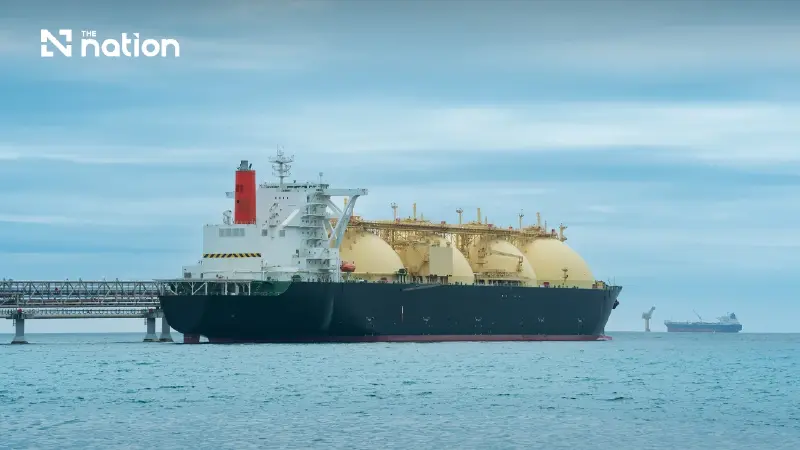


Thailand plans a new Andaman Sea petroleum auction as it seeks more domestic gas, lower LNG exposure and a legal framework supporting CCS development.
- Thailand is launching its 26th petroleum bidding round for gas exploration in the Andaman Sea to boost domestic supply and reduce reliance on costly LNG imports.
- The bidding process is expected to open in late 2026 or early 2027, targeting deep-water areas with promising geological structures.
- Over 10 major international energy companies, including ExxonMobil, Shell, and Eni, have already expressed interest in the exploration opportunity.
- To attract investment, the government is preparing amendments to the Petroleum Act to make developing challenging fields more commercially viable.
Thailand is preparing to open its 26th petroleum exploration and production bidding round in the Andaman Sea as part of efforts to increase domestic gas supplies, reduce dependence on costly liquefied natural gas (LNG) imports and strengthen long-term energy security.
Worakorn Prommobol, director-general of the Department of Mineral Fuels (DMF), told Krungthep Turakij that applications for exploration and production rights were expected to open in the fourth quarter of 2026 or, at the latest, early 2027.
The department has high expectations for the Andaman acreage because of major petroleum discoveries in nearby waters and geological structures considered potentially continuous with areas on the Thai side.
The development could also generate investment, employment and greater use of domestic goods and services in western Thailand.
Global energy majors show interest
More than 10 leading international energy companies have approached the department for information and expressed interest in studying the available data, Worakorn said.
They include ExxonMobil, Shell and Eni.
Once the bidding round is formally announced, companies will be given access to the data and invited to submit proposals.
The department expects the evaluation of state benefits and development plans to take around four to five months, with successful bidders potentially announced around the middle of 2027.
The Andaman blocks cover deep-water areas ranging from about 200 metres to as much as two kilometres in depth.
Drilling an exploration well is expected to require investment of around US$30 million.
The first exploration well could be drilled within two to three years after contracts are signed, while first commercial oil or gas production could take around seven years.
Petroleum Act changes aimed at unlocking domestic gas
Worakorn said geopolitical risks and volatility in global energy markets had reinforced the need for Thailand to maximise domestic natural gas production.
Spot LNG prices based on the Japan-Korea Marker (JKM) have previously climbed to around US$29-30 per million British thermal units, increasing the cost of imported fuel and ultimately putting pressure on domestic energy prices.
The DMF is therefore preparing amendments to the Petroleum Act, which are being readied for submission to the Cabinet.
The proposed changes include extending development periods and reviewing the government’s fiscal and benefit-sharing arrangements to reduce legal constraints and make investment in smaller or more challenging petroleum fields commercially viable.
Such changes could help operators develop small deposits, higher-cost fields or resources of lower quality that might otherwise remain uneconomic.
Worakorn said that, even with the additional development costs, domestic resources could still be considerably more economical than imported LNG.
Domestic gas production pushed to full capacity
In the shorter term, the department has instructed producers to maximise domestic gas output beyond normal contracted volumes where possible.
It is also coordinating maintenance schedules among producers to avoid simultaneous shutdowns that could reduce gas supply to the system.
Gas from new blocks, including G1/65, G2/65 and G3/65, is also being brought into the system to strengthen domestic supply.
Thailand has meanwhile signed a 35-year production-sharing contract for Block A18-01 in the Malaysia-Thailand Joint Development Area with PTT Exploration and Production (PTTEP) and Petronas.
The project is intended to support long-term natural gas security in southern Thailand.
Upper Gulf targeted for CCS hub
Alongside efforts to secure additional gas, the DMF is also supporting Thailand’s net-zero ambitions through carbon capture and storage (CCS).
The department is working with the Ministry of Natural Resources and Environment through the Department of Climate Change and Environment, Japan’s Ministry of Economy, Trade and Industry, the Energy Policy and Planning Office, the Industrial Estate Authority of Thailand, PTTEP and Japan’s Inpex.
The cooperation involves studies and exploration in the upper Gulf of Thailand to assess the potential for a CCS project capable of storing carbon dioxide emitted by industries in eastern Thailand and industrial estates in the Eastern Economic Corridor (EEC).
The concept would allow carbon dioxide captured from industrial facilities to be transported offshore and injected into suitable underground geological formations.
Arthit CCS set for first injection in 2028
The most advanced pilot is PTTEP’s CCS project at the Arthit gas field in the Gulf of Thailand.
The project will make use of existing petroleum infrastructure and subsurface formations to store captured carbon dioxide.
It is expected to begin its first underground CO2 injection in 2028, marking an important milestone for Thailand’s use of CCS technology.
The Arthit project is intended to serve as a pilot for wider CCS development, including a potential large-scale hub in the upper Gulf of Thailand serving industrial areas in the East.
For the Energy Ministry, the parallel push into new domestic petroleum resources and CCS reflects a broader strategy: Thailand still needs natural gas to support energy security during the transition, while building the infrastructure and legal framework required to reduce emissions over the longer term.
Source: Krungthep Turakij
