
Flooding raises vegetable and egg prices as supplies fall in Thailand
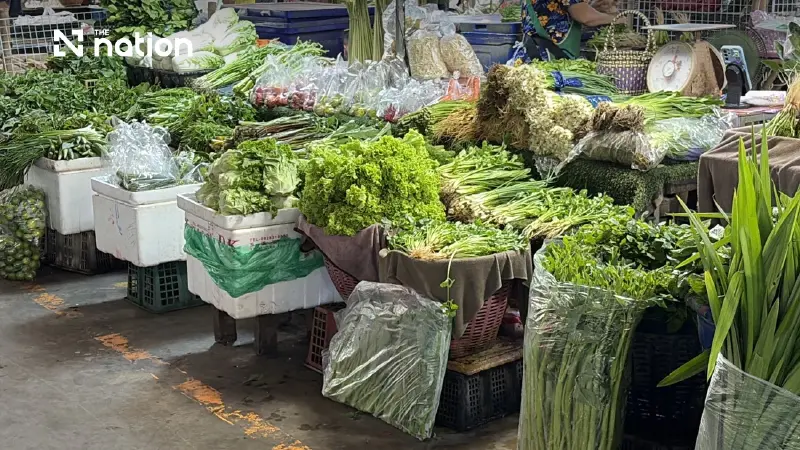


Crop damage and transport disruption have reduced food supplies, with some egg sizes costing THB6–10 more per tray in Chon Buri.
- Heavy rain and flooding in several Thai provinces have damaged vegetable crops, leading to reduced supplies and causing prices to rise by an average of THB10–15 per kilogram in some markets.
- Flooding has also disrupted transportation and distribution, resulting in a shortage of chicken eggs in areas like Chon Buri and an increase in price by THB6–10 per tray.
- Market vendors attribute the price hikes directly to the flood's impact on crops, such as rotted roots and bruised leaves, which has left fewer vegetables available for sale.
- In addition to supply issues caused by the floods, strong consumer demand for vegetables ahead of the Vegetarian Festival is also contributing to the price increases.
Reporters surveying a large fresh market in central Phitsanulok on Friday (October 2, 2026) found that prices had risen for all types of vegetables, averaging THB10–15 more per kilogram.
Pork and chicken egg prices remained stable.
The latest prices were:
- Chinese kale: THB50–60 per kilogram.
- Choy sum: THB50 per kilogram.
- Spring onions: THB120 per kilogram.
- Coriander: THB120 per kilogram.
- Chinese water spinach: THB35 per kilogram.
- Chinese cabbage: THB30 per kilogram.
- Yardlong beans: THB90–95 per kilogram.
- Jinda chillies: THB90–110 per kilogram.
- Tomatoes: THB45 per kilogram.
- Limes, sizes 1–2: THB7–9 each.
- Limes, sizes 3–4: THB5–6 each.
- Pork: THB120–150 per kilogram.
- Chicken eggs, size 0: THB155 per tray.
- Chicken eggs, size 4: THB125 per tray.


Shoppers interviewed at the market agreed that the government should address the root causes, help with transport costs and take stronger action to control prices so they could fall in line with market mechanisms.
Many felt goods had become more expensive since the “Thais Help Thais Plus” scheme was introduced, leaving people facing higher living costs each day instead of easing their burden.
A separate survey of fresh markets in Mueang Nakhon Ratchasima district found sharp increases in leafy vegetable prices.
Water spinach had risen from THB50–60 to THB100 per kilogram.
Thai basil leaves had increased from THB80 to THB160 per kilogram, while lemon basil leaves had risen from THB70–80 to THB170 per kilogram.
Market vendors attributed the increases to heavy rain and flooding, which had damaged crops, bruised leaves and caused roots to rot, leaving fewer vegetables available for sale.
Nakhon Ratchasima and several other vegetable-growing provinces had experienced persistent rain for almost an entire week, damaging crops.
Flooding had also affected Bangkok and Ayutthaya, collection hubs for vegetables from around the country.

Growers had less produce to supply vendors, reducing the volume reaching markets and affecting sellers in turn.
Strong demand for vegetables ahead of the Vegetarian Festival was also pushing prices higher.
In Chon Buri, chicken eggs were starting to run short as flooding in several areas disrupted transport and the distribution of consumer goods.
Prices for some sizes had risen by THB6–10 per tray, with size 0 eggs reaching THB140 per tray.
At a major shop selling chicken and duck eggs in Si Racha subdistrict, Si Racha district, the owner said recent flooding had pushed up farm-gate chicken egg prices by THB6–10 per tray, depending on size.
The shop was being hit hard as eggs started to run short and prices rose, while customer demand increased.
The owner added that this was the first price increase since the flooding began.
The shop was still receiving too few eggs to meet demand, and the owner said prices could rise further if the flood situation did not improve.
Egg retailers were monitoring transport conditions and the volume of eggs entering the market, waiting to see when both might return to normal.
