
Ekniti seeks Japanese investment and finance for Thailand’s green transition
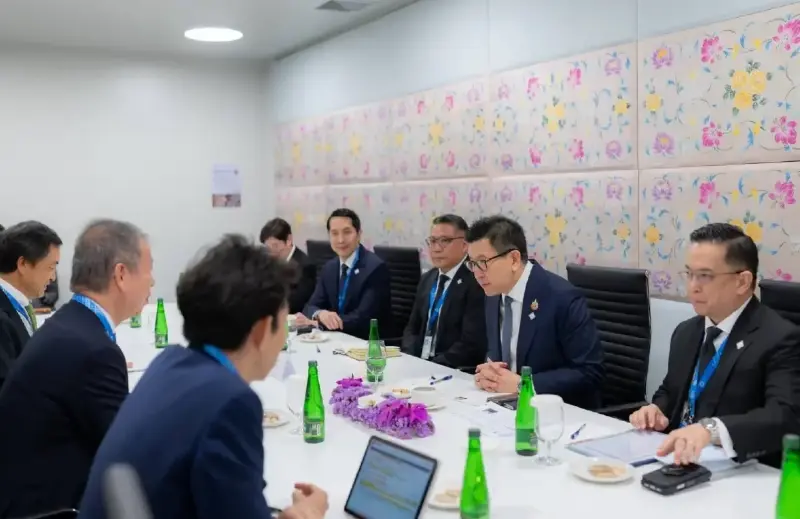


Thailand and JBIC discuss Japanese investment, SME financing, energy efficiency and technology to support the transition to low-carbon cities.
Deputy Prime Minister and Finance Minister Ekniti Nitithanprapas has held talks with Japan Bank for International Cooperation (JBIC) Governor Kazuhiko Amakawa on expanding investment and financial cooperation between Thailand and Japan, with a focus on energy transition and low-carbon development.
The bilateral meeting was held during the 2026 Annual Meetings of the International Monetary Fund (IMF) and the World Bank Group in Bangkok.
The Finance Ministry said the discussions focused on attracting greater investment by Japanese companies in Thailand while using Japanese technology and financing mechanisms to improve energy efficiency and support the country’s transition towards a greener economy.
Thailand seeks to expand AZEC-SAVE cooperation
The two sides discussed expanding cooperation through Japan’s AZEC-Smart and Advanced Value-chain for Environment (AZEC-SAVE) platform, which supports investment in energy conservation and reductions in greenhouse-gas emissions in Thailand’s industrial and commercial sectors.
The platform was launched in Thailand in April 2025 by JBIC’s Bangkok Representative Office together with Japanese government-related organisations to connect businesses with support ranging from technology and business matching to financing.
Ekniti also discussed opportunities to build on Japanese financing mechanisms, including the POWERR Asia FAST Window, which JBIC launched in May 2026 to support energy and supply-chain resilience, energy diversification and projects including renewable energy and energy efficiency.
Ekniti highlighted opportunities to deepen cooperation on energy transition and the development of low-carbon cities by applying Japanese technology and innovation to improve energy efficiency in buildings and urban infrastructure.
He also discussed financing options that could help Thai small and medium-sized enterprises (SMEs) gain greater access to funding from Japanese financial institutions and private companies.
Such financing could help businesses reduce energy costs, invest in more efficient technologies and strengthen their long-term competitiveness.
Japanese technology seen supporting green transition
The talks reflected Thailand’s efforts to combine investment, technology and financing to accelerate its green transition.
JBIC has already used the AZEC-SAVE platform to support the introduction of Japanese energy-efficient equipment in Thailand, including financing arrangements enabling companies to lease energy-saving machinery and technology.
The Finance Ministry said cooperation with JBIC could help attract further Japanese private-sector investment while supporting Thai companies in adapting to lower-carbon production.
The October 13 bilateral meeting also covered improving energy efficiency, energy transition and the role of financial tools in helping businesses reduce energy costs while increasing the competitiveness of Thai industry.
ASEAN and IMF discuss AI and economic resilience
Separately, Fiscal Policy Office Director-General Winij Wisetsuwannaphum, representing the deputy prime minister and finance minister, joined ASEAN finance ministers and central bank governors for the IMF Managing Director’s Strategic Dialogue with the ASEAN Finance Ministers and Central Bank Governors.
The meeting with IMF Managing Director Kristalina Georgieva focused on economic challenges facing the region and policies to strengthen resilience and sustainable growth.
Discussions included preparing workers for changes brought by artificial intelligence, promoting trade in services, improving the allocation of capital and strengthening social protection systems.
Thailand emphasised the potential of AI to raise productivity and the need for policies that allow workers and businesses to adapt to technological change.
Participants also highlighted the IMF’s role in assessing the economic impact of AI and providing policy advice to help countries use the technology to support broad-based and sustainable growth.
