
Pope Leo’s lung cancer confirmed in 90-minute surgery
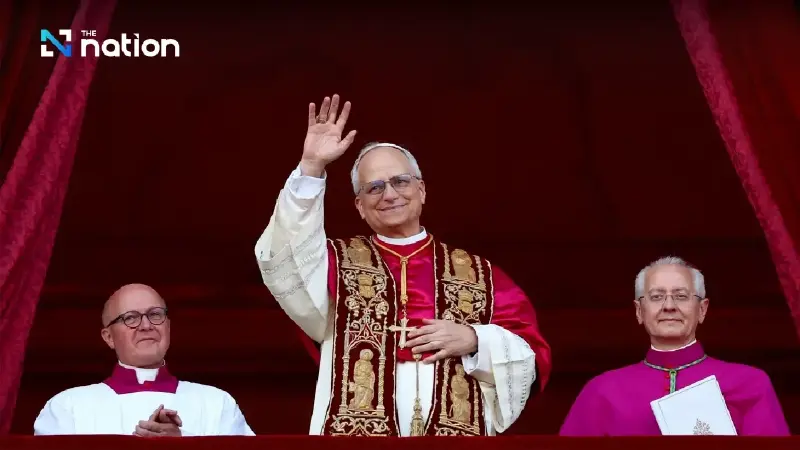


Surgeons removed the lower lobe of Pope Leo’s right lung in Rome without complications, the Vatican said, but the cancer stage remains undisclosed
- Pope Leo XIV was diagnosed with lung adenocarcinoma during a successful 90-minute surgery at Rome's Gemelli Hospital.
- The procedure involved the removal of the lower lobe of the 71-year-old pontiff's right lung and was intended to be curative.
- While the Pope is recovering without complications, the cancer's stage has not yet been disclosed, which is a critical factor for his prognosis.
- As a result of the surgery, all of the Pope's public events have been cancelled until at least October 20, and he is expected to remain in the hospital for about a week.
Pope Leo XIV was diagnosed with lung cancer during surgery at Rome’s Gemelli Hospital on October 13, 2026, when doctors removed the lower lobe of his right lung, the Vatican said. The operation on the 71-year-old pontiff lasted about 90 minutes and was successful, with no complications.
The Vatican’s medical bulletin identified the disease as lung adenocarcinoma, a common form of cancer. Tissue tests performed during surgery confirmed suspicions raised by pre-operative examinations.
Leo was admitted to Gemelli on October 13 for surgery after doctors discovered the growth during a recent routine health check.
“In order to make the procedure curative, the lower lobe of the right lung was removed using a video-assisted technique,” said lead surgeon Dr Stefano Margaritora and Leo’s personal physician, Dr Luigi Carbone, in their statement. The doctors’ aim was to remove all cancerous tissue.
Leo regained consciousness normally after surgery and returned to his hospital room to rest, according to the Vatican bulletin.

Cancer stage remains undisclosed
The Vatican had not immediately disclosed the size of Leo’s tumour or whether cancer had spread to his lymph nodes. Those details are needed to assess the case, said Dr Stephen Liu, a lung cancer expert at Georgetown University in Washington and division chief of haematology-oncology at MedStar Georgetown University Hospital.
“While we have the diagnosis, we do not yet have the stage. This is critical to prognosis and treatment,” Liu said.
“If this is a small lung cancer with no lymph nodes involved, surgery itself is likely to be curative,” Liu told Reuters. “But if final analysis reveals a greater extent of cancer involvement, this indicates a poorer prognosis.”

Public events cancelled until October 20
All of Leo’s public events have been cancelled until October 20, and the Vatican expects him to remain in hospital for about a week.
Leo’s planned 11-day tour of Uruguay, Argentina and Peru, scheduled for November 6–17, remained uncertain. The pope usually maintains a busy schedule and spoke in a firm, clear voice at his only public event on October 12.
Before the operation, Leo left the Vatican shortly before 1pm Rome time, or 11am GMT, waving from the back of a black sport utility vehicle as his convoy travelled about 9km (5.6 miles) north to Gemelli Hospital.
Leo shook hands with officials on arrival and walked past a crowd of well-wishers before entering through the hospital’s main entrance. Some in the crowd called out “Auguri”, meaning “best wishes”.
Leo retains papal authority during illness
Leo remains the ultimate earthly authority for the world’s 1.4 billion Catholics, with no deputy taking over when he is ill. The Vatican’s administration continues its routine work when a pope is incapacitated, while decisions requiring papal approval are put on hold.
Leo was elected by the world’s cardinals in May 2025, following the death of Pope Francis at the age of 88 that April. Francis had been hospitalised several times as he became increasingly frail in his later years.
Relatively young for a Church leader, Leo enjoys sport, including tennis, and is not known to be a smoker or to have had other recent health problems.
Born Robert Prevost in Chicago in 1955, Leo spent decades serving as a missionary and bishop in Peru before becoming pope.
Leo recalls typhoid illness in Peru
Leo was hospitalised with typhoid fever in 1985 while working as a young priest in Chulucanas, Peru. The pope recounted the illness in his only major interview since his election, published in a book for Penguin Peru.
Leo said the pain had been so severe that he asked God to let him die rather than continue suffering. The pope interpreted his survival as a sign from God that “We need you here (on Earth)”.
“I never looked back,” Leo said.
