Annual Meetings of the IMF and World Bank Group, Oct 14, 2026: "Ekniti-Vitai" take the IMF stage to launch "Bangkok Blueprint" to combat global financial fraud - Watch the Fiscal Monitor warning global public debt reaching 100% of GDP, while "Ajay Banga" leads discussion on unlocking emerging market investment.
The IMF and World Bank launched the "Bangkok Blueprint," a new global policy framework designed to combat cyber-enabled financial fraud, during their annual meeting on October 14, 2026.
Developed jointly with the Bank of Thailand, the blueprint advocates for an ecosystem-wide approach that emphasizes international cooperation, enhanced coordination, and technology-driven preventive measures.
The framework includes "12 Key Considerations" to guide countries in aligning their policies against financial fraud.
The initiative's name and high-level participation signal that the issue of scam syndicates, prominent in the region, has been elevated to a global regulatory priority.
The Annual Meetings of the International Monetary Fund (IMF) and the World Bank Group at the Queen Sirikit National Convention Center on Wednesday, October 14, 2026, feature over 40 agendas from 08:00 AM to 08:00 PM. The highlight directly relevant to Thailand is the launch of the "Bangkok Blueprint," a high-level policy framework for addressing cyber fraud developed jointly by the IMF, the World Bank, and the Bank of Thailand. It will be opened by Ekniti Nitithanprapas, Deputy Prime Minister and Minister of Finance, and introduced by Vitai Ratanakorn, Governor of the Bank of Thailand.
Meanwhile, the Fiscal Monitor report presented during the morning session warns that global public debt is climbing toward 100% of GDP by 2029.
Highlights of the IMF-World Bank Meeting, Oct 14, 2026: Launch of "Bangkok Blueprint" to Combat Global Financial Fraud
1. "Bangkok Blueprint": Thailand's Agenda on the Global Stage
12:30 - 01:30 PM, Room G-01 - Launch event for "Bangkok Blueprint for Fraud-Resilient Financial Services"
The framework proposes an ecosystem-wide approach to addressing cyber-enabled fraud, based on the concept that rapid technological change has expanded risks across sectors and borders. Response requires enhanced coordination, international cooperation, and advanced technology-driven preventive measures. The IMF and the World Bank, in collaboration with the Bank of Thailand, have prepared "12 Key Considerations" to guide aligned policies across countries.
Panelists:
Ekniti Nitithanprapas - Deputy Prime Minister and Minister of Finance (Opening remarks)
Vitai Ratanakorn - Governor of the Bank of Thailand (Introduction)
Kristalina Georgieva - Managing Director, IMF
Anshula Kant - Managing Director and Chief Financial Officer, World Bank Group
Andrew Bailey - Governor of the Bank of England and Chair of the Financial Stability Board
Soraya Munyana Hakuziyaremye - Governor of the National Bank of Rwanda and Chair of the AFI Board
Josh Lipsky - Atlantic Council (Moderator)
Followed by the "Bangkok Blueprint Implementation" session from 02:00 - 03:00 PM in Room G-02, which dives deep into practical implementation steps for the framework.
Notable news angle: The use of "Bangkok" in the global policy framework's name, alongside the participation of the Bank of England Governor who chairs the FSB, reflects that the scammer and call center syndicate problem in this region has been elevated to a global regulatory agenda.
2. Fiscal Monitor: Global Public Debt to Surge to 100% of GDP by 2029
09:00 - 09:45 AM, Room G-03
Key highlights of the report indicate that global public debt rose to 94% of GDP in 2025 and is projected to reach 100% by 2029, driven primarily by major economies. Global fiscal positions are strained by increasing spending pressures on social welfare, defense, and strategic autonomy, alongside higher interest burdens. Meanwhile, the fiscal impacts of conflicts in the Middle East exacerbate vulnerabilities.
The report also points to structural changes in government debt markets, including the growing role of highly leveraged non-bank financial intermediaries and the erosion of the safety premium on US Treasuries, which amplifies the risk of sudden price adjustments. The conclusion is that all country groups urgently need to adjust their fiscal positions credibly and in a well-prioritized manner.
Presenters: Rodrigo Valdés, Director of the IMF's Fiscal Affairs Department; Era Dabla-Norris, Deputy Director; Davide Furceri, Division Chief; moderated by Pavis Devahasadin.
Followed by the IMF Managing Director Press Briefing from 10:00 - 10:45 AM in Room G-03.
3. ASEAN in a Changing Global Landscape
08:30 - 09:30 AM, Room G-09 - High-level panel on how ASEAN economies can maintain resilience and strengthen medium-term growth amid an increasingly uncertain and fragmented global environment.
Panelists:
Kristalina Georgieva - Managing Director, IMF (Opening remarks)
Atsushi Mimura - Vice Minister of Finance for International Affairs, Japan (in charge of exchange rate policy and part of the US-Japan trade and investment agreement negotiating team in July 2025)
Scott Morris - Vice President, ADB (Overseeing East Asia, Southeast Asia, and the Pacific)
Eli M. Remolona Jr. - Governor, Central Bank of the Philippines, former Head of Asia-Pacific at the BIS
Krishna Srinivasan - Director of the Asia and Pacific Department, IMF (Overseeing 37 countries in the region)
Yasuto Watanabe - Director, AMRO
John Aglionby - Nikkei Asia (Moderator)
Additionally, earlier that morning featured the IMF-AMRO Signing Ceremony from 08:00 - 08:30 AM in Room G-07, strengthening cooperation between the IMF and the ASEAN+3 Macroeconomic Research Office.
4. World Bank Flagship Event: Unlocking Emerging Market Investment for Job Creation
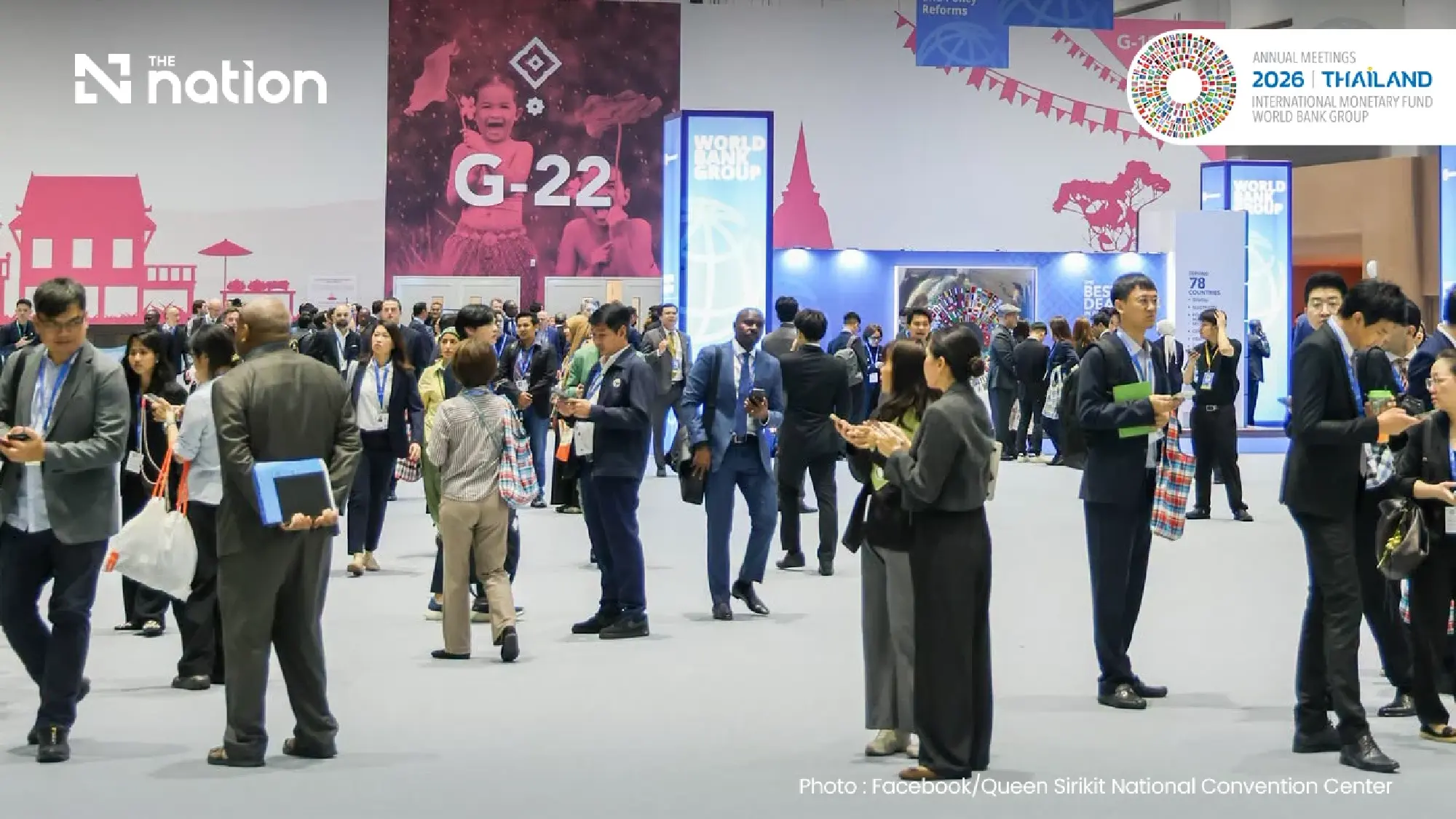
10:30 - 12:00 PM, Room G-22 - The day's flagship event featuring the highest concentration of senior executives, led by World Bank Group President Ajay Banga, along with Ed Miliband, Douglas Peterson, Shriti Vadera, Jean-Paul Servais, Shemara Wikramanayake, Karen Karniol-Tambour, Hussain Al Nowais, Atsi Sheth, Chris Wehbe, and Michael Wehrle. Moderated by Sharanjit Leyl.
5. Trade, Supply Chains, and AI
Trade
08:00 - 09:30 AM, Room 1-110 - East African Community Regional Value Chains: Lessons from Asia
11:00 - 12:00 PM, Room G-07 - Trade Diversification in a Volatile Era
04:30 - 05:45 PM, Room 1-109A - Economic Corridors and Infrastructure: Focusing on the IMEC Project
AI
12:00 - 01:30 PM, Room 2-211D - When AI is the Employer: Platform Labor, Social Security, and ILO Convention No. 193
12:00 - 01:00 PM, Room G-13 - Digital Government with Public Service Reform and Tax Administration
04:30 - 05:10 PM, Room G-17 - Designing a New Tax System in the Age of AI
04:30 - 06:00 PM, Room G-12 - AI and State Capability
05:00 - 06:00 PM, Room G-09 - Technology for Prosperity in Emerging and Developing Countries
6. Public Debt and Fiscal Sustainability
09:00 - 10:30 AM, Room 2-210A - Assessing the Two-Year Progress of the IMF-World Bank Three-Pillar Approach to Addressing Liquidity and Debt Challenges
11:00 - 12:30 PM, Room 2-210A - New Evidence on Fiscal Austerity, Adjustment Costs, and Military Spending
03:30 - 04:45 PM, Room G-08 - Global Sovereign Debt Roundtable (Closed session)
09:30 - 10:30 AM, Room G-07 - AMLAC Fund Against Money Laundering and Corruption
12:00 - 12:45 PM, Room G-09 - Technology and Public Financial Management in South Asia
7. Governor Talks and Other Interesting Panels
10:45 - 11:15 AM, Room G-09 - Post-Inflation Europe: Policy Challenges in a Changing World
01:30 - 02:00 PM, Room G-09 - Rwanda: Cross-Border Payments, Cybersecurity, and AI
03:00 - 03:30 PM, Room G-09 - Venezuela: From Crisis Management to Restoring Hope
03:30 - 04:30 PM, Room G-01 - Success Lessons on Reform and Cooperation
04:30 - 05:30 PM, Room G-15 - Aging Society and Development (An issue aligning with Thailand's challenges)
The Knowledge Café in Room G-16 runs continuously all day, covering private capital mobilization for transmission grids (12:30 PM), river investments (01:45 PM), financial system conditions for private fundraising (03:00 PM), eco-industrial parks (04:15 PM), and regional vaccine manufacturing potential (05:30 PM).
8. Closing Sessions and Ministerial Meetings
Meeting of African Governors with the World Bank President (08:45 AM), African Caucus with the IMF Managing Director (11:00 AM), Coalition of Finance Ministers for Climate Action (12:30 PM), IDA Forum (01:30 PM), Ministerial Discussion on Employment (02:00 PM), 10th Ministerial Meeting on Ukraine (05:00 PM), and the Pacific Islands High-Level Roundtable (05:30 PM).
Livestream Channels for the "IMF-World Bank 2026" Meetings:
Livestream of the IMF-World Bank 2026 Meetings via IMF Live online channel