
IMF warns of three threats to markets and urges stronger safeguards
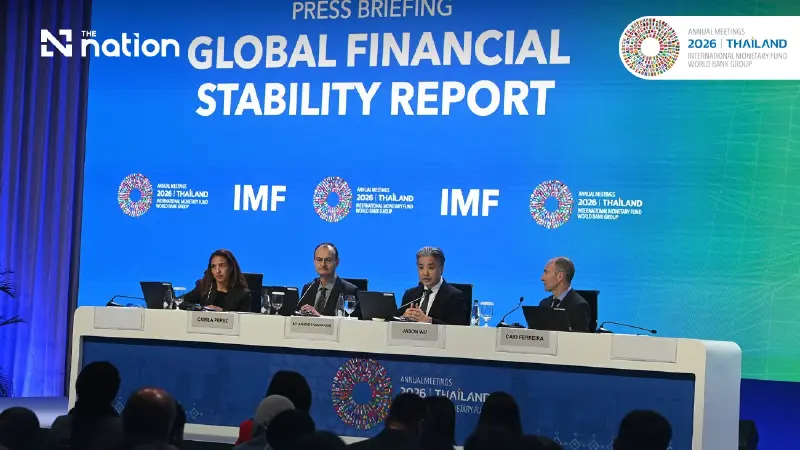


The IMF warns an AI market correction, higher bond yields and cyber threats could unsettle markets, urging fiscal discipline, financial oversight and cyber resilience.
- The International Monetary Fund (IMF) has identified three primary threats to global markets: a correction in the artificial intelligence (AI) sector, rising bond yields, and cyber threats.
- A downturn in the AI market, which has become a significant driver of share prices, could be triggered by disappointing earnings and cause wider economic disruption.
- Higher bond yields pose a second risk, potentially harming corporate profits and tightening financial conditions, with policymakers having less room to respond due to inflation and debt.
- The third threat is from cyberattacks, which could disrupt financial services and undermine confidence, with the risk amplified by increased digitalisation and the use of AI by criminals.
- In response, the IMF is urging policymakers to strengthen financial safeguards, improve cyber resilience, and address fiscal imbalances before these potential shocks emerge.
The International Monetary Fund (IMF) has identified three major risks that could trigger global market turmoil and tighten financial conditions: an artificial intelligence (AI) market correction, rising bond yields and cyber threats.
The warning came during a briefing on the IMF’s October 2026 Global Financial Stability Report at the Queen Sirikit National Convention Center in Bangkok on Tuesday (October 13), during the IMF–World Bank Annual Meetings.
Athanasios Vamvakidis, Deputy Director of the IMF’s Monetary and Capital Markets Department, attributed strong investor risk appetite to robust earnings, better-than-expected growth and optimism surrounding AI, while cautioning that market resilience did not necessarily guarantee financial stability.
“This resilience, however, is not necessarily safety. And in our report we discuss three key risks that could trigger market turmoil, tightening financial conditions.”
He warned that these risks could expose unresolved or worsening vulnerabilities in the financial system, potentially leading to wider instability.

AI market correction could trigger wider financial disruption
The first risk is an AI-related market correction, as optimistic earnings forecasts and ambitious investment plans have made the technology sector increasingly important to economic growth and financial markets.
Vamvakidis explained that AI had become a major driver of share prices and economic resilience. Disappointing earnings, investment plans that failed to materialise or weaker-than-expected returns could trigger a market correction with broader economic consequences.
“There's no doubt that if we get an AI market correction, it will affect the real economy and have broader implications. How severe it's going to be depends on the scenario that will unfold.”
He stressed that the IMF was not forecasting a correction, noting that AI-related valuations were not necessarily stretched because strong earnings growth had pushed price-to-earnings ratios lower.
However, the concentration of market performance and economic resilience in AI remained a concern. Circular financing arrangements within the sector could also become a source of instability if funding slowed or expected revenue failed to materialise.
A correction could affect other asset prices, widen borrowing spreads and reduce investors’ willingness to take risks, tightening financial conditions.
Thailand faces potential risks from an AI market correction
Jason Wu, Assistant Director in the IMF’s Monetary and Capital Markets Department, highlighted Thailand’s exposure to changes in global AI investment.
Wu explained that Thailand’s AI hardware exports had helped offset higher energy prices and support the country’s current-account buffers.
However, an AI market correction could affect those exports and global asset valuations, potentially weakening currencies and creating capital outflow pressures in emerging economies, including Thailand.
“So for emerging market economies, including for Thailand, it is important to build resilience before such a shock were to happen, and importantly, allow the exchange rate to be the shock absorber.”

Rising bond yields could intensify financial pressures
The IMF identified higher bond yields as its second major risk, with Vamvakidis noting that the forces driving yields varied between countries and over time.
He warned that higher yields could affect corporate earnings and contribute to a market correction, tightening financial conditions.
Persistent inflation, new price pressures and concerning debt dynamics in some economies also meant policymakers had less room to respond to economic shocks than in previous periods.
Cyber threats could disrupt financial services
The third risk involves cyber threats that could disrupt financial services and weaken confidence in the financial system.
Wu identified three factors increasing the danger: expanding digitalisation, growing reliance on particular software and cloud-service providers, and greater access to tools used by cybercriminals, including AI.
“These are global forces that are impacting all countries, developed and developing.”
He noted that emerging markets were generally less prepared because they had devoted fewer resources to cybersecurity.
Wu urged stronger cyber hygiene, greater supervisory capacity and closer coordination, including with the private sector, to improve preparedness and address vulnerabilities.
Financial institutions could amplify market shocks
Beyond the three immediate threats, the IMF warned that existing weaknesses in financial institutions could amplify market disruption.
Under severe stress-test scenarios involving an AI market correction, energy-price shocks and bond-market disruption, the banking sector remained resilient overall. However, some banks could become undercapitalised, particularly those with greater exposure to non-bank financial institutions (NBFIs).
Vamvakidis highlighted growing risks within the non-bank sector, including illiquid investments held by pension funds and insurers, increasing leverage among private-credit borrowers, and hedge funds’ leveraged and crowded investment positions.
These vulnerabilities could intensify market shocks and restrict lending during periods of financial stress.

IMF urges stronger safeguards before new shocks emerge
The IMF urged policymakers to strengthen financial resilience before new shocks emerge, with Vamvakidis calling for action on fiscal imbalances and sustainable debt management.
“It is therefore very important for fiscal policy to focus on addressing fiscal imbalances and bringing debt dynamics back to a sustainable path.”
He also urged central banks to focus on their inflation mandates, communicate clearly and preserve their independence, stressing that credibility was essential to anchor long-term yields.
Vamvakidis further called for stronger cyber resilience and closer supervision of banks, particularly non-bank financial institutions, to address potential systemic risks.
“The bottom line is that now is the time to strengthen the financial system.”
