
Thailand’s fruit carts showcase soft power at IMF–World Bank meetings
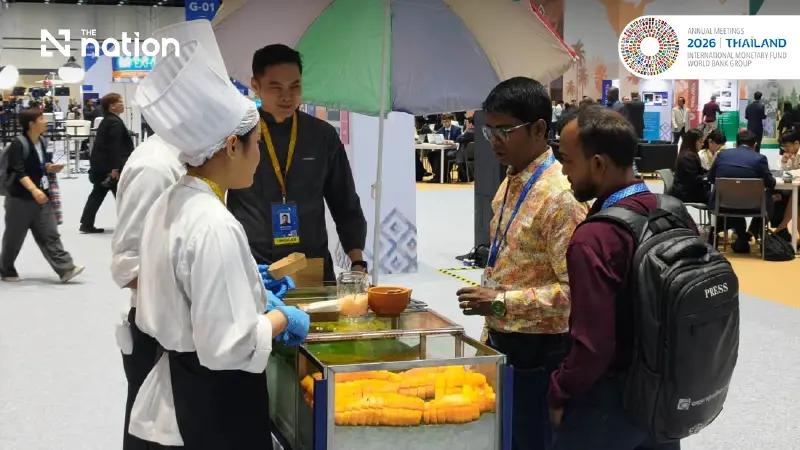


Foreign guests praise Phulae pineapple as fruit carts serve seasonal produce and traditional Thai sweets at the 2026 IMF–World Bank meetings.
- Thailand is using traditional fruit carts at the 2026 IMF–World Bank meetings as a form of "soft power" to showcase its culture to over 15,000 international attendees.
- The carts serve a rotating daily menu of fresh seasonal fruits, including geographically indicated (GI) products like Phulae pineapple, and traditional Thai sweets.
- The initiative has been highly popular with foreign guests, who have praised the taste and freshness of the fruit and the charming presentation as a unique cultural experience.
Thai ‘fruit carts’ are adding flavour and smiles to the 2026 Annual Meetings of the International Monetary Fund (IMF) and World Bank Group at the Queen Sirikit National Convention Center.
Serving fresh seasonal fruit and traditional Thai sweets, the familiar street food carts have won over many foreign guests, offering a memorable taste of Thai culture at the international gathering.
Fruit carts offer more than conference snacks
Thailand is hosting this year’s meetings from October 12 to 18, 2026 at the convention centre, returning as host for the first time in 35 years.
The event welcomes more than 15,000 participants, including finance ministers, central bank governors, business executives and representatives from 191 countries.
While the meetings provide a major forum for discussing the direction of the global economy and finance, hosting also gives Thailand an opportunity to introduce visitors to the country’s identity, creativity and cultural appeal.
The fruit carts are one example of Thai soft power on display.
Bringing this familiar roadside offering into an international conference gives participants a chance to discover products with geographical indication (GI) status and another side of Thai food culture, through a presentation that differs from conventional conference refreshments.


Fresh seasonal Thai GI fruit on a changing daily menu
Staff at the fruit cart booth explained that fruit and snacks are served twice daily, at 10am and around 2pm.
Two fruit carts operate during each session, with the food and fruit selections rotating so participants receive different menus throughout the meetings.
The morning selection on the second day, Tuesday (October 13), featured two kinds of fruit: rambutan from Surat Thani province and GI-registered Phulae pineapple from Chiang Rai province.
Coconut ice cream was on the afternoon menu.
The previous day, when the meetings opened, ‘mangoes’ and ‘yellow watermelon’ were served in the morning.
In the afternoon, guests were served the traditional Thai sweets ‘khanom tan’ (palm fruit cakes) and ‘duck-shaped coconut jelly’.
The variety gave participants an opportunity to discover both Thai fruit and traditional desserts that foreign visitors might not have encountered before.
The fruit and dessert selections change daily, and other traditional Thai sweets may be added to the afternoon menu, depending on preparations by the central kitchen.


Foreign guests flock to fruit carts and praise Phulae pineapple
Beyond the appeal of the carts themselves, the busy fruit booth reflected participants’ positive response.
Bangkok Biz News spoke to several foreign guests outside the meeting rooms and found that most enjoyed the fruit’s sweet flavour and freshness.
Phulae pineapple, a speciality from Chiang Rai, stood out, with one foreign participant describing it as one of the best pineapples they had ever tasted.
The response showed how familiar Thai fruit can leave a strong impression on foreign visitors.
Several guests also considered serving fruit from Thai-style carts a charming and interesting idea, offering a different approach to conference refreshments and adding colour to the atmosphere.
Booth staff added that participants had arrived steadily the previous day, and the fruit prepared for them ran out in about half an hour.
Staff also felt that presenting Thai fruit and sweets in an accessible way helped foreign visitors on their first trip to Thailand learn more about the country’s food culture.
Alongside tasting the food, visitors could see what each item looked like and how it was presented at close quarters.
The carts provided more than refreshments.
People chatted, sampled food, took photographs and exchanged experiences in a relaxed setting.
A familiar part of everyday Thai life, the fruit cart became a modest form of soft power, starting conversations and helping foreign guests discover Thai fruit.
Including fruit carts in the welcome for IMF–World Bank meeting participants showed that presenting Thai culture need not always involve performances or large events.
It can also begin with things people see and experience in everyday life.
If initiatives like this can help introduce produce from Thai farmers to a wider audience, the fruit’s role could extend beyond conference snacks.
Such initiatives could also help people recognise the connections between local ingredients, food culture and everyday life in Thailand.
Source: Bangkokbiznews
