
Pope Leo XIV calls for AI to be ‘disarmed’ in first encyclical as Vatican takes aim at Big Tech
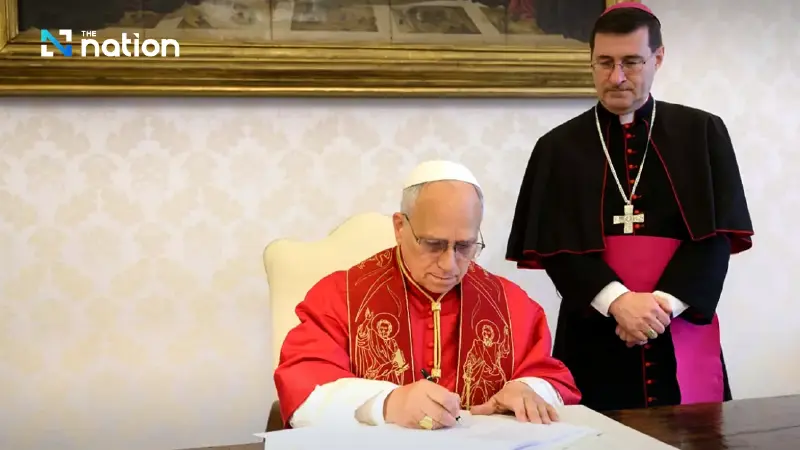


Pope Leo XIV used his first encyclical, Magnifica Humanitas, to call for stronger AI regulation, warn of risks to jobs and human dignity, and open a rare Vatican dialogue with Silicon Valley.
Pope Leo XIV puts AI at centre of Vatican agenda with first encyclical
Pope Leo XIV has used his first encyclical to issue one of the Vatican’s strongest warnings yet on artificial intelligence, calling for AI to be “disarmed” and governed by binding safeguards to prevent it from becoming a tool of domination, exclusion and conflict.
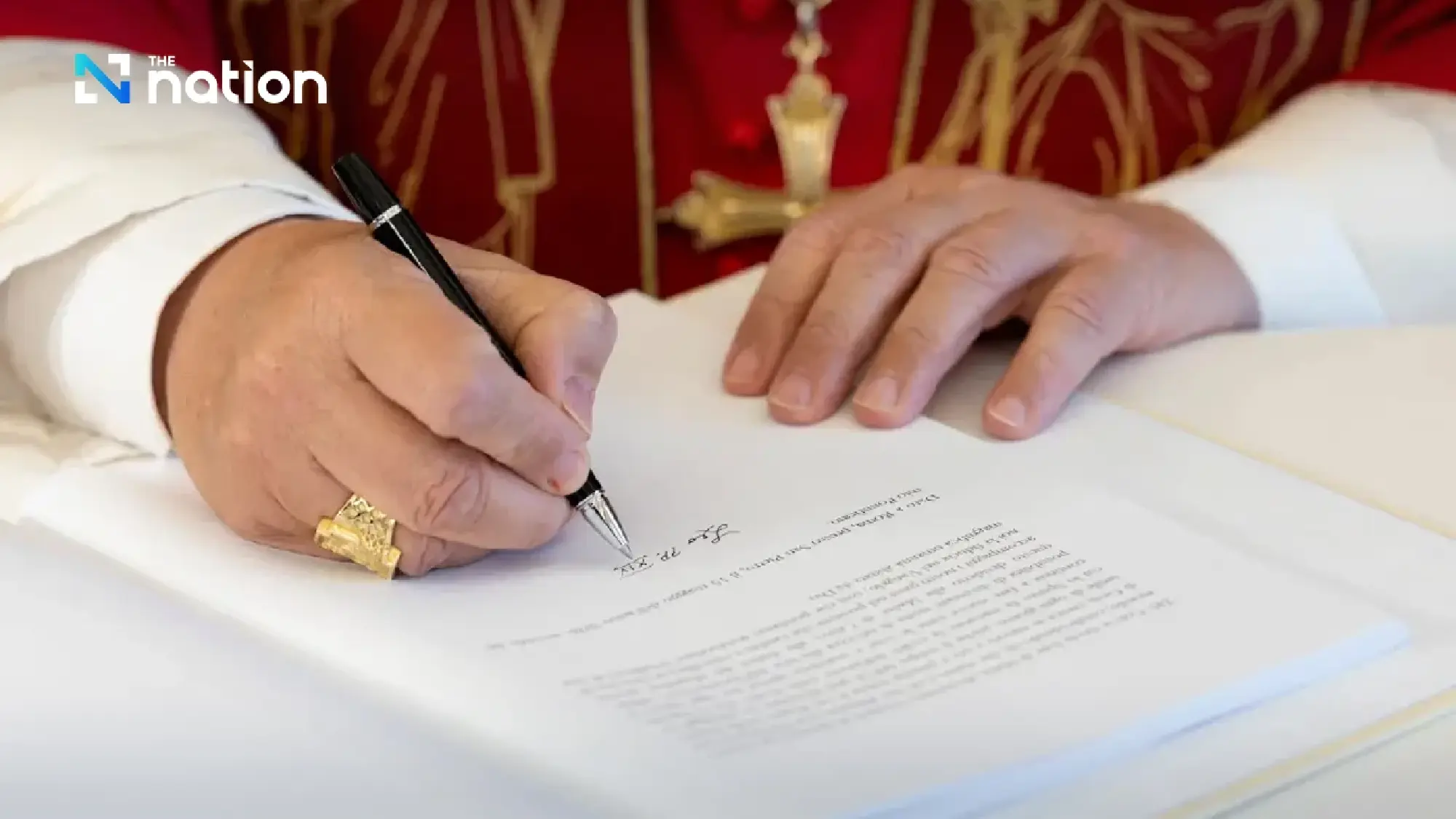
The encyclical, titled Magnifica Humanitas, focuses on safeguarding the human person in the age of artificial intelligence. It was presented on May 25, 2026, at the Vatican’s Synod Hall, with Pope Leo XIV personally taking part in the launch. The Holy See said the document was dated May 15, the 135th anniversary of Pope Leo XIII’s landmark social encyclical Rerum Novarum.
In a notable departure from usual Vatican practice, the Pope himself addressed the presentation. The event also brought together senior Vatican officials, theologians and Christopher Olah, co-founder of US AI company Anthropic and head of research on AI interpretability.

Vatican sends direct message to AI industry
At the heart of the document is Pope Leo XIV’s call for AI to be placed at the service of humanity rather than power, profit or military dominance.
The Pope said artificial intelligence “needs to be disarmed”, warning that it must be freed from systems that turn it into an instrument of “domination, exclusion and death”. He compared the need for AI governance with the Church’s long-standing call for nuclear disarmament, arguing that every powerful technology must be matched by moral discernment and public control.
The message places the Vatican more firmly inside the global debate over AI governance, at a time when governments, technology companies and civil society groups are divided over how far regulation should go.

Pope warns against autonomous lethal decisions
One of the strongest parts of the encyclical concerns the use of AI in warfare.
Pope Leo XIV rejected the idea that machines could make moral judgments in place of humans. The document states that it is “not permissible” to entrust lethal or irreversible decisions to artificial systems, adding that no algorithm can make war morally acceptable.
The Pope warned that AI could make conflict faster, more impersonal and easier to justify, while reducing victims to data. He also criticised what he described as a wider “culture of power” behind the global AI race.
Jobs and inequality emerge as major concerns
The encyclical also raises alarm over the impact of automation on workers, warning that a pursuit of profit cannot justify decisions that systematically sacrifice jobs.
Pope Leo XIV said mass unemployment, when it reaches large proportions, becomes a “true social calamity”, and warned that the current wave of technological change is intensifying fears of job insecurity and inequality.
Olah echoed the concern from within the AI industry, saying there is a real possibility that AI could displace human labour on a very large scale. He said the debate could not be left to technology companies alone and called for religious communities, civil society, scholars and governments to help push AI development in a better direction.
Encyclical draws parallel with Industrial Revolution
Pope Leo XIV explicitly linked Magnifica Humanitas to Pope Leo XIII’s Rerum Novarum, published in 1891 during the Industrial Revolution.
The new encyclical frames AI as a transformation of similar scale, but potentially with even greater consequences. The Vatican said the document was signed on the anniversary of Rerum Novarum, reinforcing the connection between the Church’s historical response to industrial capitalism and its new response to digital power.
In his address, Pope Leo XIV said the Church had once spoken to the upheaval faced by factory workers and families during industrialisation. Today, he said, AI is reshaping decisions that affect human coexistence, work and war.
Slavery apology broadens moral message
In a striking section of the encyclical, Pope Leo XIV also addressed the Catholic Church’s historical delay in condemning slavery.
The document describes slavery as “a wound in Christian memory” and says the Church must acknowledge the suffering caused by past complicity and blindness. Pope Leo XIV formally asked for pardon in the name of the Church, while warning that new forms of servitude are emerging in the digital economy.
The encyclical points to hidden labour in AI supply chains, including data labelling, model training, content moderation and resource extraction, as examples of exploitation that risk being concealed behind the language of technological progress.
Vatican-Silicon Valley dialogue enters new phase
The presence of Anthropic’s Olah signalled a rare and deliberate Vatican engagement with Silicon Valley at one of the highest levels of Church teaching.
Olah said AI questions extend beyond computer science and require input from the humanities, religion, philosophy and society at large. He also said the world needs “informed critics” capable of telling AI labs when they are failing.
It was reported that the Vatican’s decision to involve Anthropic was part of a longer effort to engage Silicon Valley on the human cost of AI, even as the Pope criticised the concentration of power and data in the hands of a few private actors.
AI regulation becomes political flashpoint
The encyclical is likely to sharpen global debate over AI regulation, especially as Pope Leo XIV calls for legal frameworks, independent oversight and public accountability.
The Pope’s position is expected to create a political flashpoint with the current US administration, which has pushed to deregulate AI development.
Pope Leo XIV, however, framed the Church’s role as moral rather than technical. He said the Church does not claim to possess all policy answers, but wants to be part of the conversation so that AI serves human dignity rather than degrading it.
