
US and Iran give negotiators 60 days to reach final peace deal
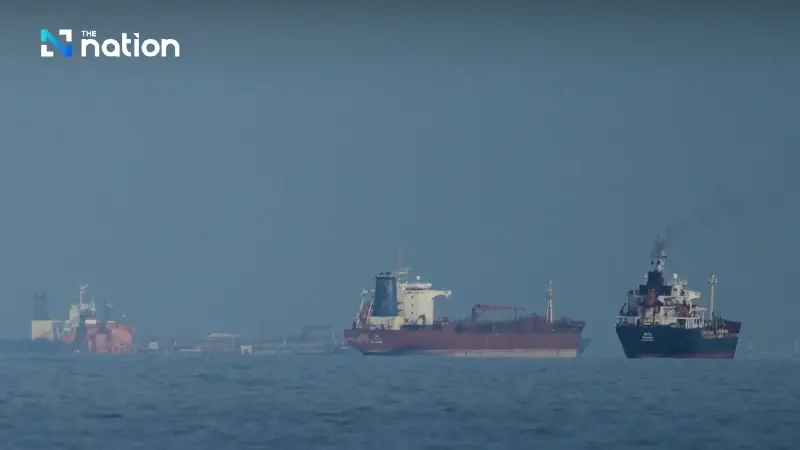


The US and Iran say a draft MOU has made major progress, with the deal expected to pause the war and allow 60 days for final peace talks.
Oil markets moved back into risk mode on Tuesday (May 26), with Brent crude gaining more than 2% after US strikes in Iran deepened uncertainty over whether the war could be halted and the Strait of Hormuz reopened.
At 0630 GMT, Brent futures were trading at US$98.50 a barrel, up US$2.36, or 2.5%.
The rebound followed a sharp 7% drop in the previous session.
US West Texas Intermediate crude was quoted at US$91.95 a barrel.
That was only slightly higher than Monday’s last traded level, but still US$4.65, or 4.8%, below Friday’s close.
The US Memorial Day holiday meant there was no official settlement on Monday.
The price action marked a turn in market sentiment.
Overnight losses had been driven by hopes that a peace agreement might be nearing, but fresh US strikes in southern Iran and Israeli attacks on Hezbollah pushed Brent higher again and widened its premium over WTI, said Michael McCarthy, CEO of online trading platform Moomoo Australia.

Those hopes were further cooled when US Secretary of State Marco Rubio said on Tuesday that talks with Iran could “take a few days”.
His remarks came after US forces carried out what Washington described as defensive strikes in southern Iran, making an immediate breakthrough appear less likely.
The Strait of Hormuz remains the key pressure point for energy markets.
Since the start of the war, Tehran has effectively stopped almost all non-Iranian shipping from entering or leaving the Gulf through the waterway, disrupting about one-fifth of global oil and liquefied natural gas flows.
The latest strikes came as Iran’s top negotiator and foreign minister were in Doha for discussions with Qatar’s prime minister on a possible agreement with the US to end the three-month-old conflict.
Both Washington and Tehran have said progress has been made on a memorandum of understanding.
The arrangement would pause the war and give negotiators 60 days to reach a final settlement.
Nikkei, citing a Middle East diplomatic source, reported that the proposed deal would require Iran to remove mines from the strait within 30 days.
Once that process was completed, vessels from all countries would be allowed to move through the route freely and safely, while Tehran would also stop charging transit fees.
“Traders are betting heavily that a breakthrough will finally free up the long-paralysed tankers stuck in and around the Strait of Hormuz,” said Tim Waterer, chief market analyst at KCM Trade.
Ship-tracking data showed that limited movement had already resumed in recent days.
Three liquefied natural gas tankers passed through the strait on routes to Pakistan, China and India, while a supertanker carrying Iraqi crude to China also moved through after being stranded for nearly three months.
The diplomatic track, however, remained fragile.
US President Donald Trump on Monday repeated his demand that Iran hand over its enriched uranium for destruction.
“It’s a sharp reminder that the deal could still collapse at the eleventh hour, much like the five previous attempts before it,” said Tony Sycamore, a market analyst at IG.
Reuters
