
Bangkok Blueprint sets out five pillars to curb global financial fraud
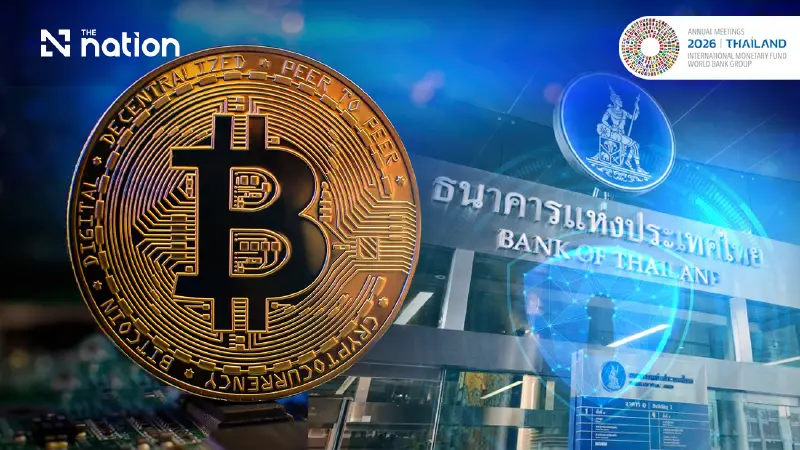


Thailand’s central bank joins the IMF and World Bank Group to launch the Bangkok Blueprint, which sets out five pillars to curb digital fraud and protect consumers.
- The Bank of Thailand, IMF, and World Bank have launched the Bangkok Blueprint, an international framework to combat digital financial fraud.
- The blueprint is built on five interconnected pillars: stronger legal foundations, comprehensive fraud mitigation, effective risk management, domestic and cross-border co-ordination, and consumer protection.
- It aims to provide practical guidance for financial institutions, regulators, and policymakers to strengthen security and public trust in digital financial services.
- The framework is supported by a companion report drawing on policy lessons from Hong Kong, Malaysia, Singapore, and Thailand to aid implementation.
The Bank of Thailand (BOT) has joined forces with the International Monetary Fund (IMF) and the World Bank Group to launch the Bangkok Blueprint for Fraud-Resilient Financial Services, establishing an international framework to combat digital financial fraud and strengthen confidence in financial services.
Introducing the initiative at the 2026 IMF–World Bank Group Annual Meetings in Bangkok on Wednesday (October 14), BOT Governor Vitai Ratanakorn highlighted the benefits of digital finance while warning of increasingly interconnected threats.
“Digital finance has become a powerful enabler of economic transformation. It has made financial services faster, cheaper, and more inclusive. As digital finance becomes widely adopted, it also creates new interconnected risks,” Vitai explained.

Three major threats to digital finance
Vitai identified three areas requiring particular attention as financial services become increasingly digitalised.
- Fraud and scams: Global fraud losses were estimated to exceed US$442 billion in 2025, while cyber-enabled fraud cases had almost tripled over the previous decade. Asia accounted for 67% of global fraud losses in 2024, highlighting the region's substantial exposure to financial crime.
- Cyber and operational risks: Growing interdependence between financial institutions, technology providers and critical financial infrastructure has heightened the financial system's vulnerability to cyber threats and operational disruptions.
- Governance and safeguards: The increasing adoption of artificial intelligence (AI) and other emerging technologies in financial services requires regulatory oversight and safeguards that keep pace with innovation.
Thailand's experience demonstrates how coordinated measures can reduce financial losses. Losses from financial fraud exceeded THB43 billion in 2024 before declining to THB32 billion in 2025.
“In the first half of this year, losses fell to just over 9 billion Thai baht. That is a huge reduction, reflecting that coordinated action can make a meaningful difference,” Vitai noted.
Bangkok Blueprint establishes five pillars for financial resilience
These risks have shaped the BOT's Safe and Inclusive Digital Finance (SIDF) agenda, which seeks to ensure that the development of digital financial services is accompanied by stronger security, consumer protection and financial resilience.
“SIDF reflects a simple principle: as digital finance advances, trust and resilience must advance with it,” Vitai emphasised.
The Bangkok Blueprint translates this approach into five interconnected pillars intended to provide practical guidance for financial institutions, regulators and policymakers.
- Stronger legal and institutional foundations: Establish clear institutional responsibilities, accountability and legal powers to support the prevention and suppression of financial crime.
- Comprehensive fraud mitigation: Strengthen safeguards throughout the fraud mitigation life cycle, from product design and adaptive prevention to system-wide detection, coordinated responses and recovery mechanisms.
- Effective risk management and enforcement: Improve the implementation of existing risk management frameworks and enforcement measures to tackle financial fraud more effectively.
- Domestic and cross-border coordination: Expand information sharing, strengthen cooperation between authorities and enable timely joint action against financial crime.
- Consumer protection and financial literacy: Enhance consumer safeguards and public awareness to help people recognise fraud risks and protect themselves from financial crime.
Vitai stressed that the five pillars must operate together, warning that individual measures cannot adequately address increasingly sophisticated financial threats.
“These pillars reinforce each other. Strong laws without operational coordination will not be enough. Better detection without rapid response will not prevent funds from disappearing,” he explained.
He also emphasised that stronger controls without consumer protection would not preserve public trust.

Thailand tightens controls on illicit financial flows
The nature of financial fraud has evolved from unauthorised transactions towards authorised push payment scams, in which victims are manipulated into transferring money themselves.
This shift has prompted Thailand to move beyond institution-specific safeguards towards a coordinated response involving the entire financial ecosystem.
“Thailand's experience illustrates how this principle can translate into real practice. As fraud shifts from unauthorised transactions to sophisticated authorised push payment scams, we moved from institution-based controls to a whole-of-ecosystem approach,” Vitai explained.
Thailand's Emergency Decree on Measures for the Prevention and Suppression of Technological Crimes provides the legal foundation for information sharing, rapid intervention, account suspensions and shared responsibility across sectors.
Meanwhile, the BOT has broadened its efforts to disrupt illicit financial flows, recognising that proceeds from fraud and scams frequently move through multiple financial channels.
“Fraud proceeds often move through scam accounts before being withdrawn, and they use cash to convert into gold, foreign currency, or digital assets, in particular USDT,” Vitai observed.
The central bank has consequently strengthened preventive measures in four areas:
- Large cash withdrawals: Require reporting of cash withdrawals of THB5 million or more.
- Gold and foreign exchange transactions: Strengthen oversight of high-value gold transactions and impose tighter supervision on foreign exchange businesses.
- Digital asset transactions: Work with Thailand's Securities and Exchange Commission (SEC) to strengthen oversight of the digital asset ecosystem, particularly transactions involving USDT.
- Financial sector safeguards: Implement the Framework on Safeguarding the Financial Sector from Illicit Activity, announced in September 2026, to establish common standards and commitments aimed at preventing the financial system from facilitating illegal activities.
These measures are intended to close gaps exploited by criminal networks and improve the authorities' ability to detect and interrupt suspicious financial transactions.

Lessons from four Asian markets support implementation
To help translate the Bangkok Blueprint into practical measures, the BOT has also developed a companion report titled Bangkok Blueprint in Action: Regional Experience and Policy Lessons for Fraud-Resilient Financial Services.
The study draws on experiences and policy lessons from Hong Kong, Malaysia, Singapore and Thailand, examining how different financial systems have responded to fraud and emerging technological threats.
It identifies policy gaps, highlights good practices and provides practical guidance for policymakers seeking to strengthen national safeguards against financial crime.
The findings are intended to support implementation of the blueprint while encouraging closer regional cooperation and the exchange of effective regulatory approaches.
Concluding his remarks, Vitai underscored the importance of sustained international cooperation, noting that financial resilience depends on collective action rather than measures taken by individual institutions or countries.
“Moving forward, true resilience will depend on coordinated actions, trusted partnerships, and continuous international teamwork to ensure that digital finance remains innovative, inclusive, and fundamentally secure,” he concluded.
