
World Bank warns of projected 800m jobs gap for young people
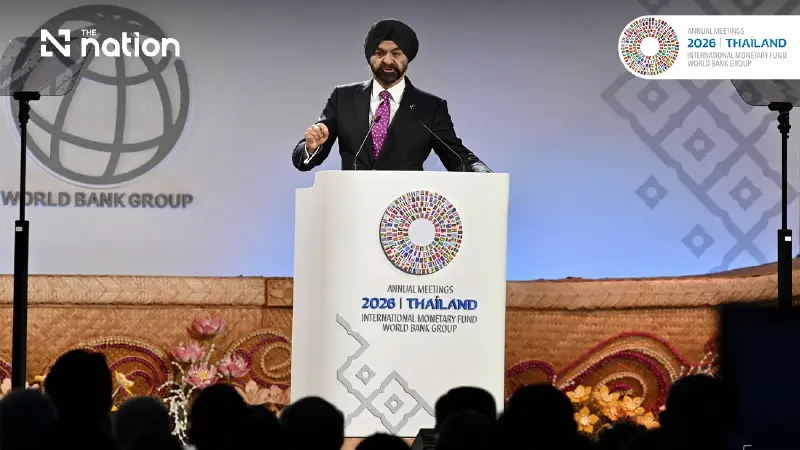


At the 2026 IMF–World Bank Annual Meetings in Bangkok, World Bank Group President Ajay Banga warned of an 800 million jobs gap and called for more private capital.
- The World Bank projects a shortfall of 800 million jobs for young people in developing countries over the next 10-15 years, with only 400 million jobs forecast for 1.2 billion new entrants to the labour market.
- To address the gap, World Bank President Ajay Banga has called for a new development model that combines public financing with private investment, technology and philanthropy to generate employment on a larger scale.
- The strategy involves mobilising private capital, supporting micro, small and medium-sized enterprises (MSMEs) in poorer nations, and investing in infrastructure, skills and practical AI.
World Bank Group President Ajay Banga has warned that developing countries could face a shortfall of roughly 800 million jobs over the next 10 to 15 years, calling for a development model that combines public financing with private investment, technology and philanthropy.
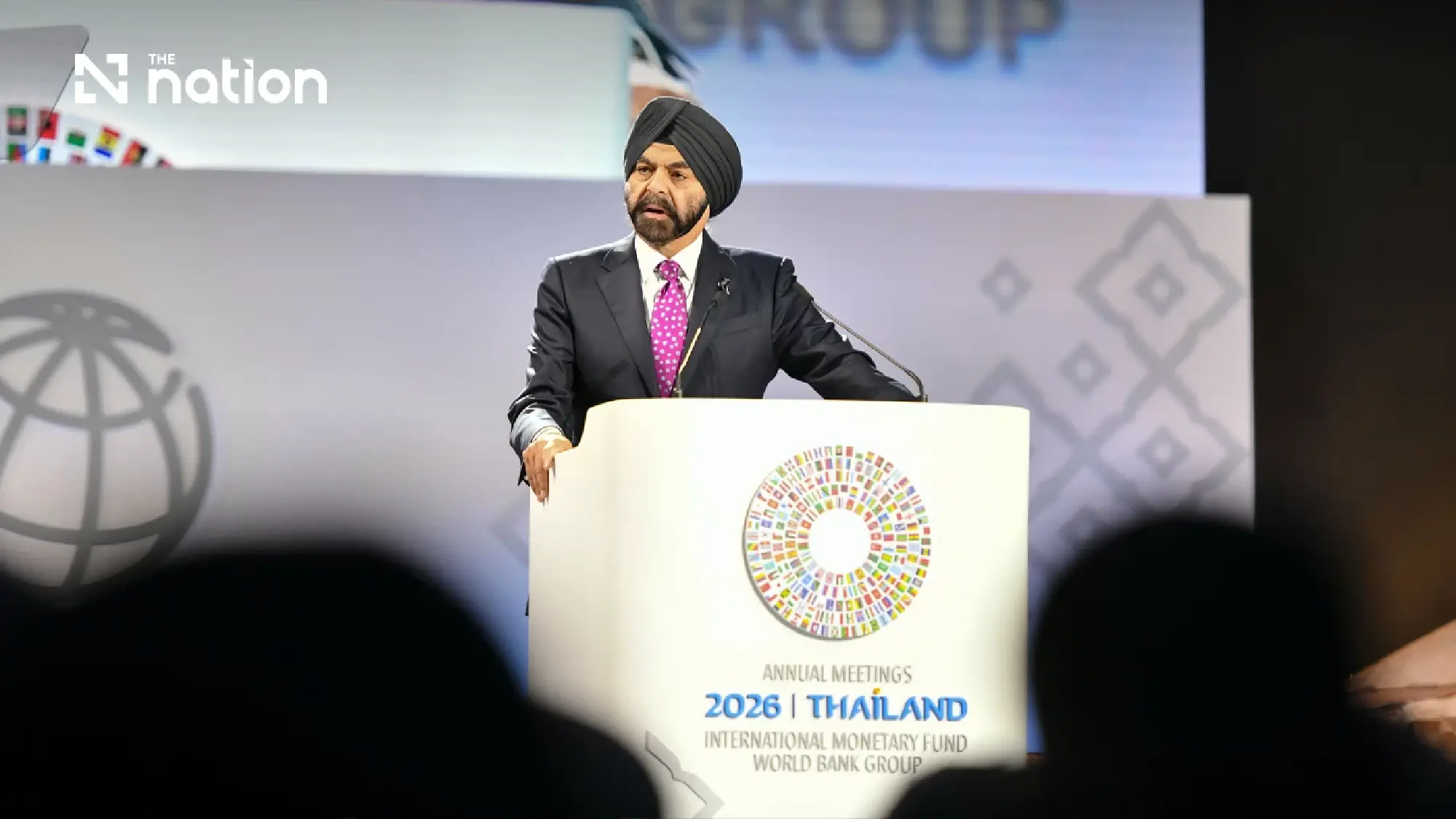
Addressing the plenary of the 2026 International Monetary Fund (IMF) and World Bank Group Annual Meetings in Bangkok on Friday (October 16), Banga estimated that 1.2 billion young people would enter the job market during that period, with only about 400 million jobs projected to be available.
“A job is not a statistic; a job is dignity. It is the difference between a young person who can build the future and a young person who is merely awaiting one,” he told delegates.
The warning came against a backdrop of prolonged conflicts, rising debt, tighter government budgets and persistently high costs for energy and fertiliser. Banga argued that development finance must both stretch limited resources further and help economies generate employment on a much larger scale.
Under the approach he outlined, public and concessional finance would remain central in countries facing the greatest risks, while private investment would take a larger role as economies strengthened. He noted that 35 countries had moved from the International Development Association (IDA) to the International Bank for Reconstruction and Development (IBRD), while 23 had become IDA donors.
“Success arrives when we are no longer needed by a country. We have to make ourselves extinct. That is success,” he told the gathering.

Private capital rises, but poorest countries lag
Banga reported that the World Bank Group mobilised US$112 billion in private capital in its latest financial year, up from about US$35 billion in fiscal 2022. Combined with the institution’s own financing, the total exceeded US$230 billion.
Private investment mobilisation nearly tripled in lower-middle-income countries, quadrupled in upper-middle-income economies and more than doubled in Africa. But it remained at around US$3 billion in low-income countries, where commercial financing is hardest to attract.
He identified micro, small and medium-sized enterprises (MSMEs) as a route to creating jobs in poorer and conflict-affected economies. A new strategy would help these businesses build digital records, secure finance, connect with larger buyers and navigate simpler rules.
Investors from 110 countries supplied capital last year, led by the United States, the United Kingdom and India. Nearly 55% of the World Bank Group’s financing and the private capital it mobilised went to infrastructure and energy, agribusiness, health, tourism and value-added manufacturing. World Bank Group climate co-benefits totalled US$96 billion, including US$48 billion from private capital.
Banga also outlined reforms intended to make the institution more effective. Project preparation times had been cut from 19 months to nine, performance measures had been reduced from 153 to 22, and the share of financing tied to results had increased from roughly one-third to half. Balance-sheet changes had created more than US$100 billion in additional IBRD lending capacity over the next decade.
Meanwhile, the pipeline for co-financing among development banks had tripled in two years to around 250 projects seeking US$138 billion. The bank’s employment strategy rests on infrastructure and skills, predictable regulation, and measures to reduce investment risks through guarantees, equity and local-currency financing.
Last year, it committed US$40 billion, nearly a third of its financing, to physical and human infrastructure, including power, water, transport, healthcare and education. Separately, 30% of its public-sector financing supported policy and institutional reform.

Practical AI and essential services
Banga distinguished capital-intensive frontier artificial intelligence (AI) from practical “small AI”, which could help farmers increase yields, teachers personalise lessons, health workers make better decisions and entrepreneurs find customers. Developing countries, he argued, needed dependable electricity, connectivity, access to devices, safeguards and relevant training to benefit.
He emphasised that tailored country strategies and agreements should determine how public funding, private investment, philanthropy and technology work together. He also highlighted programmes designed to translate finance into everyday opportunities.
Under Mission 300, developed with the African Development Bank, 59 million people in Africa had gained access to electricity, towards the goal of reaching 300 million by 2030. Annual access rose from 12 million people in fiscal 2024 to 28 million in the latest financial year.
“It's not enough to put one light and one fan on a home; we have to give them productive electricity,” he argued.
His proposed energy mix includes renewables, hydropower, gas where appropriate, nuclear power, stronger grids and storage. He cited work with the International Atomic Energy Agency on nuclear retrofits, the World Bank’s first such involvement in 50 years.
On water, the bank and its partners aim to improve water security for up to one billion people by 2030, with the World Bank Group committed to reaching 400 million. Twenty country compacts set out a route to clean water for 150 million people, with another 20 being prepared.
In agriculture, partners aim to help 300 million smallholder farmers produce a surplus by 2030, including 200 million under the World Bank Group’s commitment. The AgriConnect programme has a pipeline to support 82 million farmers, with preparations under way for a further 118 million.
HealthWorks, meanwhile, aims to reach 1.5 billion people with affordable, quality healthcare by 2030. About 600 million have been reached so far.
The bank also plans to expand its critical-minerals business fivefold over the next five years and has identified 20 countries for possible partnerships intended to develop local industries and retain more value and jobs.
It launched 52 economic-corridor projects last year, compared with 20 three years earlier, including work to connect producers and markets along routes such as the Lobito Corridor in Africa.

Drawing in long-term investors
Looking ahead, Banga described efforts by six multilateral development banks to develop common standards for assessing, packaging and transferring investments to other buyers. The aim is to bring long-term investors, including pension funds, insurers and sovereign wealth funds, into development projects while freeing bank capital for new lending.
He called this the foundation for an emerging-market development asset class, potentially allowing development financing to expand beyond the limits of individual banks’ balance sheets.
The World Bank Group is also expanding its presence in New York, Frankfurt, Milan and Tokyo to work more closely with investors.
Banga closed by invoking the international co-operation behind the creation of the Bretton Woods institutions in 1944, arguing that economic opportunity in one country could produce benefits elsewhere.
“Development is not charity; it is an investment in our collective future,” he told delegates. “The jobs gap is a projection; it does not have to be our future.”
