
Thailand cuts B7 diesel by 1 baht, gasohol by 50 satang from October 29
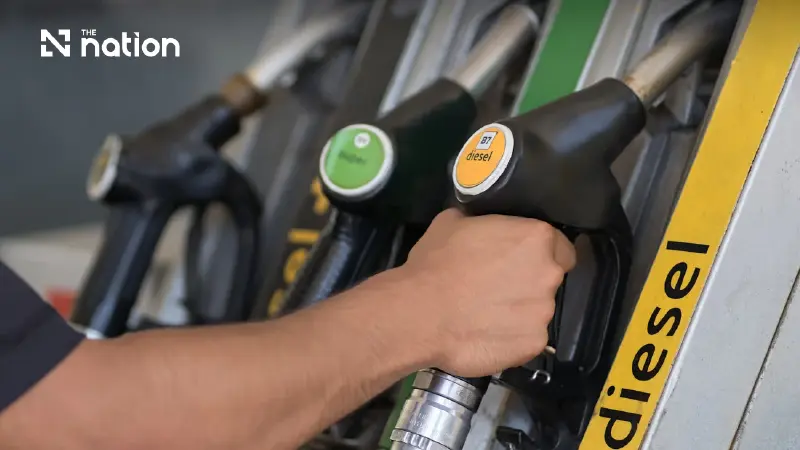


From October 29, 2026, Thailand cuts B7 diesel by 1 baht to 42.54 baht a litre and E10-91 and E10-95 gasohol by 50 satang under revised fuel-pricing rules.
- From October 29, the retail price of B7 diesel in Thailand is being cut by 1 baht per litre, whilst the price of E10-95 and E10-91 gasohol will fall by 50 satang per litre.
- The price reductions are the result of a revised fuel-pricing formula that removes assumed freight and insurance costs from Singapore, as most fuel is refined domestically.
- The new prices will be 42.54 baht per litre for B7 diesel, 41.54 baht for E10-95 gasohol, and 41.17 baht for E10-91 gasohol.
- The measures are intended to make fuel prices more accurately reflect actual costs and ease the financial burden on consumers.
Thailand’s Oil Fuel Fund Management Committee approved reductions in retail fuel prices on Wednesday (October 28), cutting the price of B7 diesel by 1 baht per litre and the prices of E10-95 and E10-91 gasohol by 50 satang per litre, effective from October 29.
Under the decision, the subsidy for B7 diesel will be reduced by 0.38 baht to 2.93 baht per litre, bringing its retail price down to 42.54 baht per litre.
Subsidies for E10-95 and E10-91 gasohol will each be reduced by 0.16 baht to 1.61 baht per litre. Their retail prices will fall by 0.50 baht per litre to 41.54 baht and 41.17 baht respectively.
The price reductions follow a decision by the Energy Policy Administration Committee (EPAC) to revise the country's fuel-pricing formula by removing freight, insurance and transport-loss charges.
The previous formula assumed that fuel was transported by sea from Singapore, even though most fuel is refined domestically. As a result, these assumed costs had been included in retail fuel prices despite not being incurred in practice.
The committee also reduced the oil reserve cost allowance to two-thirds of its previous level to bring it into line with actual oil reserves.
Amid continued volatility in global oil markets, diesel prices in Singapore stood at approximately US$171 per barrel on October 28, while petrol prices were around US$139 per barrel. These market conditions have left the Oil Fuel Fund bearing subsidy costs of approximately 253 million baht per day.
Nevertheless, the committee decided to maintain existing retail prices for other fuel types to avoid placing additional pressure on households already struggling with the cost of living.
Amid the ongoing energy crisis and cost-of-living pressures, the Ministry of Energy and relevant agencies are aligning the EPAC decision with Oil Fuel Fund measures to ensure that domestic fuel prices more accurately reflect actual costs.
The measures are intended to prevent consumers from paying charges that are not actually incurred, while easing the financial burden during the crisis and laying the foundations for a fairer and more sustainable fuel-pricing structure in the long term.
